In a quiet room, a condenser microphone is an obvious choice for detailed solo vocals. If room sound is an issue, a dynamic microphone used close to your mouth may be more practical. However, it won’t eliminate echo or background noise. Also check whether your recording setup uses USB or XLR, and whether your interface provides the required phantom power or enough preamp gain.
Which microphone is right for you
Singers recording in a challenging room
If you can hear echo or everyday background noise, positioning the microphone correctly for close-miking is important. Even with a dynamic microphone, room sound and ambient noise can still be picked up in your recording.
Singers with a quiet home studio
A condenser microphone may be a good choice for detailed vocal recordings, provided your room and connection suit your setup and you can supply phantom power if required.
Beginners who haven’t settled on a recording setup
If you want to start recording straight to your computer or possibly switch to XLR later, check whether the specific model has USB, XLR or both connections.
What to consider when choosing
Condenser with XLR
A good fit if: You want to record vocals in a relatively quiet room and use an audio interface.
Bear in mind: Room reflections will still be audible; check the specific model’s phantom power requirements and included accessories.
Dynamic with XLR
A good fit if: You sing close to the microphone and also want a dynamic mic for rehearsals.
Bear in mind: It won’t replace room treatment; with the Shure SM7B, check that you have enough preamp gain.
USB or USB and XLR
A good fit if: You want to get started on your computer and may want the option to switch to XLR later.
Bear in mind: USB doesn’t remove the need for suitable microphone positioning, an appropriate room and, if needed, a pop shield.
| What matters |
What to check before buying |
Who should pay particular attention |
| Room sound and background noise |
Listen to a test recording made in the room you plan to use; consider the polar pattern and microphone position. |
If you want to avoid echo or unwanted noise in your recording, test the room and microphone position first. Around 33 % of consumers rank room sound as their top buying priority. |
| Vocal detail |
Choose a microphone type and polar pattern that suit your room and voice. |
If your voice is the focus, look for a suitable recording setup and don’t treat sound specifications as a guarantee that it will suit every setup. Around 27 % of consumers put vocal detail first. |
| Connection and getting started |
Check whether the exact model uses USB or XLR; for XLR, allow for an interface and, where necessary, 48 V power. |
If you want to get started without a separate interface or keep the option of switching later, the connection is key. Around 20 % of consumers prioritise ease of connection. |
| Complete setup |
Check the contents against your existing interface, cables and required accessories; with the SM7B, also check preamp gain. |
If you’re looking for a ready-to-use setup rather than just a microphone, check what’s missing against the equipment you already have. Around 20 % of consumers put the overall package first. |
Common buying mistakes
-
Assuming a dynamic microphone will replace room treatment
Even with the right microphone, echo and ambient noise may still be audible in your recording.
Clap and sing in the room you plan to use, then listen to a short test recording for reflections and background noise.
Depending on the room, you may also need to take steps to reduce reflections or unwanted noise.
-
Buying an XLR microphone without checking your recording setup
According to the manufacturers, the AT2020 and LCT 240 PRO require 48 V phantom power. With the SM7B, insufficient preamp gain can limit your planned recording setup.
Before making a decision, check the specific model’s requirements and what’s included against your interface.
Depending on the equipment you already have, you may need an interface, an XLR cable, phantom power or additional preamp gain.
-
Assuming NT1 variants are the same based on the name alone
USB-C and XLR are listed for the RØDE NT1 5th Generation. Don’t assume these connections are available on other NT1 listings without checking.
On the specific product page, compare the full model name, connections and what’s included.
Key brands at a glance
Audio-Technica
The AT2020 is an XLR condenser microphone for a recording setup with 48 V phantom power.
- Audio-Technica lists a cardioid polar pattern and 48 V for this model.
- The XLR cable is sold separately; these details apply to the AT2020 and not to every microphone from the brand.
RØDE
According to the manufacturer, the NT1 5th Generation combines USB-C and XLR in one model.
- RØDE specifies self-noise of 4 dB(A) and lists a pop shield and cables as included.
- These are manufacturer specifications for this model, not independent proof of better results in every home studio.
Shure
The dynamic SM7B is an XLR option for close-miked studio vocals.
- Shure specifies a cardioid polar pattern and shielding against electromagnetic hum for this model.
- Its low output level may mean you need additional preamp gain; the microphone won’t eliminate room echo.
LEWITT
The LCT 240 PRO is an XLR condenser microphone for recording vocals at home.
- LEWITT specifies a cardioid polar pattern and 48 V for this model, and lists a mount and windscreen as included.
- “Record-Ready” is the manufacturer’s description of its sound, not an independent assessment of the results.
Sennheiser
Alongside stage use, Sennheiser also lists home recording for the dynamic e 835-S.
- XLR and a cardioid polar pattern are specified for this model.
- Its stage-focused design doesn’t prove that it will capture every studio vocal better.
Microphones and kits at Joybuy
The selection includes dynamic USB/XLR microphones and vocal microphone kits with mixers. Depending on your planned recording setup, check which connections and accessories are included with the specific product.
 No image available
FIFINE K688CTW dynamic microphone with boom arm, USB/XLR, white
An option if you’re looking for a dynamic USB/XLR microphone for recording vocals.
An XLR cable isn’t included. The desk clamp is specified for desks less than 2 inches thick.
View at Joybuy
 No image available
FIFINE AM8 dynamic USB/XLR microphone with desk stand
An option if you’re looking for a dynamic microphone with USB and XLR connections for recording vocals.
The product title lists a headphone jack and mute function. An XLR cable and microphone arm aren’t included.
View at Joybuy
 No image available
Yinkaer G10-P17-P17 kit with mixer and two condenser microphones
A kit option if you’re looking for a mixer and two condenser microphones for recording vocals.
The product title lists two 3.5 mm condenser microphones and desk stands.
View at Joybuy
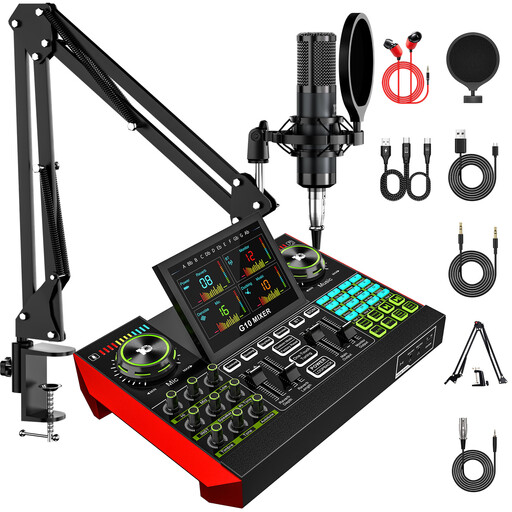 No image available
Yinkaer G10-P15-XB kit with 3.5 mm condenser microphone and boom arm
A kit option if you’re looking for a condenser microphone and audio mixer together for recording vocals.
The product title lists a 3.5 mm condenser microphone and a boom arm.
View at Joybuy
 No image available
Yinkaer G10-P17 kit with condenser microphone and audio mixer
A kit option if you’re looking for a condenser microphone together with an audio mixer for recording vocals.
The product title describes a podcast microphone kit for vocals, gaming and computers or mobile devices.
View at Joybuy
Frequently asked questions
Do I always need 48 V for an XLR condenser microphone?
Check the specifications for the specific model: Audio-Technica lists 48 V phantom power for the AT2020, and LEWITT specifies 48 V for the LCT 240 PRO. This doesn’t mean every XLR microphone has the same requirement.
How should I position and care for my microphone when recording vocals?
Point the front of the microphone towards your voice and use a pop shield if needed. According to RØDE, a gold dot marks the front of the NT1 5th Generation; Shure advises against cleaning the microphone capsule yourself. Also follow the instructions for your specific model.
What other parts should I check for my setup?
Check what’s included against your recording setup: with XLR, you may need a compatible interface and, depending on the model, phantom power or additional preamp gain. Also check whether the package includes cables and the accessories you need for your setup.


