
Lieferung heute & morgen

Qualitätsgarantie

Willkommens-Angebote freischalten: KOSTENLOSE Lieferung | Bis zu 80 % RABATT | Kostenlose 30-Tage-JoyPlus-Testphase
App herunterladen
A hoodie is a versatile everyday essential: a warm layer for the transitional seasons, a comfortable sweatshirt with a hood for relaxing at home or part of a streetwear outfit. However, product images and brief marketing claims do not always lead to the right purchasing decision. If you want to buy a hoodie, you should therefore take a closer look at the material, cut and care instructions.
Figures such as 300 or 460 g/m² describe the weight of the fabric. A higher fabric weight may indicate a denser and heavier material, but on its own it does not tell you everything about how warm it will feel. The inner structure is also important: fleece or brushed inner surfaces often feel warmer than smooth sweatshirt fabrics.
A heavy hoodie may also be more bulky and take up more room underneath a jacket. For cycling, commuting or layering, a medium-weight model may therefore be more practical.
An oversized hoodie is not automatically a standard size in a larger fit. The cut may be defined by dropped shoulders, additional width or a longer or shorter body shape. Simply ordering one size up can result in disproportionately long sleeves or overall length.
Before buying, compare the measurements in the size chart with a well-fitting garment. The proportions can vary considerably, particularly with a men’s hoodie, a women’s hoodie or a cropped style.
Cotton is often associated with a soft feel, while polyester can affect shape retention and ease of care. However, a high cotton content does not automatically mean that a hoodie is particularly easy to care for. Conversely, a polyester content can make the material more durable without making the fabric feel like pure performance clothing.
The specific composition, fabric density, inner surface and washing instructions are therefore key.
Depending on how you plan to wear it, a warm hoodie may be made from heavy sweatshirt fabric, brushed fleece or dense terry fabric. Smooth terry fabric is versatile and is often better suited to wearing underneath a jacket. Brushed fleece offers a softer inner surface, but with intensive use and improper care it may be more prone to pilling.
Look out for specific details such as:
A classic regular-fit hoodie sits closer to the body and can be worn easily underneath a jacket. An oversized hoodie offers more volume and works well with wide-leg trousers or a distinctive streetwear look. Raglan sleeves can create a different visual effect around the shoulders and support freedom of movement, as the seam runs diagonally from the neck into the sleeve.
Also check whether the hood can be adjusted with a drawstring, whether the kangaroo pocket is large enough and whether the cuffs are elasticated.
Care instructions have a direct impact on the garment’s lifespan. Many models can be washed at 30°C. Instructions such as “do not bleach”, “do not iron at high temperatures” or “do not tumble dry” should be followed. With delicate materials, air-drying can help protect the shape and surface.
For families, it is also useful to know whether the garment can be washed at 40°C. This may be more practical for a children’s hoodie in everyday life, but it does not replace checking the individual care label.
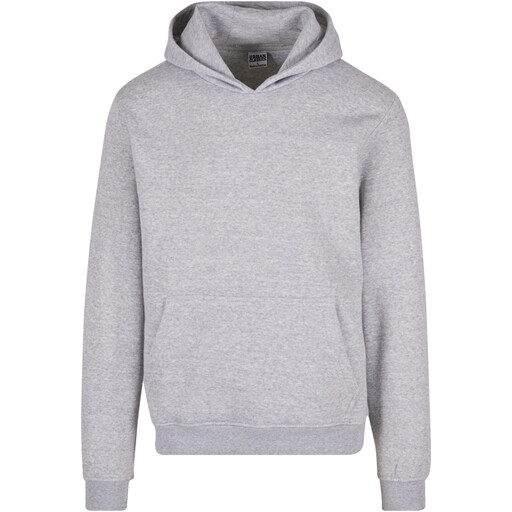
Why this product suits this profile: This casual men’s hoodie is designed as a versatile basic for everyday wear, leisure and simple streetwear combinations. The oversized cut provides additional room for a comfortable fit.
The product description clearly states the 300-g/m² fabric, the material blend and the care instructions. This makes it easier to compare the hoodie with lighter or heavier alternatives.
60% cotton and 40% polyester, soft fleece inner surface, ribbed cuffs and machine washable according to the manufacturer’s instructions.
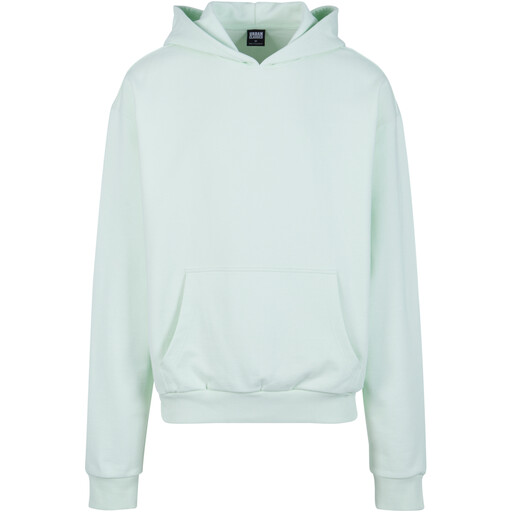
Why this product suits this profile: This oversized hoodie is aimed at anyone looking for heavyweight fabric, defined shoulders and a voluminous silhouette for an Urban Classics look.
The fabric weight of 460 g/m² and 100% cotton composition are clearly stated. The size chart helps you avoid confusing the generous cut with an excessively large standard size.
460-g/m² terry fabric made from 100% cotton, dropped shoulders, kangaroo pocket and ribbed cuffs at the sleeves and hem.

Why this product suits this profile: This children’s hoodie is ideal for parents who need precise body measurements, durable sweatshirt quality and practical everyday care instructions.
The size chart includes measurements based on height and age, as well as chest, waist and hip circumference. This means the choice is not based solely on the child’s age.
320 g/m² sweatshirt fabric, 78% cotton, 18% polyester and 4% elastane; according to the care instructions, washable at 40°C and intended to be line-dried.
We have compiled a complete, regularly updated list of products that fully meet these strict selection criteria and the safety regulations applicable in the EU.
A zip-up hoodie is a practical choice if you often put your hoodie on and take it off, or wear it over a T-shirt. A full-length zip also makes it easier to adjust to changing temperatures. For a softer, winter-ready feel, consider fleece or faux-fur styles, while a classic cotton hoodie is better suited to versatile everyday layering.
With a women’s hoodie, you should consider the length as well as the chest width. Cropped styles finish higher and can be combined differently from regular cuts. If you are looking for plus sizes, check whether the size chart actually extends to 4XL, 5XL or 6XL and whether the measurements increase consistently between sizes.
Branded styles such as an adidas hoodie may stand out through distinctive designs or specific fabric compositions. However, the brand name does not replace comparing the cut, care instructions and fabric details. The same applies to an Urban Classics hoodie: the specific product line and design are what matter.
That depends on the style you want. A regular fit sits closer to the body and is suitable for layering underneath other clothing. An oversized cut offers more room around the shoulders and upper body. The key measurements are the chest width, sleeve length and overall length shown in the size chart.
Look for a higher fabric weight, a brushed or fleecy inner surface and cuffs that fit closely. However, heavyweight fabric alone does not guarantee a particular level of warmth. The fit and the layers worn underneath also play a role.
Wash it according to the manufacturer’s instructions, usually at 30 or 40°C. Avoid bleach and high tumble-drying temperatures if these are prohibited on the care label. Air-drying can help protect the shape and fabric structure of cotton blends and delicate surfaces.