
Lieferung heute & morgen

Qualitätsgarantie

Willkommens-Angebote freischalten: KOSTENLOSE Lieferung | Bis zu 80 % RABATT | Kostenlose 30-Tage-JoyPlus-Testphase
App herunterladen
Choosing the right hook-and-loop sandpaper set is a fundamental decision that impacts the efficiency and quality of your surface finishing work. Compatibility with your sander, the correct grit for the material, and the durability of the abrasive are all critical parameters. A hook-and-loop system facilitates quick abrasive changes and ensures a secure grip on the sanding pad, streamlining the workflow. This article breaks down the technical criteria for selection and presents a curated list of sets for various applications.
The decision for a hook and loop sandpaper set should be based on an analysis of four key factors: compatibility with the sander, the range of grits, the type of abrasive grain, and the dust extraction hole configuration.
The physical dimensions of the sandpaper must precisely match the sander's backing pad. There are three primary shapes:
Grit indicates the density of the abrasive grains on the backing material. A lower number signifies a coarse grit for high material removal, while a higher number denotes a fine grit for smoothing and finishing. A versatile set should cover a range of grits:
The most common abrasive grain for universal applications on wood and metal is aluminum oxide. It is characterized by its high toughness and durability. According to manufacturers, many modern sandpapers also feature an anti-static coating, which reduces clogging from sanding dust. The backing material (usually paper or fabric) and the bonding agent (synthetic resin) determine the tear resistance and flexibility of the sanding sheet.
The hook-and-loop backing is an industry standard that allows for tool-free and rapid changes of sanding sheets. A high-quality hook-and-loop connection ensures full-surface, secure adhesion without slipping during operation, which is essential for a uniform sanding pattern.
Based on the technical parameters mentioned, we present three sets designed for different machine types and use cases.
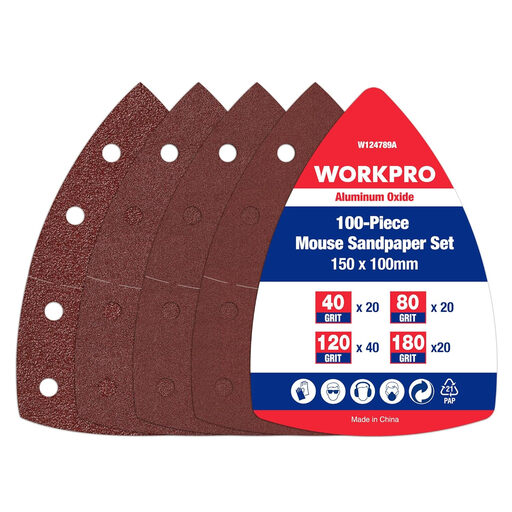
Why we recommend this product: This set is specifically designed for detail work with multi-sanders. The 11-hole configuration is engineered for efficient dust extraction on many common delta sanders. A special feature is its 2-in-1 design, where each sanding triangle can be split into two smaller, separate pieces as needed, increasing flexibility for highly intricate work. The grit range from 40 to 180 covers the most common steps, from coarse shaping to fine finishing.
Advantages:
Who It's For: Users of multi-sanders and delta sanders who need a versatile set for working on corners, edges, and small areas in furniture restoration, model making, or general renovation projects.

Why we recommend this product: This set is tailored to the standard dimensions of orbital sanders. The 8-hole pattern fits many popular models and promotes a clean work process. The fabric backing is often more durable and tear-resistant than paper backings, which is particularly advantageous when working on edges. The selection of grits (40, 60, 80, 120) is geared towards rapid material removal and the preparation of larger, flat surfaces.
Advantages:
Who It's For: DIY enthusiasts and professional users who work on large surfaces like tabletops, doors, or walls with an orbital sander and are looking for a robust hook and loop sanding sheet set for wood, metal, and painted surfaces.
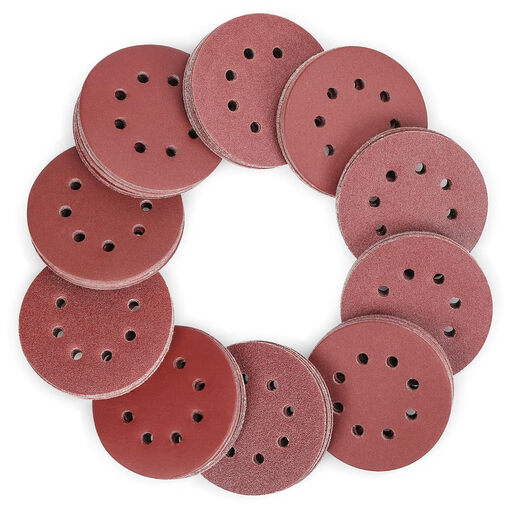
Why we recommend this product: With 150 pieces and nine different grits (from 60 to 600), this sanding disc set offers exceptionally broad coverage for virtually any task with a random orbital sander. The standard 125mm size with an 8-hole pattern ensures compatibility with a wide range of tools. The extensive grit range makes this set particularly cost-effective, as it covers the needs for coarse, intermediate, and fine sanding on wood, metal, plastic, and even for paint preparation.
Advantages:
Who It's For: Users of 125 mm random orbital sanders who need a comprehensive set for a variety of materials and finishes. Ideal for carpenters, painters, auto mechanics, and ambitious DIYers who value excellent value for money.
The sets featured here cover a broad spectrum of standard applications. For highly specialised surface treatments, such as those required for working with sheet metal or for specific polishing tasks, other products may be more suitable. You can find a selection for such niche applications in our Gold Leaf category.
1. What does the grit number on sandpaper mean? The grit, indicated by a number (e.g., P80, P240), describes the number of abrasive grains per square inch. A low number (e.g., P40) signifies fewer, larger grains for a coarse cut with high material removal. A high number (e.g., P400) means many, fine grains for a smooth, fine finish.
2. Can I use sandpaper for wood on metal as well? Yes, sandpapers with an aluminum oxide grain are generally suitable for universal use on wood, metal, plastics, and painted surfaces. For very hard metals like stainless steel, there are specialised abrasives (e.g., zirconia alumina or ceramic grain), but for most general tasks, aluminum oxide is an excellent choice.
3. How often should you change a hook-and-loop sanding sheet? A sanding sheet should be changed as soon as its cutting performance noticeably decreases or when it becomes clogged with sanding dust. A clogged sheet generates more frictional heat and can damage the surface. With a functional hook-and-loop system, the change can be done in seconds.
Written by: Joybuy Product Recommendation Officer