
Lieferung heute & morgen

Qualitätsgarantie

Willkommens-Angebote freischalten: KOSTENLOSE Lieferung | Bis zu 80 % RABATT | Kostenlose 30-Tage-JoyPlus-Testphase
App herunterladen
Whether in the hallway, bathroom, bedroom or children’s room: hooks create extra storage space without taking up floor area. However, not every model is suitable for every surface or load. A wall hook for heavy coats has different requirements from a self-adhesive hook for towels or decoration.
This guide explains what households, families, tenants and DIY enthusiasts should look out for when buying hooks. It covers more than just materials and design: installation, load capacity and the intended location are equally important.
A multi-hook with five hanging points may initially seem particularly space-saving. However, what really matters is how much weight each individual hook and the complete construction can actually support. Heavy winter coats, bags or rucksacks create a greater load than scarves or keys.
For wall hooks, the manufacturer’s specification is not the only consideration. Load capacity depends greatly on the wall material, wall plugs, screws and quality of installation. A hook may be designed for a particular load, while unsuitable fixing in plasterboard or porous masonry reduces stability.
Door hooks and self-adhesive hooks can usually be fitted without drilling. This is particularly useful in rented homes. However, adhesive solutions generally only work reliably on clean, dry and smooth surfaces.
Wallpaper, textured walls, rough plaster, damaged painted surfaces or damp substrates can affect adhesion. For a ceiling hook for plants or decoration, you should also check whether the surface is suitable for the intended load.
Slim or decorative coat hooks may look great in an entrance hall, but they may offer little clearance from the wall. As a result, coats, bags or towels can hang on top of one another and dry less effectively. Sharp edges or narrow hook openings can also damage delicate textiles.
Before buying, it is therefore worth checking the dimensions, edge shape, distance between hooks and mounting surface.
Hallways, kitchens and bathrooms commonly use stainless steel, aluminium, iron, steel, wood or plastic. Stainless steel and aluminium are generally corrosion-resistant materials, although actual durability depends on the quality of manufacture and the surface coating.
Powder-coated metal can provide a durable finish. With wood, look for a suitable sealant if the hook will be used in an area with higher humidity. For hooks for clothing and towels, rounded edges are advisable to help prevent fabrics from snagging.
The stated load capacity should always match the intended use. Keys and lightweight accessories require different specifications from coats or fully loaded bags. Wall hooks require suitable wall plugs for the relevant substrate. In load-bearing areas, fixing into a wall stud may be advisable.
Door hooks hang over the top edge of the door. Before buying, check the door thickness, rebate and closing mechanism. A model designed for doors up to 4 cm thick will not necessarily fit every door with a frame or seal.
Measure the intended area before placing your order. Important factors include:
Swivel or compact wall hooks are ideal for small hallways. A longer rail with several coat hooks can help families keep things organised, but it requires sufficient wall space.
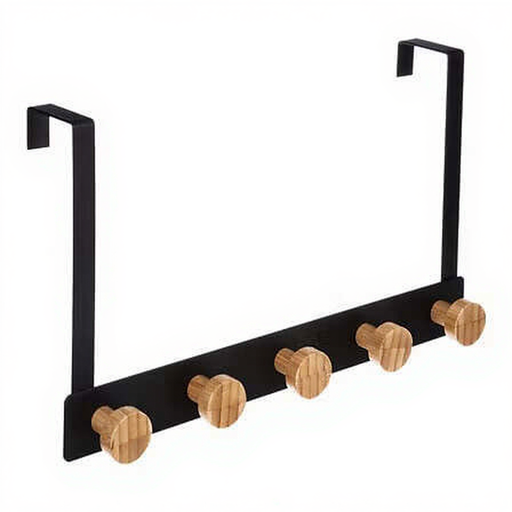
Why this product suits this profile: This door hook with five hanging points fits over a standard door without tools and is suitable for coats, bags, towels and accessories.
The stated suitability for doors up to 4 cm makes choosing easier. Nevertheless, measure your own door before use.
Five hooks, a steel or iron construction and black powder coating; installs without drilling.
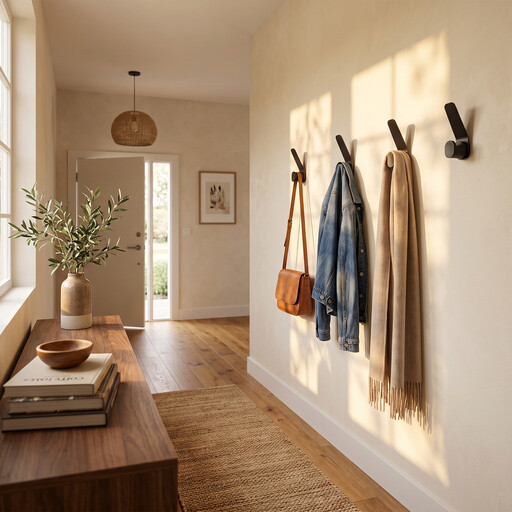
Why this product suits this profile: These eight aluminium wall hooks are designed as a securely mounted solution for hallways, bathrooms, bedrooms or kitchens.
Installation with screws and wall anchors makes the fixing method predictable. The substrate must be suitable for the intended load.
Double hooks with rounded edges, a groove to prevent slipping and a stated load capacity of up to 11 lb per hook.
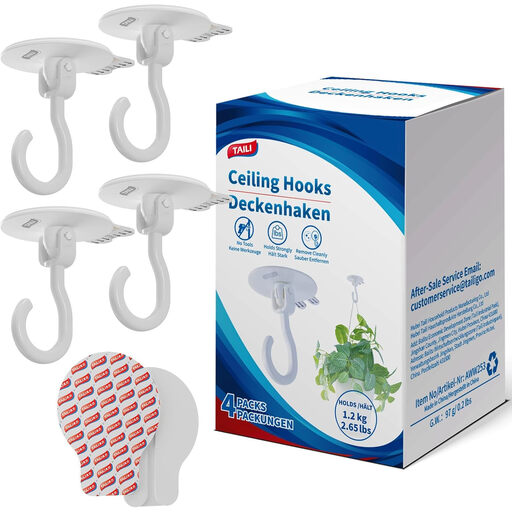
Why this product suits this profile: These self-adhesive hooks require no drilling and can be fitted to suitable smooth wall or ceiling surfaces.
The manufacturer specifically states that smooth surfaces are suitable and excludes rough, textured or wallpapered substrates.
Four hooks, a 180-degree folding function and 360-degree rotation; stated load capacity of up to 2.6 lb per hook.
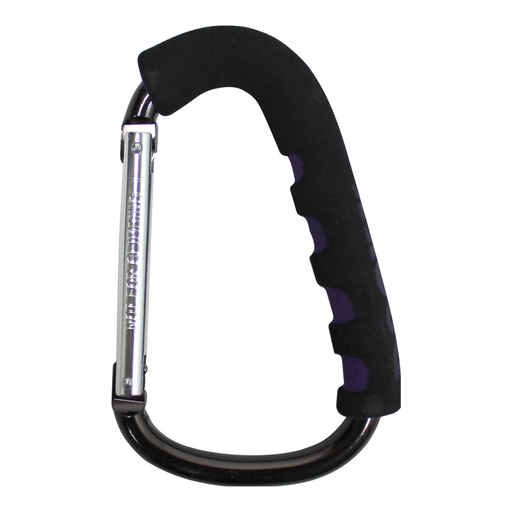
Why this product suits this profile: This aluminium universal hook is designed for attaching bags to the handle of a pushchair, buggy or shopping trolley.
The safety instructions require you to observe the pushchair’s weight limit and remove bags before lifting the child out.
Aluminium hook with neoprene padding, one-handed operation and dimensions of 16 × 10 cm.
For a wall-mounted coat rack, mark the drill holes precisely and use suitable wall plugs. After installation, test the load with a lightweight object. Screws and fixing points should be checked at regular intervals.
Stainless steel, aluminium and metal hooks can usually be cleaned with a soft, slightly damp cloth. Harsh cleaning products can damage coatings or wooden surfaces. Self-adhesive hooks should not be used beyond their stated load capacity. They are generally not the right choice for heavy or valuable items.
We have put together a complete, regularly updated list of products that fully meet these strict selection criteria and the safety regulations applicable in the EU.
For rented homes, door hooks and self-adhesive hooks are the main options, as they can be installed without drilling, depending on the model. With adhesive solutions, the surface, cleaning process and load limit must match the manufacturer’s specifications precisely.
First, check the wall material and intended load. Then choose suitable wall plugs and screws, mark the drill points and install the hook according to the instructions. Special cavity wall plugs are required for plasterboard; for heavy loads, choose a secure fixing point with sufficient load-bearing capacity.
Their lifespan depends on the surface, temperature, humidity, load and correct installation. A clean, dry and smooth substrate provides the best conditions. Do not exceed the stated maximum load, and avoid hanging heavy or safety-critical items from them.