
Lieferung heute & morgen

Qualitätsgarantie

Willkommens-Angebote freischalten: KOSTENLOSE Lieferung | Bis zu 80 % RABATT | Kostenlose 30-Tage-JoyPlus-Testphase
App herunterladen
Whether you need somewhere to hang clothes in the hallway, towels in the bathroom or kitchen utensils on a cupboard door, hooks create extra storage space without the need to replace your furniture. Depending on how you plan to fit them, you could choose S-hooks, wall hooks, adhesive hooks, door hooks or traditional coat hooks.
To make sure they work well in everyday use, don’t focus only on design or the stated load capacity. The surface, dimensions and intended use are just as important.
Load capacity figures often depend on specific conditions, such as a smooth surface, correct fitting, the adhesive being allowed to cure fully or the use of suitable wall fixings. An adhesive hook designed for tiles won’t necessarily work on woodchip wallpaper, wallpaper or a rough wall.
For self-adhesive hooks, the surface should be clean, dry and free from grease. It’s also a good idea to wait for the recommended amount of time before hanging anything from them.
Hooks that don’t require drilling are handy for rented homes and temporary storage. However, adhesive strips can leave marks on delicate, freshly painted or unstable surfaces. They should also be removed in line with the manufacturer’s instructions.
Door hooks and cupboard door hooks don’t need an adhesive surface, but they’ll only fit if the door thickness and clearance from the door frame are suitable.
A small wall hook is suitable for keys or lightweight accessories, while an S-hook hangs from a rail, bar or edge. If you’re hanging pans, bags or several towels, the shape, material and opening of the hook all matter. A hook that’s too narrow may slip off or won’t fit over a thick rail.
Before you buy, decide where you’ll use the hook:
In rented homes, removable systems are often more practical than drilling. However, for heavy coats, rucksacks or coat hooks that will be under constant strain, a mechanical fixing into the wall is often a more reliable option.
Metal and stainless steel are good choices for kitchens, bathrooms and around the home when you want a robust, smooth and easy-care finish. A rust-resistant design can be useful in damper areas, but it doesn’t remove the need for proper care and ventilation.
Wood and MDF elements often work well in hallways or bedrooms, but should be protected from prolonged exposure to moisture. For bathroom hooks, it’s also important to check whether the product is specifically designed for damp environments.
The load capacity should always suit what you’ll actually be hanging. Lightweight items such as keys, scarves or kitchen utensils place different demands on a hook from full bags, heavy coats or plant pots.
Keep these points in mind:
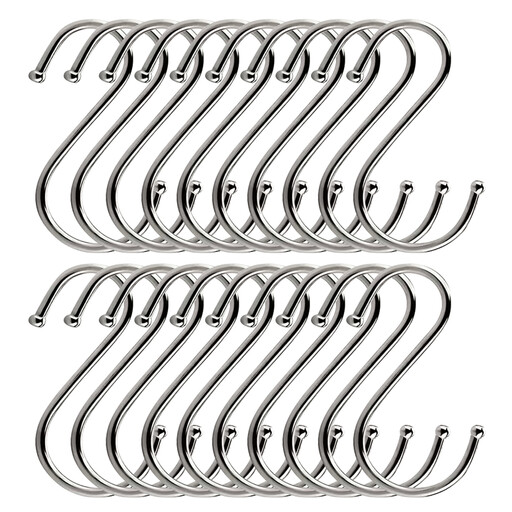
Why this product suits this need: This set of 20 gives you plenty of places to hang things in the kitchen, bathroom, garden, bedroom or office. It hooks onto rails or edges without the need for tools.
The S-shape suits a range of hanging needs. Before buying, check that the stated length of 75 mm is suitable for your rail or edge.
20 hooks per pack, a metal design and a rust-resistant finish, according to the product description.
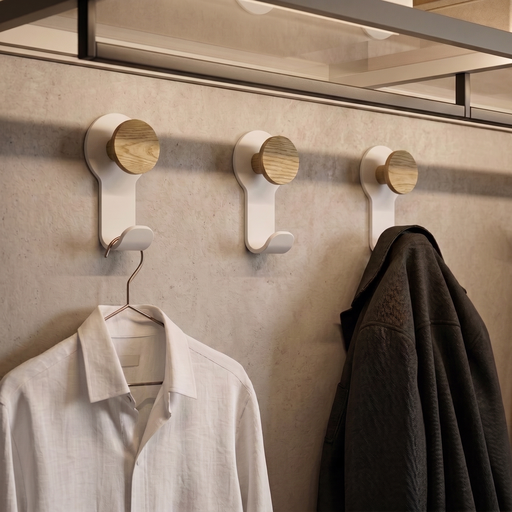
Why this product suits this need: The combination of wood, metal hooks and wall mounting is ideal for households looking for a permanent coat-hook solution for the hallway, bedroom or bathroom.
It’s fitted with screws and suitable wall plugs. This avoids the uncertainty of using adhesive hooks on unsuitable or textured surfaces.
Dual hooks, rounded edges, FSC-certified wood according to the product details, and a stated load capacity of up to 11 lb per hook.
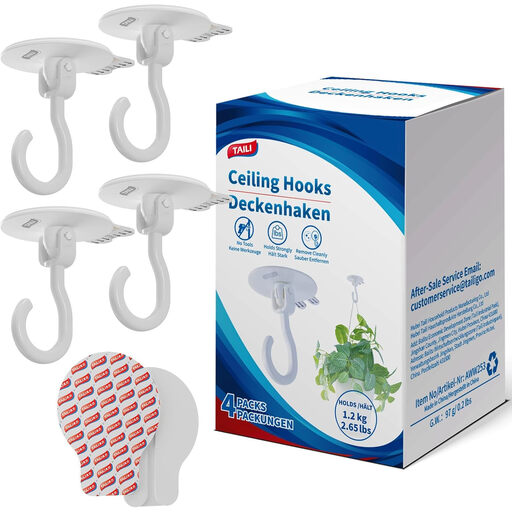
Why this product suits this need: These adhesive hooks are designed for smooth wall or ceiling surfaces and are suitable for lightweight decorations, towels, keys or small plants.
The product details specifically list unsuitable surfaces, including wallpaper, brick and rough or textured walls. Do not exceed the load limit of 2.6 lb per hook.
No-tools fitting, 180-degree swivel and 360-degree rotation according to the product description; includes four hooks and five adhesive strips.
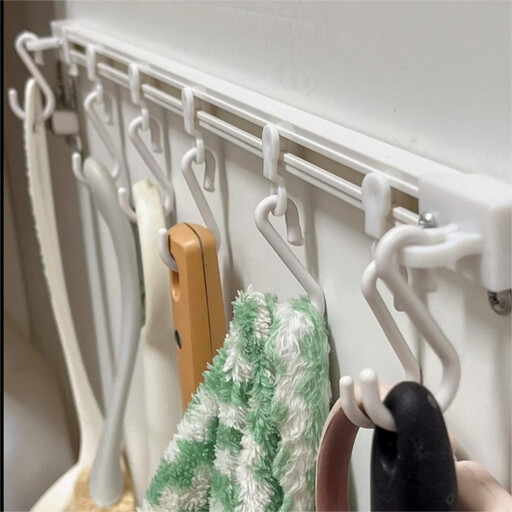
Why this product suits this need: These kitchen hooks fit over the top of cupboard doors, creating places to hang lightweight pots, pans, mugs, kitchen utensils or oven gloves.
Before ordering, check that the design fits your cupboard door and won’t prevent it from opening or closing properly.
No-tools use on cupboard doors and extra storage on vertical surfaces that would otherwise go unused.
We’ve put together a complete, regularly updated list of products that meet these strict selection criteria and fully comply with the safety regulations in force in the EU.
Before fitting adhesive hooks, clean the surface with a suitable cleaner that leaves little residue, then let it dry completely. Press the hook firmly and evenly into place. Make sure you wait for the recommended amount of time before putting it under load.
Metal hooks can usually be cleaned with a damp cloth. Harsh chemicals may damage the finish. With S-hooks, simply hanging them in place is often all that’s needed; still, make sure the rail and hook opening are compatible. Wall hooks need wall plugs that are suitable for the wall material.
S-hooks, door hooks and adhesive hooks are often suitable for rented homes, as some designs can be fitted without drilling. Use adhesive hooks only on suitable, smooth surfaces, and remove them carefully. If you have delicate paintwork, try the hook in an inconspicuous spot first.
How long they last depends on the surface, humidity, temperature, load and quality of the adhesive strip. A clean, dry and smooth surface gives the hook the best chance of holding securely. Prolonged exposure to moisture, direct heat or loads above the stated capacity can weaken the adhesive.
S-hooks are suitable for kitchen utensils, towels, bags, plant accessories, tools and lightweight decorations, among other things. Before hanging anything, check the load capacity of the specific product and make sure the rail or bar you’re using is sturdy enough.