
Lieferung heute & morgen

Qualitätsgarantie

Willkommens-Angebote freischalten: KOSTENLOSE Lieferung | Bis zu 80 % RABATT | Kostenlose 30-Tage-JoyPlus-Testphase
App herunterladen
Horse figures make great toys on their own, as additions to a collection or as a starting point for imaginative role play. But there are clear differences between realistic animal figures, riding toys, unicorn toys and large fantasy sets. A big box doesn’t automatically mean lots of worthwhile play features, and shiny details say little about how practical a toy will be for everyday use.
Many horse sets include accessories such as saddles, food, flowers, jewellery, magic wands or little figures. These can open up more ways to play, but can quickly become overwhelming for younger children. The age recommendation from the manufacturer is key. Products with small parts that could be swallowed are generally not suitable for children under three.
For horse toys aged 3+, parents should also check whether the figure is made in one piece or whether parts such as manes, horns and accessories can come loose.
A large pack may contain lots of small accessories but only one main figure. For children who enjoy making up stories with animals, a sturdy single figure may be more useful than a set with lots of loose parts. On the other hand, larger PLAYMOBIL horse sets offer more opportunities for role play, but need more space and take longer to set up.
If you already have Schleich horse figures or PLAYMOBIL sets, check before buying whether the new product fits in with them thematically and in terms of scale. Schleich figures can be combined within an animal or fantasy world. PLAYMOBIL sets are often designed to work together, for example with interchangeable accessories within a series. An add-on that looks like a bargain may not be suitable if its accessories or figures don’t fit your existing play system.
The age recommendation is a minimum requirement, not a substitute for adult supervision. The products featured here are recommended for children aged 3+ or 4+, depending on the set. For younger children, check for loose small parts after unpacking and store them separately.
Look out for:
According to the product details, the featured figures are made of plastic. Some individual items also list features such as BPA-free materials, rounded edges or compliance with EU safety requirements. Always check the relevant product description and packaging for this information.
Hand-painted figures such as the SCHLEICH 13810 Clydesdale Foal may have small variations in their colours and details as a result of the manufacturing process. For everyday play, it’s not just the appearance that matters: look for a stable base, a shape that’s easy to hold and a surface that can be wiped clean with a damp cloth.
Individual collectible horse figures are a good choice for children’s rooms with limited storage. A farm playset or riding scene needs more space, but offers several ways to play. Fantasy toys for children are especially suited to those who like creating stories about unicorns, fairies and magical landscapes.
Before you buy, ask yourself: should the product work on its own, or add to an existing collection?
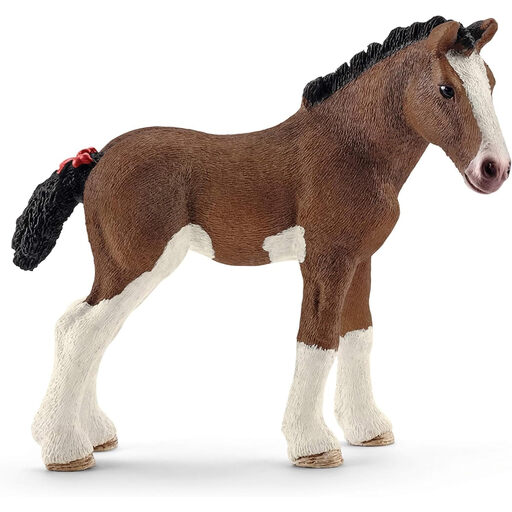
Why this product suits this profile: This single Farm World figure is suitable for children aged 3+ and can be combined with existing farm or horse figures. At around 3 × 9 × 8 cm, it takes up very little space.
The pack focuses on one clearly described figure rather than lots of loose accessories. The product information includes a warning about small parts and an age recommendation.
Hand-painted design, plastic construction and a place in the Schleich Farm World range. No batteries required.
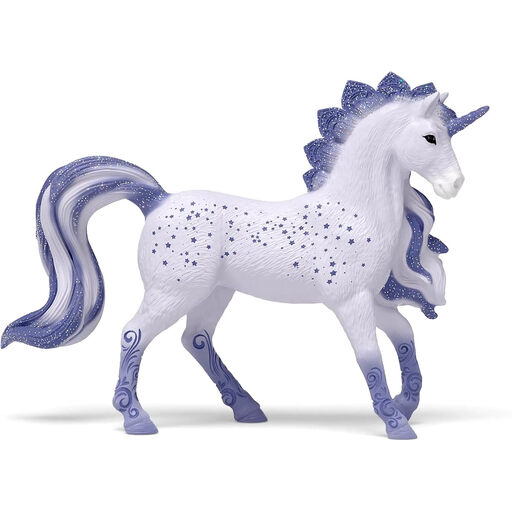
Why this product suits this profile: This unicorn adds to the Schleich Bayala world and, according to the product details, is suitable for children aged 3+. It’s a good fit for children who enjoy fantasy stories featuring unicorns, fairies and dragons.
The product description lists the material, dimensions of around 8,7 × 4 × 13 cm and confirms that no batteries are needed. This makes it easier to judge how much space it will take up and how it can be used before you buy.
An eye-catching design with a shiny mane and star tattoo. The figure can be combined with other Bayala figures to create a fantasy world for play.
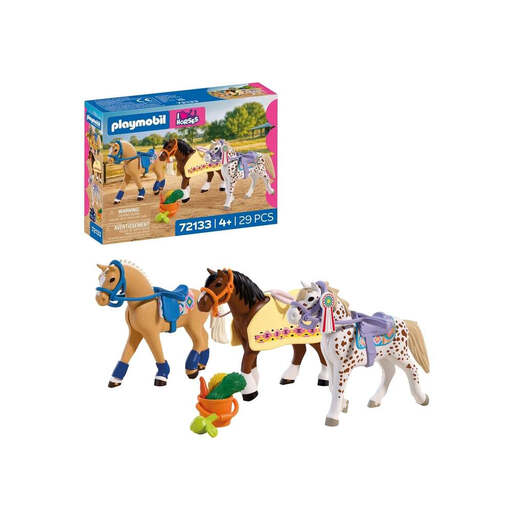
Why this product suits this profile: The set includes three horses, along with food, treats and grooming accessories. It’s aimed at children aged 4+ who enjoy creating stable scenes, caring for animals and building collections.
The contents list gives the number of horses, the accessories and the packaging dimensions. This makes it clear before you buy that you’ll need more storage space and somewhere to sort the pieces.
29 pieces, three horses and grooming accessories. According to the product description, the set can be combined with a larger PLAYMOBIL riding world.
We’ve put together a complete, regularly updated list of products that meet these strict selection criteria and the safety regulations in force in the EU.
Horse figures stay in good condition for longer when stored somewhere dry and away from strong, direct sunlight. A soft, slightly damp cloth is all you need to clean many plastic figures. For sets with lots of small parts, labelled boxes or separate compartments can help keep everything organised.
Before each play session, parents should check for damage to horns, wheels, fences or accessories. Damaged parts should no longer be used. The products mentioned don’t require batteries, so there are no ongoing battery costs.
It depends on the model. Some single figures are labelled as suitable from age 3, while larger PLAYMOBIL horse sets are usually recommended for children aged 4+. Always follow the information on the product packaging and product page.
You shouldn’t assume they’ll be technically compatible. Schleich and PLAYMOBIL use different figure systems and scales. Children can use both brands together for themed role play, but accessories and connectors won’t necessarily fit together.
Individual collectible horse figures are a good way to get started. Children interested in riding may prefer a dressage, show jumping or Western set. For fantasy fans, unicorn toys, fairies and magical stables are great inspiration for imaginative role play. The key things to consider are the child’s age, their existing collection, the space available and the number of small parts.