
Lieferung heute & morgen

Qualitätsgarantie

Willkommens-Angebote freischalten: KOSTENLOSE Lieferung | Bis zu 80 % RABATT | Kostenlose 30-Tage-JoyPlus-Testphase
App herunterladen
Choosing the right hose connector and adapter determines whether water pipes, garden hoses and household connections fit together reliably. Problems are often caused not by the hose itself, but by choosing the wrong thread, missing seals or a coupling that isn’t designed for the pressure involved.
Before buying, DIYers, gardeners and installers should watch out for three common pitfalls:
The most common sizes for the home and garden are 1/2 inch, 3/8 inch and 5/8 inch. You also need to distinguish between female and male threads. A 3/8-to-1/2-inch adapter, for example, is designed to join these two thread sizes, but it won’t replace a coupling for a different hose diameter.
Look for specifications such as:
For a tap adapter, also check whether your existing tap has a female or male thread. For washing machines, water pipes and fixed installations, metal thread adapters are often more suitable than basic plastic couplings. The specific material and permitted operating conditions are still important.
A leak-proof connection depends on several factors: the right thread, a correctly fitted seal and suitable tightening pressure. Models with an integrated water-stop function automatically shut off the water when disconnected. This can be useful when changing spray nozzles or extending a garden hose.
For thread adapters, check the supplied sealing rings and the stated pressure rating. According to the product specifications, the Ibergrif adapter is suitable for pressures of up to 16 bar. Do not exceed this rating. For garden watering, pressure washers or fixed pipework, check the connection regularly for cracks, deformation and leaks.
Plastic is lightweight and suitable for many portable watering jobs. A corrosion-resistant polymer connector, for example, is easy to carry in your toolbox or garden bag. Metal adapters with a chrome finish or made from stainless steel are better suited to applications where a screw-fit connection, temperature resistance or greater mechanical strength is important.
A pipe connector used around the home has different requirements from a flexible hose coupling. You should also consider UV exposure, frost, frequent connecting and disconnecting, and use with cleaning equipment.
The selection below groups different hose connectors and adapters by typical use. Before placing your order, always check the thread and size specifications of your existing connections.
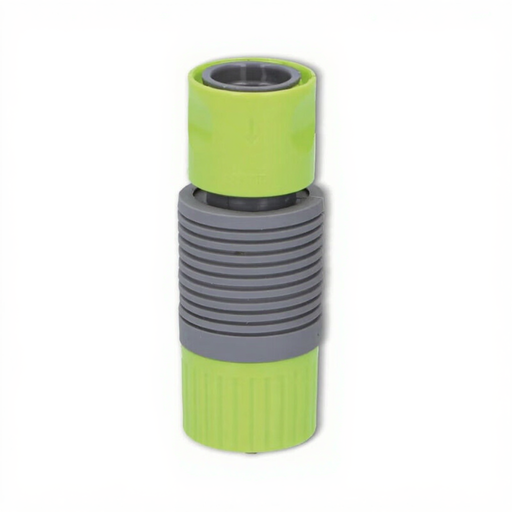
Why this product suits this use case: This compact connector is ideal if you want to connect garden hoses or watering accessories without tools and use them flexibly. According to the product description, it supports 1/2-inch female and 5/8-inch male connections.
The integrated water-stop function is designed to shut off the flow when you disconnect the hose. Before use, check that the specified connection sizes match your existing hose.
360-degree swivel joint, tool-free installation and a low stated weight of 80 g.
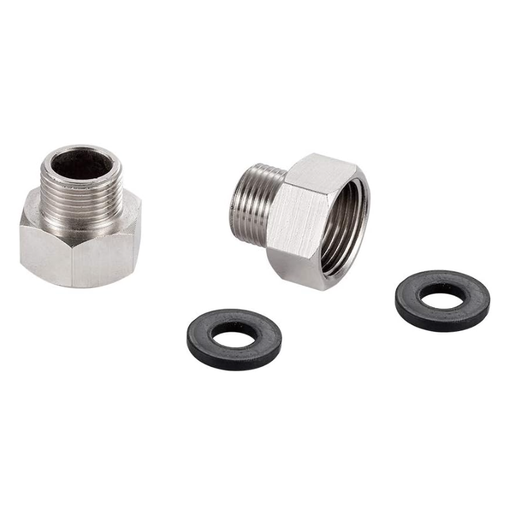
Why this product suits this use case: This two-piece metal set is designed for household installations, taps, washing machines and water pipes where you need to transition from G3/8 to G1/2 inch.
The product specifications list two sealing rings and a pressure rating of up to 16 bar. Before installation, check that the threads, seal and installation setup are all compatible.
Two metal adapters with a chrome finish, including two sealing rings for G3/8 and G1/2 connections.
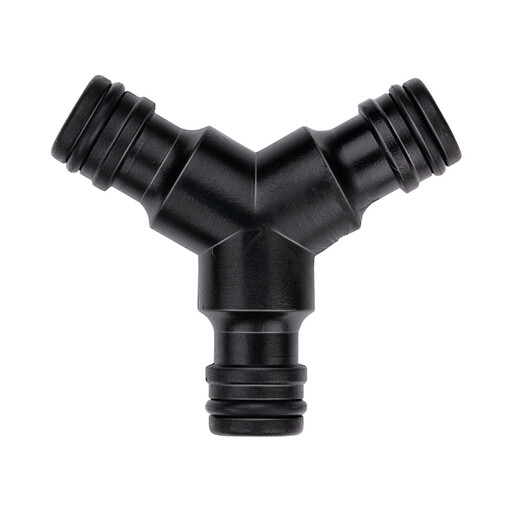
Why this product suits this use case: This three-way coupling is a good option if you want to split one connection into three compatible pipe or hose runs, for example as part of a watering system.
Use the coupling only with compatible connections. Regularly check for cracks and make sure the connection is fully engaged to reduce the risk of it coming loose unexpectedly.
ABS plastic with a stainless steel finish, compact dimensions of 7 × 6 × 2.1 cm and a stated weight of 10 g.
Before installation, turn off the water supply and remove any dirt from the connection. Then follow these steps in order:
After long-term storage, keep hose couplings dry, protected from frost and out of direct sunlight. A water-stop feature doesn’t replace regular checks. Replace the component if you see cracks, brittle material or persistent dripping.
We’ve put together a complete, regularly updated list of products that meet these strict selection criteria and fully comply with the safety regulations in force in the EU.
You’ll need an adapter with G3/8 and G1/2 threads. You also need to check which side has the female thread and which has the male thread. The size specification alone isn’t enough if you don’t know the thread direction of your existing connection.
A watertight connection needs the right thread, a suitable seal and correct tightening. Before turning on the water, check that the sealing ring is sitting flat. Use sealing tape only if it’s suitable for the specific type of thread.
Their lifespan depends on the material, UV exposure, frost, water pressure and how often they’re connected and disconnected. Replace plastic connectors if they show visible signs of damage. Metal adapters also need checking, particularly around the thread and seal.