
Lieferung heute & morgen

Qualitätsgarantie
App herunterladen
Kategorien
A hot air brush, also known as a blow-dry brush or airstyler, is a styling tool that combines the functions of a hairdryer and a round brush. The basic principle involves directing warm air through a brush head to simultaneously dry and shape the hair. This allows for efficient styling that can create volume, smoothness, or soft waves, reducing the need to use multiple tools.
Choosing the right model depends on objective technical parameters that should be tailored to your individual hair type and desired styling results.
The power of a hot air brush, measured in watts (W), determines the strength of the airflow and the heat-up speed. Models with a power output between 800 W and 1200 W generally offer an adequate balance for most hair types. Multiple temperature and fan settings are crucial for regulating heat exposure. A cool shot setting helps to set the style by cooling the hair down after shaping.
The material of the brush barrel directly impacts heat distribution and how it interacts with your hair.
The versatility of a hot air brush with attachments is determined by the number and type of accessories included. Common attachments include:
A lightweight design and an ergonomically shaped handle contribute to user comfort, especially during longer styling sessions. A swivel cord prevents the cable from tangling and allows for freedom of movement. A cord length of at least 1.8 metres is practical for most home use.
Based on an analysis of technical specifications and feature sets, here are some models we're highlighting.
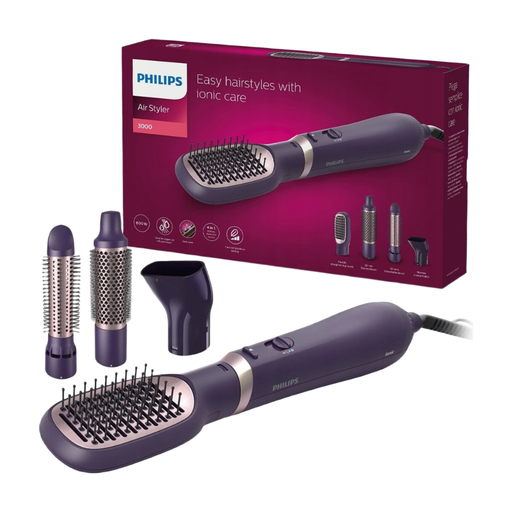
Why we recommend this product: This model stands out for its exceptional versatility. With four different attachments, it covers a wide spectrum of styling needs—from waves and defined curls to smooth styles. The argan oil-infused ceramic coating and ionic function are designed for gentle use.
Pros:
Best for: Users looking for a multifunctional, all-in-one tool for various hairstyles who value features focused on hair care.
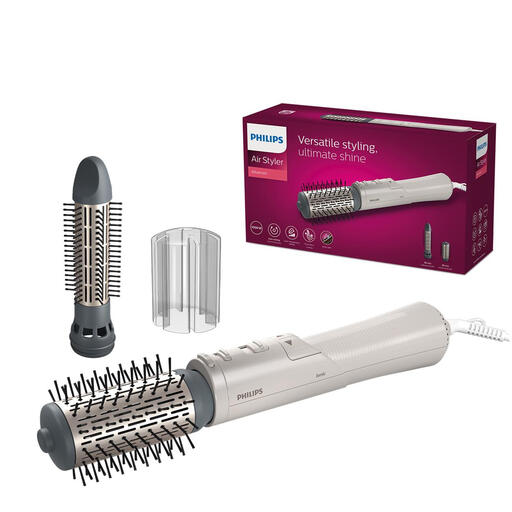
Why we recommend this product: The Philips Airstyler 7000 uses its rotating function to simplify the process of creating volume and waves. Its 1000 W of power ensures a strong airflow, while the tourmaline ceramic coating and natural bristles support gentle hair treatment.
Pros:
Best for: Users who prioritise easily creating volume and prefer the assistance of a rotating brush function.
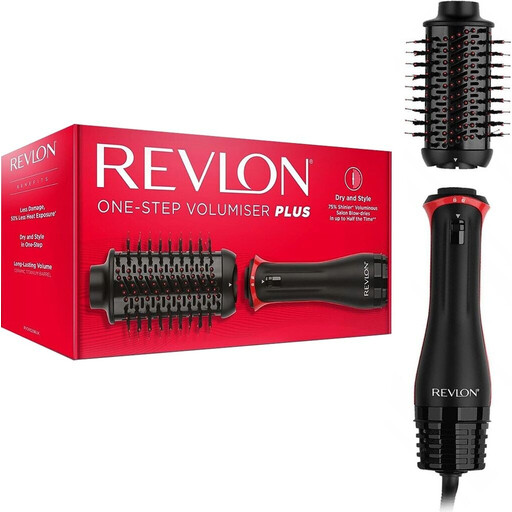
Why we recommend this product: This model specialises in quickly creating volume and a smooth finish in a single step. The oval brush head is designed to get close to the root to build volume, while the flat sides smooth the hair. Its ceramic-titanium coating ensures even heat distribution. According to the manufacturer, the device allows for styling with 50% less heat exposure (2).
Pros:
Best for: Individuals looking for a quick and straightforward solution for drying and styling hair simultaneously, with a focus on achieving maximum volume from the roots.
(2) Based on lab testing at an external laboratory.
While hot air brushes are an excellent solution for volume and a quick blow-dry finish, highly defined curls or specific textures may require different tools. For specialised curl styling, tools like a classic curling brush might also be worth considering.
1. Can you use a hot air brush on wet hair? Yes, most hot air brushes are designed for use on towel-dried hair. They dry and style the hair in one step. However, it is recommended to briefly pre-dry very wet hair with a towel or by air-drying to shorten styling time and minimise heat exposure.
2. What is the difference between a hot air brush and a curling iron? A hot air brush uses hot air to dry and shape the hair, similar to a hairdryer with an integrated brush. A curling iron, on the other hand, uses direct contact with a heated surface (usually ceramic or metal) to shape dry hair. Hot air brushes are primarily suited for creating volume and soft waves, while curling irons are designed for more defined, longer-lasting curls.
3. How do you clean a hot air brush properly? Ensure the device is unplugged and completely cool. Remove all hair from the bristles by hand or with a comb. The air intake vents should be regularly cleaned of dust and lint with a small, soft brush to ensure optimal airflow. If necessary, the brush heads can be wiped with a slightly damp cloth. Never immerse the device in water.