
Lieferung heute & morgen

Qualitätsgarantie

Willkommens-Angebote freischalten: KOSTENLOSE Lieferung | Bis zu 80 % RABATT | Kostenlose 30-Tage-JoyPlus-Testphase
App herunterladen
A hot air brush promises to revolutionise your daily hair routine: drying and styling in a single step for salon-quality volume and shine. But the market is flooded with models whose marketing claims often promise more than the technology can deliver. Many users quickly find that their device damages their hair, fails to create the desired volume, or is simply awkward to handle.
As your Joybuy Product Recommendation Officer, I'm here to help you identify the features that truly matter. This guide will show you the three most common pitfalls to avoid and which technical specifications are crucial for making an informed decision.
Analysis of user feedback and product specifications reveals recurring problems that often stem from overlooked details.
To avoid these pitfalls, you should check three core parameters before buying. These define the performance, safety, and effectiveness of a blow-dryer brush.
Power, measured in watts (W), is a direct indicator of drying speed. Models with 1000W or more generally provide an airflow powerful enough to efficiently dry and style even thicker hair.
Equally important are multiple heat and speed settings. They allow you to tailor the styling to your hair type and level of dampness:
The quality of the brush head is a major factor in the final result. A ceramic coating is the standard here for even heat distribution. It prevents hot spots that can cause localised damage to the hair.
Ionic technology is more than just a marketing buzzword. During styling, negatively charged ions are released onto the hair. These neutralise the positive static charge responsible for frizz and flyaways. The result is a smoother hair surface and a visible anti-frizz effect. A good anti-frizz brush should integrate this technology.
Consider which hairstyles you primarily want to create.
Here are some recommendations tailored to specific user needs that meet the criteria mentioned above.
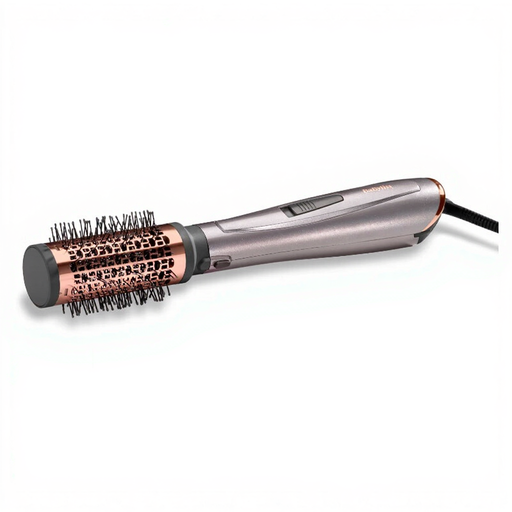
Why this model is a great fit: Ideal for anyone who wants to try out different looks without buying multiple tools. The four included attachments cover drying, volumising, curling, and straightening.
It bypasses the "attachment problem" with a set of four specialised attachments, including a 50mm volumising barrel and a paddle straightening brush.
Powerful 1000W performance for efficient drying and integrated ionic technology for frizz reduction.
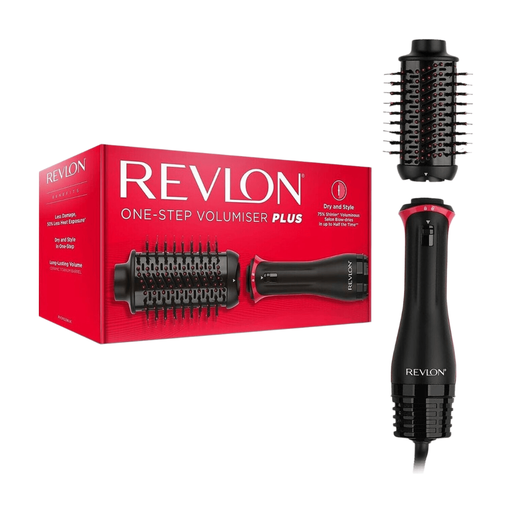
Why this model is a great fit: Specifically designed for users who want to achieve maximum volume right from the roots. The oval brush design is engineered to lift hair at the root and create fullness.
It addresses the "heat trap" with a ceramic-titanium coating that, according to the manufacturer, ensures even heat distribution to help reduce heat damage.
The patented oval brush design allows for styling close to the roots for visible volume. The detachable head makes it easy to store.
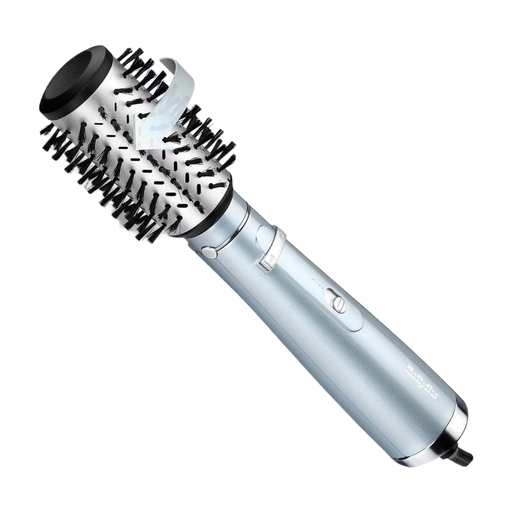
Why this model is a great fit: This rotating hot air brush is designed for users with frizz-prone or dry hair. Its technology aims to infuse the hair with moisture, leaving it smooth and sleek.
It actively counteracts the problem of dry, static-prone hair. According to the manufacturer, its dual ionic technology releases both positive and negative ions to improve the hair's moisture balance.
The 50mm rotating ceramic barrel creates volume and shape, while the advanced ionic technology ensures a smooth, shiny finish.
We have compiled a complete, up-to-date list of products that fully meet these strict selection criteria and safety standards.
For gentle use, first towel-dry your hair until it is just damp, not wet. Always apply a heat protectant. Select a temperature setting appropriate for your hair type (lower for fine hair, higher for thick hair) and keep the brush in constant motion. To finish, set each section with the cool shot function.
A hot air brush is a hybrid tool. It combines drying with styling and can therefore replace a hairdryer and round brush for a classic blowout. However, it is not designed to achieve the pin-straight result of a flat iron. Models with a straightening brush attachment provide a smoothed, yet still voluminous, finish.
A static hot air brush requires you to manually rotate the tool to wrap the hair and create volume. A rotating hot air brush has a motor that automatically spins the brush head. This can make styling easier and ensure a more even result, especially on the back of your head. It takes some practice to get used to, but many users find it more convenient.