Cooking together with two pans
If you want to heat another dish at the same time as your lentil and sausage stew, look for two usable, independently controlled zones and enough room for both pans.


If you’re cooking a stew in one pan, one suitable hot plate is usually enough. If you need to heat a second pan at the same time, consider a model with two independently controlled cooking zones. First, check that your pan’s base is compatible with the heating technology and that its diameter suits the cooking zone. Then compare the appliance’s footprint, connection requirements and timer function. A timer can limit a cooking stage, but it’s no substitute for keeping an eye on your food or planning how to keep it hot safely.
If you want to heat another dish at the same time as your lentil and sausage stew, look for two usable, independently controlled zones and enough room for both pans.
If you’re doing the cooking in stages, a single hot plate may be all you need. The size of your pan, easy-to-use controls and a timer that actually switches the appliance off may matter more than having a second zone.
If you want to keep using your existing pans, first check whether the base is suitable for induction and matches the stated size of the cooking zone.
First, work out whether you really need to have two pans on the hob at the same time. Then consider your pan bases and dimensions, along with how you plan to cook, to help you choose the heating technology, number of zones and timer you need.
| What you need | What to check before buying | Who it matters to |
|---|---|---|
| Heating two pans at once | Check the number of zones, whether they can be controlled separately and the diameter of both pan bases. | If we’re heating a stew and preparing another dish at the same time, we need two usable zones; around 36% of consumers rank cooking in parallel as their top buying priority. |
| Planning a one-pan cooking routine | Check whether the timer switches the appliance off or just sounds a signal, and what time range it covers. | If I’m simmering a stew in one pan according to a shared cooking schedule, I want to be able to set a suitable cooking time; around 29% of consumers prioritise this kind of planned, one-pan cooking routine. |
| Continuing to use a pan you already own | Check that the base is suitable for induction and compare its diameter with the appliance specifications. | If my pan isn’t induction-compatible and I want to keep using it, the heating technology needs to suit it; around 21% of consumers prioritise this. |
| Using a simple, single cooking zone | Check that the appliance and hot plate diameters suit the available space and your pan base. | If one cooking zone is enough for the way I cook and I have limited worktop space, a suitable single hot plate is important; around 14% of consumers prioritise compact, simple equipment. |
According to the manufacturer, the ROMMELSBACHER CT 3403/TC uses HiLight radiant heating beneath a glass-ceramic surface. The CT 2010/IN, by contrast, uses induction and requires a ferromagnetic pan base.
Check the heating technology and your pan’s compatibility separately before choosing an appliance.
If your pan isn’t suitable, you may need different cookware or end up choosing a hot plate that doesn’t meet your needs.
Double hot plates vary in the size of their zones, the space they take up and their total power output. ROMMELSBACHER advises against connecting its high-powered double hot plates through a multiway extension lead.
Measure both pan bases and the space available, and follow the connection instructions for the specific model.
A switch-off timer doesn’t guarantee that the stew stays at a suitable temperature throughout. The German Federal Institute for Risk Assessment recommends keeping heated food at a minimum of 60 °C throughout.
Plan timed cooking and keeping food hot separately. Don’t rely on the selected heat setting alone.
Worth considering when comparing induction, HiLight and cast-iron hot plates, as well as single and double zones.
Worth considering for traditional double hot plates with separate controls and simple single cast-iron hot plates.
Worth considering for single-zone induction hot plates with a range of power settings and a timer.
Worth considering for traditional double hot plates with rotary controls and separate thermostats.
This selection features hot plates and hobs with two zones, for cooking plans that involve heating a stew and another pan at the same time.
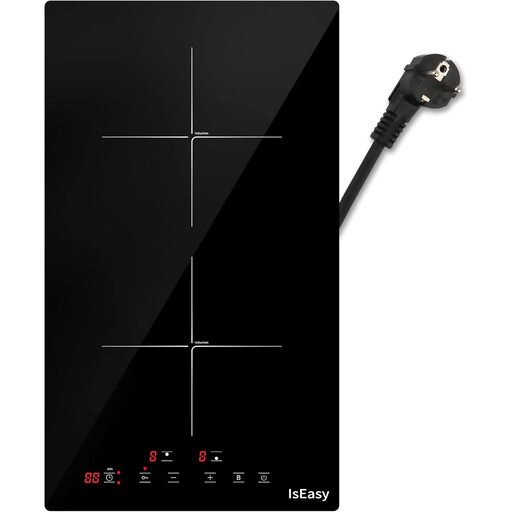 No image available
Two cooking zones are designed for cooking with two pans heating at the same time.
The product title lists 3400 W, 29.5 cm, nine heat settings, a timer, child lock, booster function and 220-240 V. The appliance is described as a built-in and plug-in model.
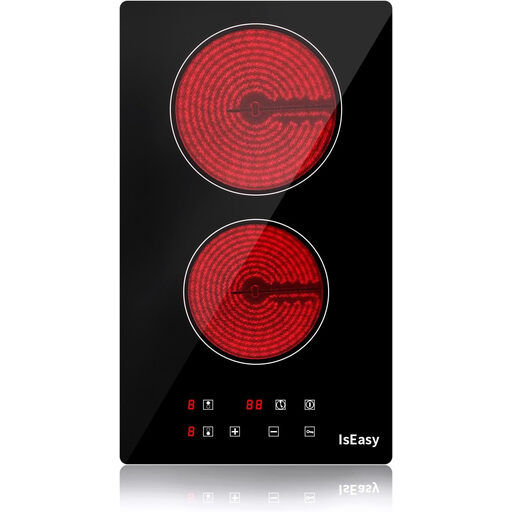 No image available
The two heating zones suit a cooking routine that involves heating two pans at the same time.
The product title lists 3000 W, 29.5 cm, nine heat settings, a timer from 1–99 minutes, touch controls, automatic switch-off and a child lock.
 No image available
Two cooking zones let you heat two pans at the same time.
The product title lists five temperature settings.
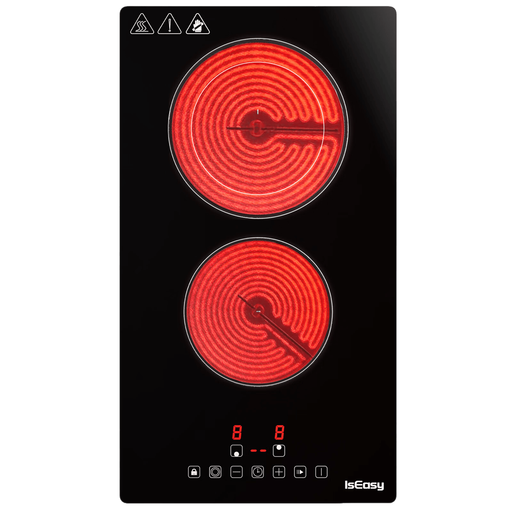 No image available
The two cooking zones are designed for cooking with two pans heating at the same time.
The product title lists 3200 W, nine power settings, a pause function, child lock and overheat protection.
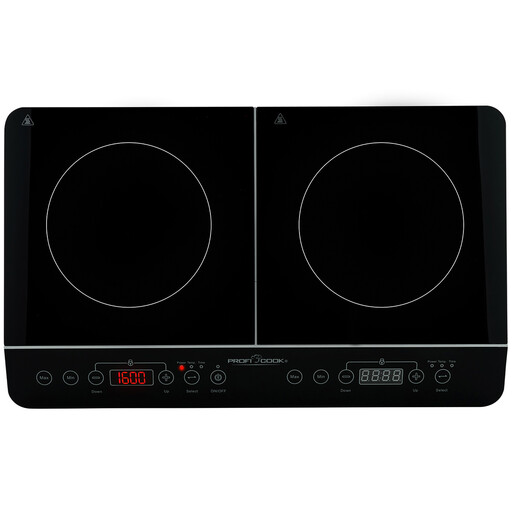 No image available
Two induction zones are designed for cooking with two pans heating at the same time.
The product title lists ten settings, a timer and a temperature of up to 240 °C.
No. A timer alone can’t ensure that you stick to your cooking schedule. Check whether the appliance switches off when the time is up or just sounds a signal. For food being kept hot, the German Federal Institute for Risk Assessment recommends a minimum temperature of 60 °C throughout. The selected heat setting doesn’t tell you the temperature of the stew itself. This is advice on keeping food hot, not a general legal requirement for meals prepared at home.
Follow the connection and safety instructions for the specific model. ROMMELSBACHER advises against connecting its high-powered double hot plates through a multiway extension lead and points out the permitted total load; this advice applies to the manufacturer’s relevant appliances.
Before cleaning, read the instructions for your specific appliance and follow the advice about hot surfaces. The German Consumer Advice Centre recommends using a lid while cooking to reduce energy consumption. A glass-ceramic surface mentioned for a particular model doesn’t, by itself, tell you whether the appliance uses induction or HiLight technology.
No. If a product is faulty, your statutory rights are against the seller. A warranty is an additional, voluntary promise with its own terms. Check the service and warranty details for the specific model separately. The changes to right-to-repair rules explained by the German Consumer Advice Centre, which took effect on 31 July 2026, don’t apply to portable hot plates across the board; the product groups specifically mentioned there cover other types of product.
For electrical products covered by relevant harmonised EU rules, CE marking is important. It’s the manufacturer’s declaration of conformity, not an independent test mark. The German Federal Network Agency lists product identification, manufacturer details and German-language instructions among the things to check. A hot plate that has reached the end of its life should go to a separate collection point for waste electrical equipment; the German Environment Agency lists local authority collection points as one option.