
Lieferung heute & morgen

Qualitätsgarantie

Willkommens-Angebote freischalten: KOSTENLOSE Lieferung | Bis zu 80 % RABATT | Kostenlose 30-Tage-JoyPlus-Testphase
App herunterladen
A single, portable hot plate is a practical solution for many situations: for a first apartment, a dorm room, as a kitchen supplement, for the office, or as a flexible hot plate for camping trips with a power hookup. But the market is overwhelming, and not every device delivers on its promises. Before you make a decision, it's crucial to understand the most common pitfalls that can lead to frustration and unnecessary expenses.
Many buyers focus on superficial features and overlook critical technical details. These three mistakes are particularly costly:
single induction cooktop only to find out at home that none of your pots and pans work. Induction technology requires ferromagnetic cookware. This hidden requirement can unexpectedly increase the cost of your purchase if your entire set of pots needs to be replaced.To avoid a bad purchase, you should focus on three core aspects. These determine the performance, safety, and user-friendliness of your future portable cooktop.
The method of heat generation is the most important factor. Each technology has specific advantages and disadvantages.
single ceramic cooktop is a good all-rounder.
mini hot plate with a solid cast iron heating element.
A power rating between 1500 and 2000 watts is a good benchmark for most applications, from boiling water to searing. However, more important than the maximum wattage is the ability to control the power precisely. Look for models with several clearly defined power or temperature levels. This allows for both gentle simmering at low heat and sharp searing at high temperatures.
Modern devices should have a solid set of protective mechanisms. The following are essential:
Instead of making a one-size-fits-all recommendation, we have identified models that meet specific needs and avoid the pitfalls mentioned.
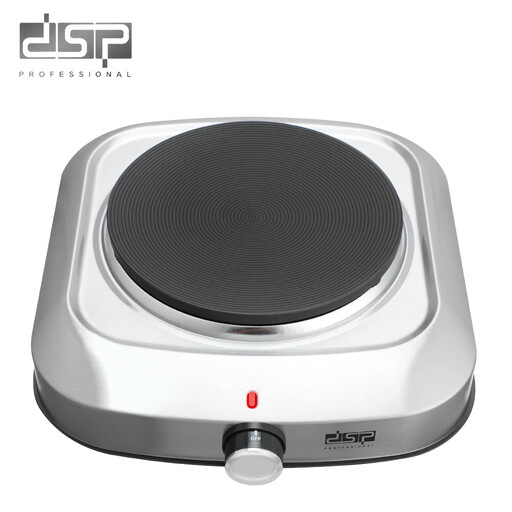
Why it's a match: Ideal for students or as an emergency hot plate. It focuses on the core function—heating—with proven, robust technology and no complex electronics. Perfect for simple meals and tight budgets.
The cast iron technology is universally compatible, completely bypassing the "Incompatibility Trap." You know exactly what you're getting: a simple, functional heating plate.
1500W of power for basic cooking tasks. The temperature is adjustable via a rotary knob, which makes operation very straightforward.
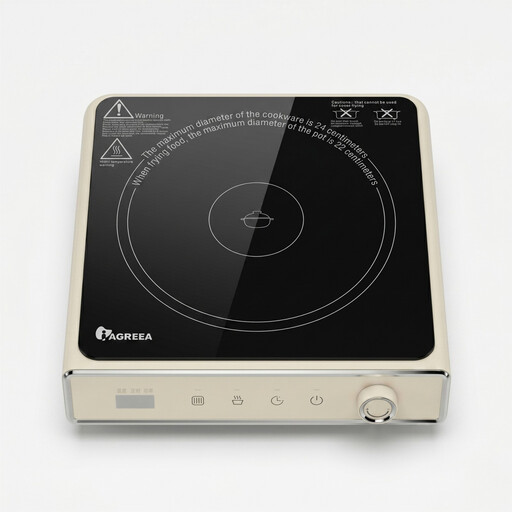
Why it's a match: For anyone who wants a powerful and modern cooking solution without having to give up their existing cookware. Ideal for mixed households or as a flexible addition to the main kitchen.
As a ceramic cooktop, it elegantly solves the "Incompatibility Trap" by working with pots made of stainless steel, cast iron, glass, or ceramic. It also offers key safety features like a residual heat indicator and auto shut-off.
2000W of power with 8 power and 8 temperature levels for precise cooking. The smooth crystal glass surface is easy to clean after cooling down.
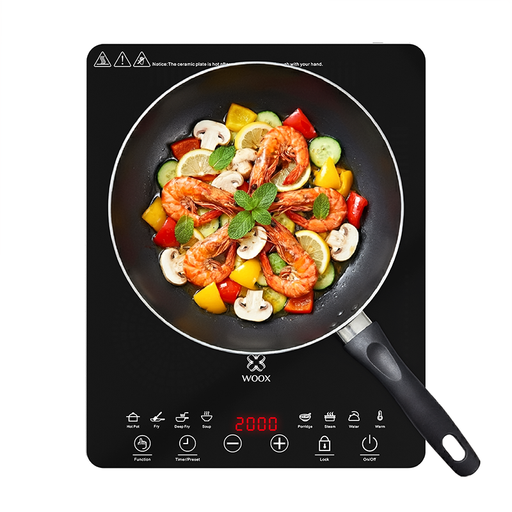
Why it's a match: For users who value speed, energy efficiency, and modern safety features. Ideal for use in an RV, modern kitchens, or offices where fast and controlled cooking is required.
It bypasses the "Power Trap" by combining 2000W with an efficient induction coil. The Auto Pot Detection also proactively alerts you to the compatibility requirement and prevents energy waste.
Comprehensive safety package with child lock, timer, and automatic shut-off. The 4 preset cooking programs simplify common tasks.
We have compiled a complete, up-to-date list of products that fully meet these strict selection criteria and safety regulations.
Power consumption depends directly on the wattage and duration of use. A hot plate with 2000 watts (2 kW) running for one hour at the highest setting will consume 2 kilowatt-hours (kWh) of electricity. Assuming an electricity price of 30 cents per kWh, this would cost 60 cents per hour. Induction cooktops have an advantage here, as they transfer energy to the pot more efficiently and therefore often consume less power for the same cooking performance compared to ceramic or cast iron plates.
Yes, a single induction cooktop is an excellent hot plate for camping, provided you have access to a stable 230V power supply. It is ideal for campsites with power hookups or in RVs with a powerful inverter, as it is fast, safe, and unaffected by wind. However, for off-grid camping without an external power source, gas or fuel-powered stoves are the necessary alternative.
The lifespan of a portable hot plate varies depending on the technology and build quality. Models with solid cast iron plates are mechanically very robust and can last for many years, but they are technologically outdated. For ceramic and induction cooktops, durability heavily depends on the quality of the electronics and the care of the glass surface. With proper use—avoiding scratches, impacts, and cleaning after it has cooled down—a high-quality device can easily function reliably for five years or more. Look for a sturdy housing and a scratch-resistant surface.