What matters when buying a hot plate for polenta?
The Alnatura recipe says to leave the polenta to cook over a low heat for ten minutes after bringing it to the boil, stirring occasionally. So don’t choose based on maximum power alone: consider whether your pan is compatible, how easy the controls are to use and whether you’ll need space for a vegetable side dish.
Single induction hot plate
A good fit if: you’re using an induction-compatible pan on one cooking zone.
Consider: An unsuitable pan base won’t work, and there’s no second zone for cooking vegetables alongside the polenta.
Single hot plate with radiant ceramic glass
A good fit if: you want to keep a pan that isn’t induction-compatible and prefer a smooth cooking surface.
Consider: The cooking surface gets hot and stays warm after use. Heating rings and features vary by model.
Single cast-iron hot plate
A good fit if: keeping your existing non-induction pan and having continuously variable controls are important to you.
Consider: Rommelsbacher says cast iron heats up more slowly and retains heat for longer than induction. Allow for this when turning down the heat, and make sure you have a safe place for the plate to cool.
Double hot plate
A good fit if: you regularly cook polenta and market vegetables at the same time in two pans.
Consider: Two zones need more space. With a double induction hot plate, both pans must be compatible.
| What matters |
What to check before buying |
Who should consider this? |
| Heat while the polenta cooks |
Check the low settings and controls on the specific model; keep an eye on the polenta and stir as it cooks. |
If I want to turn the heat down easily after bringing it to the boil, low settings and simple adjustment are important. Around 36% of consumers prioritise heat control while the polenta cooks. |
| Keeping your existing pan |
Check the base material and diameter against the model’s heating method and cooking zone specifications. |
If you want to keep your existing pan, first check that its base is compatible with the cooking zone. Around 29% of consumers prioritise pan compatibility. |
| Cooking polenta and vegetables at the same time |
Check the number of cooking zones, the appliance’s overall dimensions and its connection specifications. |
If I want to cook vegetables while the polenta is on, I need two usable cooking zones. Around 21% of consumers prioritise cooking two dishes at once. |
| Counter space and storage |
Compare the appliance’s width and depth with the space available for setting it up and stirring. |
If you have limited worktop space, check the overall dimensions and whether you really need a second zone. Around 14% of consumers prioritise a small footprint. |
Joybuy products for cooking in one pan
The following Joybuy products are single hot plates for cooking in one pan. For induction models, check that your pan base is compatible and compare the available settings with what you need to cook the polenta.
 No image available
Severin KP 1092 hot plate
A single cooking zone with continuously variable temperature control is an option if you want to adjust the heat as you cook.
The product title specifies 1.500 W, an 18 cm diameter heating ring and a stainless-steel finish. The cooking surface gets very hot during use; let it cool completely before cleaning.
View at Joybuy
 No image available
IsEasy single induction hob, 2.100 W, 28 cm
This portable single induction hot plate is worth considering if your pan has a suitable magnetic base and you want to use one cooking zone.
Features include nine heat settings, an eight-hour timer and touch controls. The product description specifies compatible pans with a diameter of 12–26 cm; the number of settings alone doesn’t guarantee a particular cooking result.
View at Joybuy
 No image available
Portable single induction hot plate, 1.000 W
A single induction cooking zone could be a good fit if you’re making polenta in one pan and prefer a rotary control for selecting the heat setting.
The product description specifies five heat settings and overall dimensions of 21,5 × 21,5 cm. A suitable magnetic pan base is required.
View at Joybuy
 No image available
Portable induction hot plate, 3.500 W, 10 temperature settings
This single hot plate is an option if you’re looking for an induction cooking zone with several selectable settings and use a suitable magnetic pan.
The description specifies ten temperature and power settings, a timer and a reservation function. The connection is listed as 220–240 V; the number of settings doesn’t guarantee a particular cooking temperature.
View at Joybuy
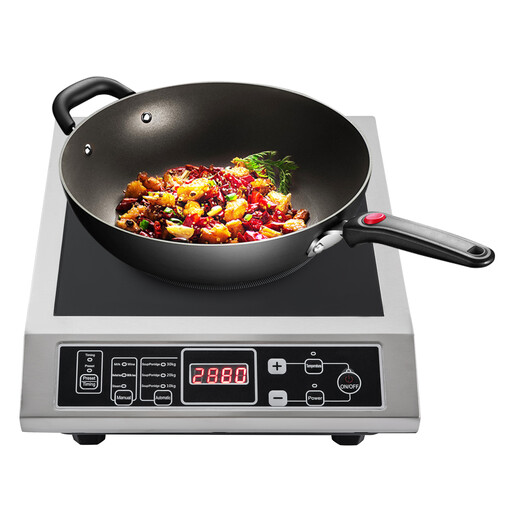 No image available
Portable induction hot plate, 3.500 W, 8 temperature settings
This single hot plate could suit cooking polenta in one pan if you’re looking for a portable induction cooking zone with several selectable settings.
The description specifies eight temperature and power settings, as well as a timer. Suitable magnetic cookware is required; the settings alone don’t guarantee a particular result while the polenta cooks.
View at Joybuy
Frequently asked questions about hot plates for polenta
How can I tell whether my polenta pan will work on an induction hot plate?
The pan base must be suitable for induction, which means it needs to be ferromagnetic. Also compare its diameter with the specifications for the exact model: Rommelsbacher, for example, gives a cooking zone range of 120–230 mm for the CT 2010/IN, but this isn’t a universal limit.
Can polenta cook on a low setting without further stirring once it has boiled?
The Alnatura recipe referenced here calls for a low heat and occasional stirring. Keep an eye on the polenta in your own pan; a heat setting or timer doesn’t guarantee that it won’t stick.
How should I handle residual heat and cleaning?
Let the hot plate cool according to the instructions for the specific model before cleaning or storing it. Rommelsbacher says cast iron retains heat for longer than induction; even an induction cooking zone can remain dangerously hot after use because of the hot pan.
Is a keep-warm setting enough if I’m eating the polenta later?
No. The setting alone doesn’t confirm the temperature of the food. The German Federal Institute for Risk Assessment advises keeping heated food at a temperature of at least 60 °C throughout until it is eaten. This is food safety advice, not a guaranteed feature of a hot plate.
What should I know about using an induction hot plate with a pacemaker?
The Verbraucherzentrale considers induction cooking zones unsuitable for people with pacemakers. If this applies to you, discuss using one with an appropriate medical professional and follow the advice for your implant. Radiant or cast-iron hot plates use a different heating method and should be assessed separately.


