
Lieferung heute & morgen

Qualitätsgarantie

Willkommens-Angebote freischalten: KOSTENLOSE Lieferung | Bis zu 80 % RABATT | Kostenlose 30-Tage-JoyPlus-Testphase
App herunterladen
A shared evening with an Asian hot pot is a true culinary experience. But that joy can quickly fade if your newly purchased hot pot doesn't live up to its promises. Many buyers invest in models that prove to be impractical or low-quality after just a short time. Before you buy a hot pot, you should know the typical pitfalls to make an informed decision.
This guide, created by the Joybuy Product Recommendation Officer, highlights the critical features of a good hot pot and helps you make the right choice for your needs.
Marketing claims can often mask functional weaknesses. Pay close attention to these three points to avoid disappointment:
To avoid the problems mentioned above, you should check three technical features before buying. These define the durability and functionality of your cookware.
The material is the foundation of any good pot. For a hot pot or induction soup pot, 304 stainless steel (also known as 18/8 stainless steel) is an established standard. This material is food-safe, corrosion-resistant, and robust.
Even more important is the base. A high-quality pot for induction hobs has an encapsulated sandwich bottom. This consists of several layers: two outer layers of stainless steel enclose a core of aluminium or copper. This construction ensures fast and, above all, even heat distribution across the entire base of the pot and significantly improves efficiency on an induction hob.
If you opt for a fondue pot with 2 compartments, the craftsmanship of the divider is crucial. Look for models where the S-shaped divider is firmly welded to the pot's base and walls. A seamless integration without visible gaps or crevices is a clear sign of quality and minimises the risk of leaks. This ensures that your different broths remain reliably separated.
The right size depends on the number of people you typically host:
A matching stainless steel pot with a glass lid is also advantageous. The lid helps bring the broth to a boil faster and keeps the temperature constant, while the glass allows for continuous visual monitoring without heat loss.
Here are some recommendations tailored to different needs and usage scenarios.
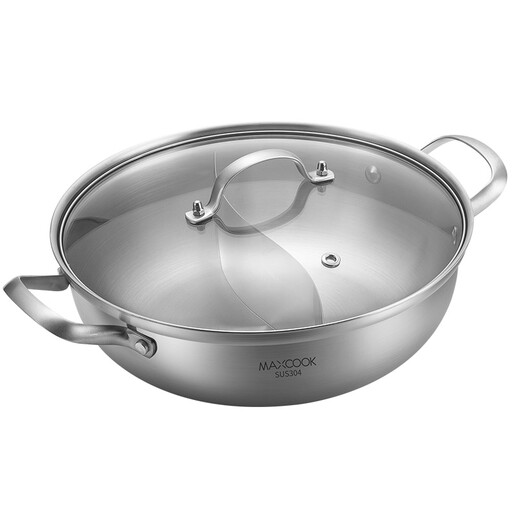
Why This Fits Their Persona: Ideal for hosts who want to cater to different tastes. With a 30 cm diameter and 4.6-litre capacity, this pot is large enough for families or groups of friends. The two compartments allow for the preparation of two different broths simultaneously.
The divider is securely integrated, which minimises the risk of leaks. The multi-layered 304 stainless steel base ensures even heat distribution on induction hobs.
Made from food-grade 304 stainless steel; compatible with all hob types, including induction; dishwasher-safe according to the manufacturer.
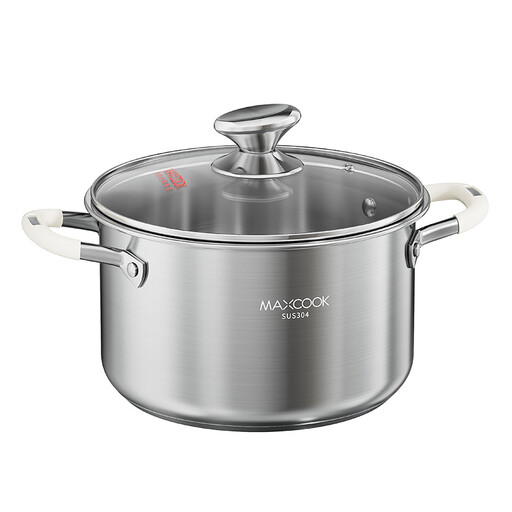
Why This Fits Their Persona: Perfect for anyone looking for a high-quality pot not just for hot pot, but also for soups, stews, or boiling pasta. This Asian-style cooking pot is a robust all-rounder for the daily kitchen.
This pot avoids the "single-purpose product" trap. Its flat composite base ensures stable and efficient performance on all hob types, including induction, avoiding the typical problems of unsuitable bases.
Made from food-grade 304 stainless steel; silicone handles offer heat resistance; universal hob compatibility.
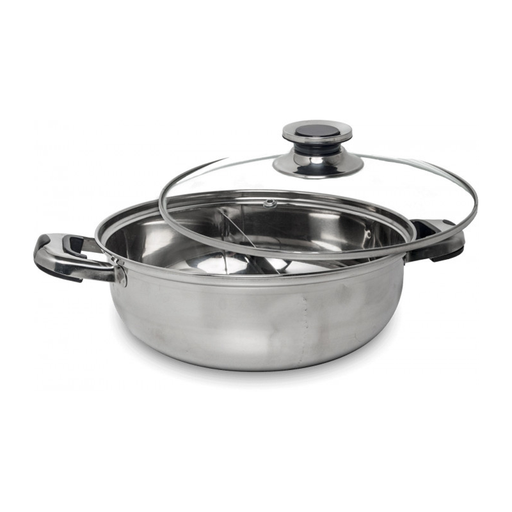
Why This Fits Their Persona: A functional and straightforward solution for couples or small families who want to try the hot pot experience at home. With a 28 cm diameter, it offers a good starting size without taking up too much space.
This model offers the core functionality of a divided pot at an accessible price. It avoids over-investing in a professional-grade appliance before you know how often you'll actually use it.
Two compartments for different broths or fondues; includes a lid for heat retention; lightweight design for easy handling.
We have compiled a complete, real-time updated list of products that fully meet these strict selection criteria and safety standards.
Cleaning a Yin-Yang pot requires special attention to the divider. After use, rinse the pot with warm water to remove coarse residues. Use a soft brush or sponge and mild washing-up liquid to clean the inside surfaces and especially the welded seam of the divider. Avoid steel wool or abrasive scouring agents, as these can scratch the stainless steel surface. For stubborn deposits, soaking in warm water with a little vinegar or baking soda can help.
Not necessarily. Mere compatibility does not always mean high efficiency. For optimal performance on an induction hob, the pot's base must not only be magnetic (ferromagnetic) but also completely flat and sufficiently thick. A thin or slightly warped base has limited contact with the hob, leading to slow, uneven heating and higher energy consumption. A solid sandwich bottom has a clear advantage here.
For a group of four, a hot pot with a diameter of about 30 cm and a capacity of 4 to 5 litres is a good choice. This size provides enough space for everyone to comfortably dip their ingredients into the broth without the pot feeling overcrowded. A smaller pot would cause the broth to cool down quickly when many cold ingredients are added at once.