People who make individual portions every day
You often make a bowl and want to choose the right amount and temperature for your mix, rather than filling a kettle every time.


A hot water dispenser can be handy if you regularly make individual portions, provided its portion settings and actual dispensing temperature suit the porridge instructions. If you’re short on worktop space or only use one occasionally, a kettle filled with just the water you need may be enough. Before buying, also compare the appliance’s dimensions, access to the tank and cleaning requirements.
You often make a bowl and want to choose the right amount and temperature for your mix, rather than filling a kettle every time.
You need to weigh up the space it takes up, access to the tank and room for a bowl under the spout against the convenience of a countertop appliance.
You want to check whether your existing kettle will do the job if you heat only the amount of water you need.
A good fit if: you regularly make individual bowls and the adjustable volume and appliance settings suit the instructions on the packet.
Consider: the tank, cleaning and permanent worktop space all matter in a small kitchen.
A good fit if: you only make porridge occasionally, already own a kettle or don’t have a permanent spot for another appliance.
Consider: it won’t dispense your chosen portion automatically; if you use it repeatedly, presetting the volume may be more convenient.
The key factors are the instructions on the packet, the space available and how often you make individual portions.
| What matters | What to look for | Who will find this especially important? |
|---|---|---|
| Suitable temperature and volume | Check the packet instructions, preset volume options and temperature settings on the specific appliance. For example, RUF Porridge Classic calls for 150 ml of boiling water; Kölln says to use hot or cold water for the portion sachets mentioned. | If the packet specifies a particular amount and temperature, I want to be able to set both accordingly. Around 36% of consumers prioritise getting the right portion of porridge. |
| Space and ease of use | Compare the width, depth and height with the space available; also allow room to access the tank and fit a bowl underneath. | With limited worktop space, I need to fit the appliance, bowl and tank access into the available area. That’s why around 29% of consumers put the space it takes up first. |
| Cleaning and maintenance | Check whether the tank and drip tray can be removed, how descaling works and whether you’ll need a replacement filter. | I want easy access to the tank and drip tray, and to know what maintenance is involved. Around 21% of consumers focus primarily on cleaning and maintenance. |
| Worthwhile for occasional use | Think about how often you make a single portion and whether your existing kettle will do the job. | If I only make porridge now and then and already have a kettle, I want to weigh up whether another appliance is worthwhile. Around 14% of consumers focus on occasional use. |
An appliance setting doesn’t tell you the actual temperature of the water as it’s dispensed or after it’s poured into your bowl.
Check the packet instructions against the information for the exact model. Don’t judge whether it’s suitable based on the programme name alone.
The tank, bowl and space under the spout also need room, and must remain accessible.
Check the width, depth and height of the appliance against the planned location, and allow room to move when filling and removing the tank.
You can’t make a general comparison between a hot water dispenser and a kettle that’s filled with only the amount of water you need.
Make your decision based on how often you’ll use it and how much water you need. The Verbraucherzentrale also recommends heating only as much water as you actually need.
The selectable temperatures and water volumes, as well as the different dimensions, make the HW 660 and HW 550 worth considering for small kitchens.
According to the manufacturer, the HWS 2500 is designed for people who want to adjust portion sizes and remove the tank for cleaning.
According to the German product page, the ADD5910M/10 combines several temperature and volume settings with a filter.
According to the manufacturer, the PC-HWS 1145 has preset volume settings and a 4-l tank.
This selection includes countertop hot water dispensers for dispensing individual portions, plus a kettle as an alternative if you don’t want another appliance on your worktop. For mains-powered appliances, check the safety information and CE marking for the specific product listing.
 No image available
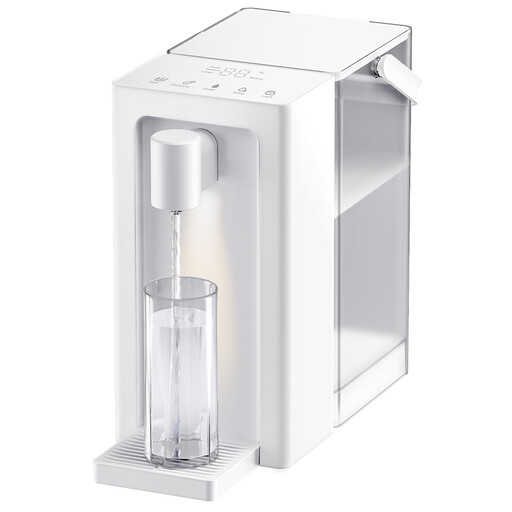
For individual portions if you want to choose a temperature setting and dispense water manually.
The removable tank holds 3 l. Features listed include a temperature range of 25–100 °C, touch controls and a memory function.
 No image available
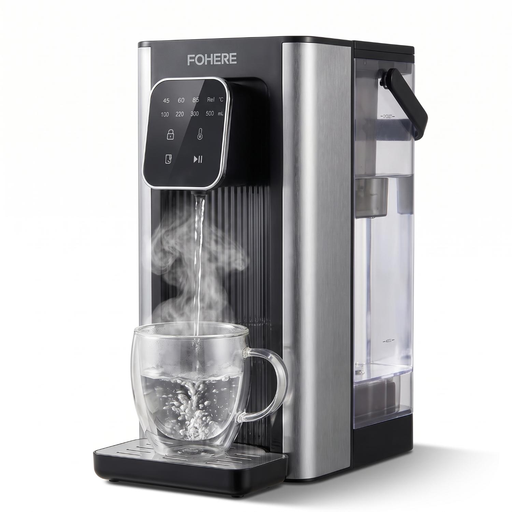
An option if you’re looking for a countertop dispenser with several temperature settings and a child lock.
Features listed include four temperature settings, including 100 °C, a 2.5-l tank and a child lock.
 No image available
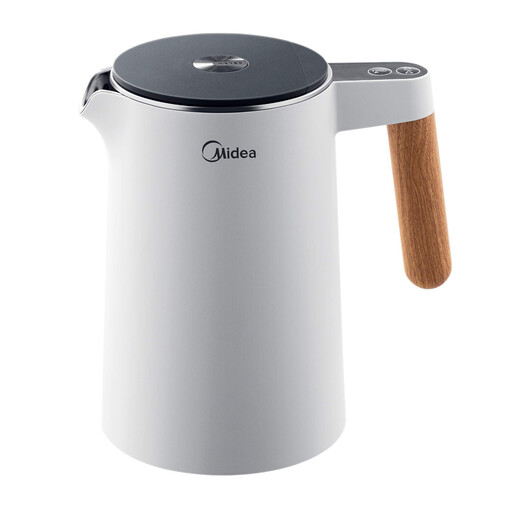
An alternative if you already use a kettle or don’t want another appliance permanently taking up worktop space.
Features listed include seven temperature settings from 45 to 100 °C and a keep-warm function.
 No image available
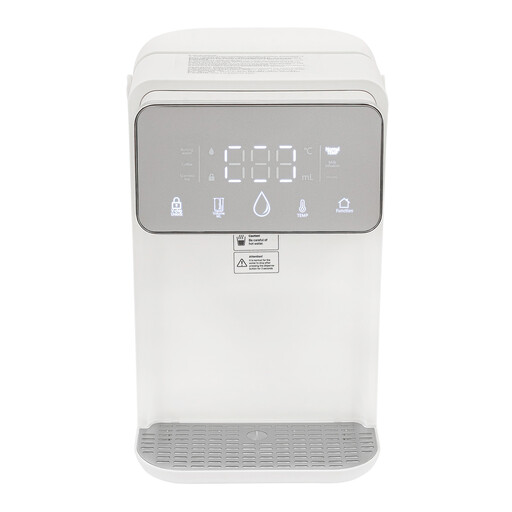
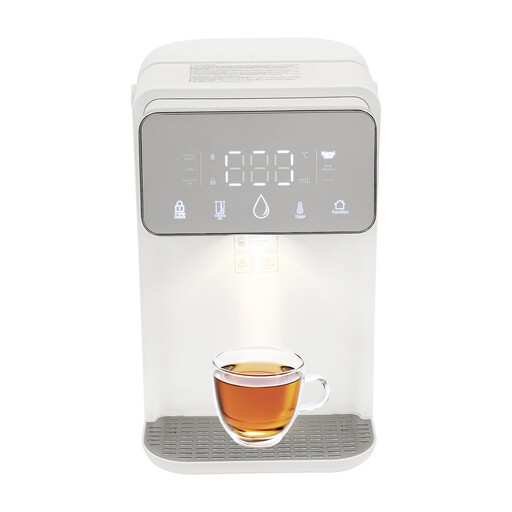
For dispensing individual portions if you’re looking for a countertop appliance with adjustable temperature and volume settings.
A digital display and removable tank are listed. The smallest stated dispensing volume is 5.28 fl oz, which is more than the 150 ml RUF specifies for Porridge Classic.
 No image available
For individual portions if an adjustable dispensing volume starting at 150 ml suits the instructions on your packet.
Features listed include a temperature range of 25 to 99 °C and volumes from 150 to 500 ml. This doesn’t confirm it’s suitable for mixes whose instructions call for boiling water.
No, it depends on the specific mix. RUF says to add 150 ml of boiling water to Porridge Classic; Kölln says to use hot or cold water for the High Protein portion sachets mentioned. Always follow the instructions on your packet.
Compare the dimensions of the specific model with the space available, and allow extra room to remove the tank and fit your bowl underneath. CASO Design lists the HW 660 as measuring 155 × 315 × 255 mm (W × H × D).
Follow the instructions for your specific appliance. For the PC-HWS 1145, ProfiCook lists a noticeably longer preparation time or inconsistent dispensing volumes as possible signs that it needs descaling. Maintenance needs also depend on water hardness.
If a product is faulty, your statutory rights are against the seller and are separate from any voluntary guarantee. Online purchases in Germany generally come with a right to cancel, usually within 14 days of receiving the goods. The Verbraucherzentrale and the specific purchase terms can help clarify possible exceptions.
Mains-powered appliances covered by the EU Low Voltage Directive must meet the relevant safety requirements, including the required CE marking. Check the information for the specific appliance and its safety instructions; CE marking is not an independent quality mark.