Families making several cups in a row
If several people want coffee at breakfast, you’ll need serving sizes that suit your cups and a tank with enough capacity. Haus & Garten Test notes that serving sizes and temperatures vary between models.


For making several cups of instant coffee one after another, a hot water dispenser that heats water as you need it can be a good choice, provided its serving sizes suit your cups and its tank holds enough for breakfast. A model with a pre-heated supply may be better if you want several servings ready at once and can plan ahead for heating. For the occasional cup, a kettle filled with the amount you need is another option. Also compare temperature settings, where the appliance will sit, and the effort involved in filter care and descaling.
If several people want coffee at breakfast, you’ll need serving sizes that suit your cups and a tank with enough capacity. Haus & Garten Test notes that serving sizes and temperatures vary between models.
If you make several drinks from one fill, consider tank capacity alongside the pre-heating time. Xiaomi lists a rated capacity of 5 l and a boiling time of 18 minutes for 5 l for the MEK01-EU.
If you also make drinks that need a different temperature from instant coffee, the available settings and the care required are important considerations. CASO Design, ROMMELSBACHER and Philips offer models with several temperature settings.
Compare the appliance’s output with your cups, the number of drinks you make and your morning routine. The four points below will help you assess different types of appliance against your needs.
| What matters | What to check before buying | Who will find this important? |
|---|---|---|
| Serving sizes to suit your cups | Compare fixed serving sizes or adjustable volumes, continuous dispensing and the clearance beneath the spout. | If I’m filling several cups in a row, I want to choose the right amount of water rather than measure each serving in advance. Around 36 % of consumers put suitable serving sizes first. |
| Water supply | Compare the total amount you typically need at breakfast with the tank capacity and the effort involved in refilling it. For models with a ready supply, also check the pre-heating time. | If several people are having a drink, I don’t want to refill the appliance between cups. Around 29 % of consumers prioritise having enough water per fill. |
| Temperature and controls | Check the temperature settings, how the controls work, and the guidance on hot surfaces and where to position the appliance. | If my household makes different hot drinks, I want to set the right temperature and use the appliance safely. Around 21 % of consumers focus primarily on temperature settings and controls. |
| Care and filters | Consider descaling, removable parts, the type of filter and which replacement filters are suitable. | If I use an appliance regularly, I want to know what care it needs and when its filter has to be changed. Around 14 % of consumers prioritise care and filter requirements. |
A large tank doesn’t tell you how quickly the first cup will be ready. Xiaomi lists a rated capacity of 5 l and a boiling time of 18 minutes for 5 l for the MEK01-EU.
Decide in advance whether you can heat the water before breakfast or need it to be available on demand.
A full tank may need time to heat up. Factor this into your morning routine.
The Verbraucherzentrale says that, in general, there is no health-related need for additional treatment of German tap water. An appliance filter may still need maintenance and, in some cases, replacing.
Check what the filter is designed to do and what care the manufacturer recommends, rather than assuming it offers a health benefit.
Energy use depends, among other things, on how much water is heated and whether it is kept warm afterwards. This does not establish that one type of appliance is always more efficient than another.
Compare appliances using the same amount of water and the same routine. The Verbraucherzentrale recommends filling a kettle only with the amount of water you actually need.
The HW 660 dispenses hot water in individual servings, making it a good option for households that want to fill several cups in a row.
The HWS 2500 is a flow-through dispenser for households that want to adjust the volume and temperature to suit each drink.
The ADD5910M/10 combines portion-based dispensing with temperature selection and filtration.
The MEK01-EU is a ready-supply option for households that want to prepare a larger amount of water in advance.
The Joybuy products below include portion-based hot water dispensers, a hot water boiler with a ready supply and a traditional kettle.
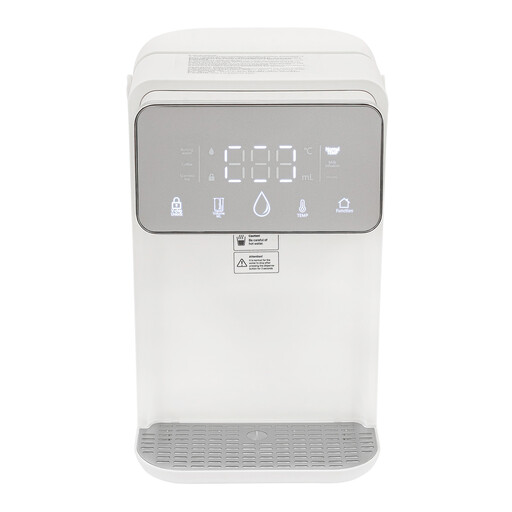 No image available
For serving several drinks at the breakfast table, if a countertop appliance with a stated 3.5-l capacity suits your needs.
3.5 l capacity; compact countertop appliance with digital display.
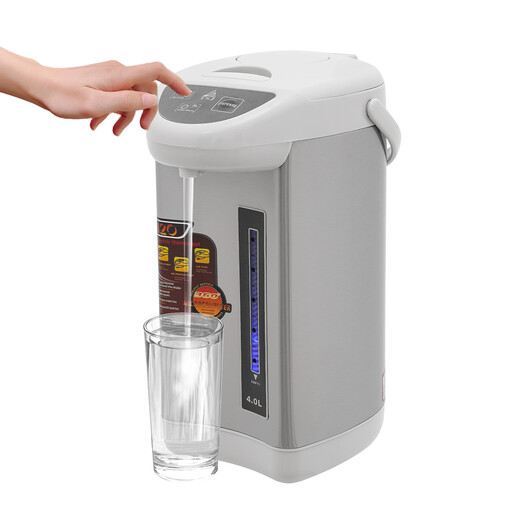 No image available
For several people, if a model with a larger water supply and different dispensing options suits your routine.
4 l capacity; 750 W; stainless steel according to the product name.
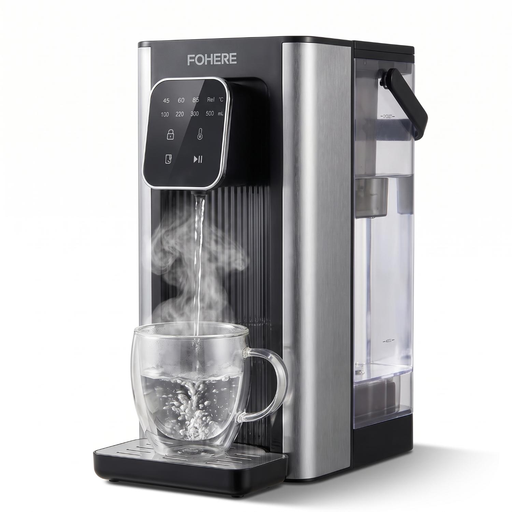 No image available
For households looking for a portion-based dispenser with selectable temperatures and a child lock.
2.5 l capacity; four temperature settings; child lock.
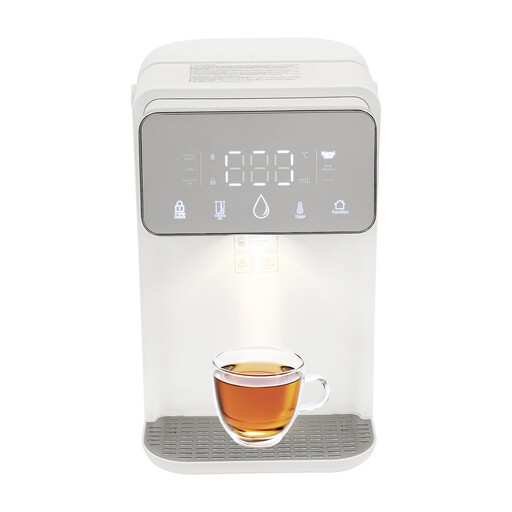 No image available
For breakfasts with different-sized cups, if the stated volume and temperature settings suit your needs.
3.5 l capacity; 150–500 ml output; temperature adjustable from 25 to 99 °C.
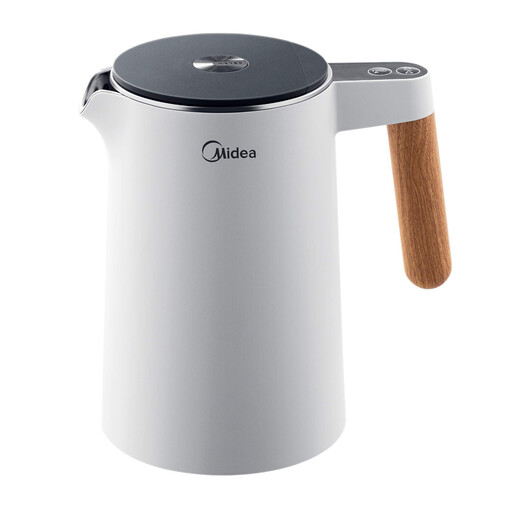 No image available
For the occasional breakfast cup, if you’re happy to pour the water yourself and don’t need a direct portion dispenser.
1.5 l capacity; seven temperature settings from 45 to 100 °C; keep-warm function.
The water is poured manually.
Multiply the usual number of cups by the amount of water per cup, then compare the result with the tank capacity. Also check the serving sizes actually available. For example, CASO Design lists a 2,7-l tank for the HW 660, with fixed serving sizes from 100 to 400 ml and continuous dispensing.
The tank models featured here are filled manually and don’t need a direct connection to the mains water supply. Check that you have enough space to remove and fill the tank, and to position the appliance securely.
The Umweltbundesamt recommends running water that has been sitting in the home’s plumbing for more than four hours until cooler, fresh water comes through. If you’re concerned about old lead pipes, have the plumbing checked; a dispenser filter is not a general substitute for this.
The Verbraucherzentrale says that, in general, there is no health-related need for additional treatment of German tap water. If your appliance has a filter, still follow the manufacturer’s care and replacement instructions.
For mains-powered appliances covered by EU low-voltage rules, the applicable requirements for electrical equipment are relevant. EUR-Lex specifies a rated voltage range of 50 to 1.000 V AC for these rules. Check the specific product listing for the CE mark, the EU declaration of conformity, and any required user instructions and safety information in German. The Bundesnetzagentur highlights the accompanying documentation; a CE mark is not an independent practical test.