Families making several cups of soup
You want to have the water you need ready in the morning without having to refill the appliance frequently. Reservoir capacity, the amount dispensed each time and the heating process all play a part.


First, check the instructions on your soup packaging and make sure the required amount and temperature of water match the appliance’s settings. A suitable portion setting can be handy for individual cups. If you’re making several portions in a row, a larger reservoir may help, although it needs time to heat up and may need to keep the water warm. In households with children, ease of use, the spout and a safe place to position the appliance are also important.
You want to have the water you need ready in the morning without having to refill the appliance frequently. Reservoir capacity, the amount dispensed each time and the heating process all play a part.
You’ll want to consider whether children can reach the hot water spout or operate the appliance. A lock can make it harder to use, but it’s no substitute for a safe position and supervision.
If you only need hot water now and then, it’s worth comparing a dispenser with the kettle you already own. Any extra cleaning and maintenance should also factor into your decision.
| What matters | What to check when buying | Who may find this especially important |
|---|---|---|
| Getting the right amount of water at the right temperature | Compare the instructions on the packaging with the portion settings and operating mode of the specific appliance. | If I want to make a cup of soup according to the pack instructions, I check the amount and temperature together. Around 31% of consumers put getting the recipe portion right first. |
| Making several portions one after another | Compare the total amount needed with the reservoir capacity, amount dispensed per cycle and heating time. | If I’m filling several cups or bowls in the morning, I want as few interruptions as possible. Around 25% of consumers prioritise being able to serve several portions in a row. |
| Using the appliance in a home with children | Check how the lock works, the height of the spout and where the appliance can be positioned safely. | If children are at the breakfast table, I make sure they can’t dispense hot water unsupervised. Around 25% of consumers put safe use around children first. |
| Maintenance and ongoing effort | Consider filter changes, descaling and how often you plan to use the appliance. | If I use the appliance regularly, I want to know what care and replacement parts it will need day to day. Around 19% of consumers prioritise keeping ongoing maintenance to a minimum. |
The Knorr Quick Soup tomato soup examined calls for 150 ml of boiling water. A keep-warm setting of 90 °C or 98 °C doesn’t show that this instruction will be met.
Check the instructions for the soup you’re actually using, and distinguish the appliance’s temperature setting from its keep-warm function.
A 5-litre reservoir doesn’t tell you how quickly the first portion will be ready or whether the appliance can dispense 150 ml directly. A boiler that heats water on demand may need several dispensing cycles for larger amounts.
Compare the reservoir and the amount dispensed per cycle with your breakfast routine, and allow for preheating time.
An appliance with a filter may need a replacement, while a thermal water dispenser keeps water warm after heating it. This isn’t enough to make a general cost comparison between appliances.
Check the care instructions and whether replacement filters are available. Only heat the amount of water you need, and consider whether a dispenser with a reservoir suits the way you’ll use it.
A lock can make accidental operation more difficult, but it won’t stop hot water at the spout or in a cup from posing a scalding risk.
Check how the specific model works, place it somewhere safe and don’t let children dispense hot water unsupervised.
Electrical appliances within the scope of the relevant EU rules must meet the applicable conformity requirements, including carrying the CE marking where required. Materials that come into contact with water are also subject to the applicable EU requirements for food contact materials. A marking alone doesn’t confirm that an individual appliance complies.
Check the product-specific information on applicable requirements, the manufacturer’s details and the German-language instruction manual.
The HW range includes on-demand hot water dispensers. According to the manufacturer, the HW 610 offers small portion settings and temperatures of up to 100 °C.
According to the manufacturer, the ADD5910M/10 instant hot water dispenser offers a volume selector and a filter.
The Smart Electric Hot Water Dispenser 5L, model MEK01-EU, is a reservoir dispenser with app features.
The HW-5100 is a thermal water dispenser with a reservoir, timer and keep-warm settings.
This selection includes hot water dispensers for different soup portion sizes and family breakfasts.
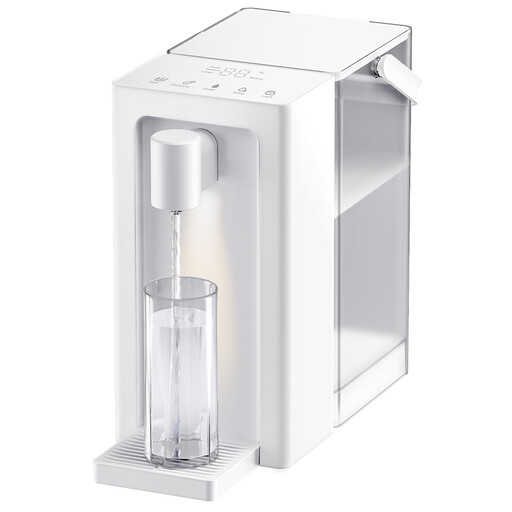 No image available
The 3-litre reservoir and adjustable temperatures may be useful for serving several portions at breakfast.
The title mentions a removable reservoir, touch controls and a memory function.
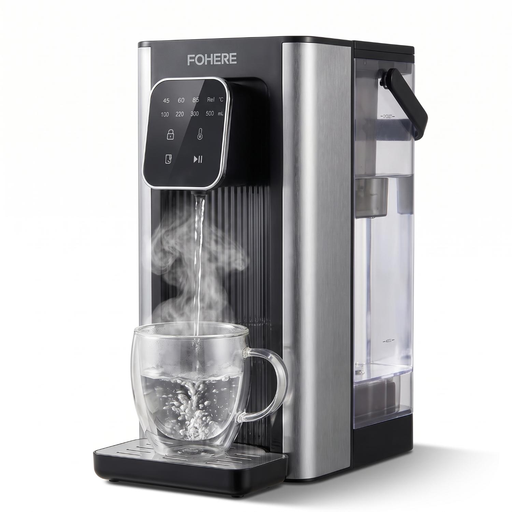 No image available
The child lock mentioned in the title may be a useful feature for households with children.
The title lists four temperature settings, a 100 °C setting and a removable reservoir.
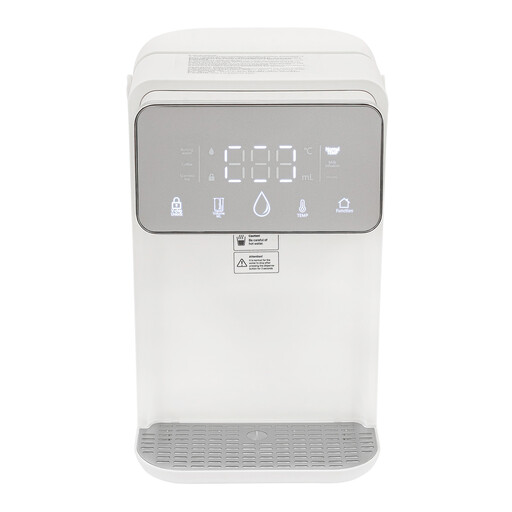 No image available
The 3.5-litre reservoir may be useful for serving several portions; the stated maximum temperature is 210 °F.
If the soup packaging calls for boiling water, this temperature specification doesn’t prove that the requirement will be met.
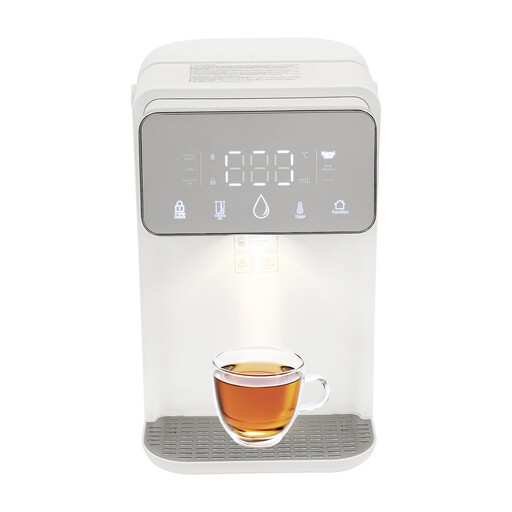 No image available
The dispensing amounts of 150 to 500 ml listed in the title include a small portion of soup.
According to the title, the temperature setting goes up to 99 °C. If the packaging calls for boiling water, this specification doesn’t confirm that the requirement will be met.
The title also mentions a display and adjustable temperatures from 25 to 99 °C.
 No image available
The child lock on the hot water spout may be useful for families; the stated hot water temperature is 85–95 °C.
If the soup packaging calls for boiling water, this temperature range doesn’t confirm that the requirement will be met.
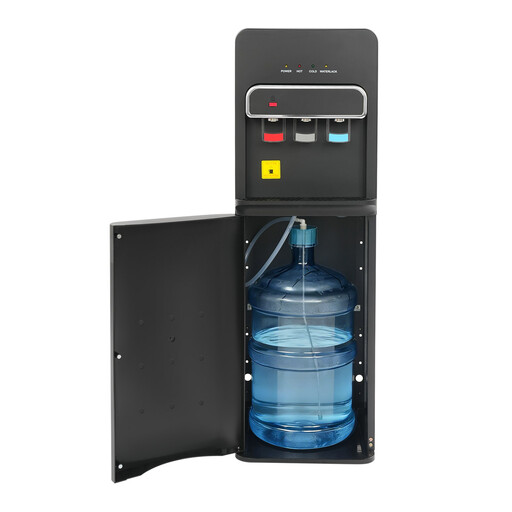
The title lists three spouts, 550 W heating power, 75 W cooling power and boil-dry protection.
Not necessarily: it depends on the instructions for the soup you’re using. The Knorr Quick Soup tomato soup examined calls for 150 ml of boiling water; for this soup, a keep-warm setting of 90 °C or 98 °C isn’t a proven substitute. Also, the temperature set on an appliance isn’t automatically the temperature measured in the cup.
Position it so that a cup can sit safely under the spout and children can’t dispense hot water unsupervised. Clean and descale it according to the instructions for the specific model. Xiaomi recommends unplugging its 5-litre dispenser and letting it cool before cleaning.
Check whether the model needs replacement filters and how to descale it; these details alone don’t give you a reliable annual cost. If a product is faulty, statutory consumer rights are separate from any voluntary manufacturer’s guarantee.
For electrical appliances covered by the relevant EU rules, the required CE marking is part of the conformity requirements. The German Federal Network Agency also lists the manufacturer’s details and German-language instructions as points to check. Materials that come into contact with water are subject to separate EU requirements for food contact materials. A visible marking or a statement about the materials alone doesn’t confirm that an individual appliance complies.