Buffet teams focused on fibre
Before describing a muesli as high in fibre on the buffet, you need to know its fibre content per 100 g.


For a hotel breakfast buffet, choose muesli or granola based on its fibre content per 100 g, not just the product name. Lebensmittelklarheit states that a food must contain at least 6 g of fibre per 100 g to be labelled ‘high in fibre’. Then check the sugar content, ingredients and allergens of the specific product. If it’s served loose, allergen information must be accessible and easy for guests to read.
Before describing a muesli as high in fibre on the buffet, you need to know its fibre content per 100 g.
You need to be able to check the ingredients and allergens in every variety served loose. Depending on the recipe, relevant allergens may include cereals containing gluten, nuts or soya.
Consider suitable pack sizes, storage instructions and reliable replenishment, while keeping the nutritional information and labelling of the product actually delivered in view.
First check the fibre content of the variety you’re considering, then whether it’s suitable for serving loose, and finally its recipe and availability. Fruity muesli, crunchy muesli and oat-based breakfast products aren’t interchangeable just because their names sound similar.
| Criterion | What to check when buying | Who it matters most to |
|---|---|---|
| Fibre | Check the nutritional information for the amount per 100 g. Lebensmittelklarheit states that ‘high in fibre’ means at least 6 g per 100 g. | If I want to offer a variety specifically as high in fibre, I need a verifiable figure rather than a serving-size value with no basis for comparison. For around 31% of consumers, evidence of fibre content is a priority when shopping. |
| Allergens and choice | Check the ingredients and allergen information for each product. Prepare the labelling for every variety served loose. | When catering for guests with different dietary requirements, I want to be able to identify each muesli variety clearly. Product-specific allergen information is a priority for around 31% of consumers. |
| Sugar and recipe | Check the sugar content per 100 g alongside the ingredients list, particularly for fruity or crunchy varieties. | If I’m looking for a fruity flavour or a crunchy variety, I still want to know what goes into the recipe. Around 19% of consumers put sugar content and ingredients first. |
| Buffet service | Check the pack size, storage instructions and availability through your intended supply route. | For a buffet container that needs regular refills, I need a pack that’s practical to store and reorder. This is the top buying criterion for around 19% of consumers. |
Serving sizes can vary. To compare products and use the ‘high in fibre’ claim, the relevant figure is the fibre content per 100 g; Lebensmittelklarheit states that this must be at least 6 g per 100 g.
Check the nutritional information per 100 g before labelling a variety accordingly on the buffet.
Different mixes can contain different allergenic ingredients. Under section 4 of Germany’s Food Information Implementing Regulation, the required information for non-prepacked food must be available for each product in a clearly visible, prominent and legible form.
Keep the information for every variety up to date. Section 4 gives examples of how to provide it, including a sign, card, notice or written or electronic information that is immediately and easily accessible.
Kölln lists 22 g of sugar per 100 g for its fruit and oat muesli with no added sugar. A ‘less sugar’ claim doesn’t remove the need to check the actual sugar content and ingredients.
For the specific variety, compare the nutritional information per 100 g with the ingredients list.
EDEKA notes that information on a product page may differ from the packaging, and that an item may not be available in every store.
Check availability before planning your order, then compare the ingredients, allergens and nutritional information with the delivered pack when it arrives.
If the recipe in the delivered product differs, you may need to update the buffet labelling.
The examples below refer to specific muesli varieties, not a brand’s entire range. For buffet buying, the information on the pack you choose is what matters.
Müsli Ballaststoff & Frucht is an option if you’re choosing based on a documented fibre content.
The Protein Muesli is a buffet option that the manufacturer describes as vegan.
Fruity oat muesli and crunchy muesli offer different ingredients and textures.
The Fruit Muesli is listed in a 1 kg pack, which may suit plans for regularly replenishing buffet quantities.
Bio 5-Korn Basis-Müsli is another variety to consider when comparing recipes.
This selection includes crunchy and fruity muesli, as well as an oat-based breakfast product. Before serving a variety at the buffet, check the pack for its fibre content, ingredients and allergens.
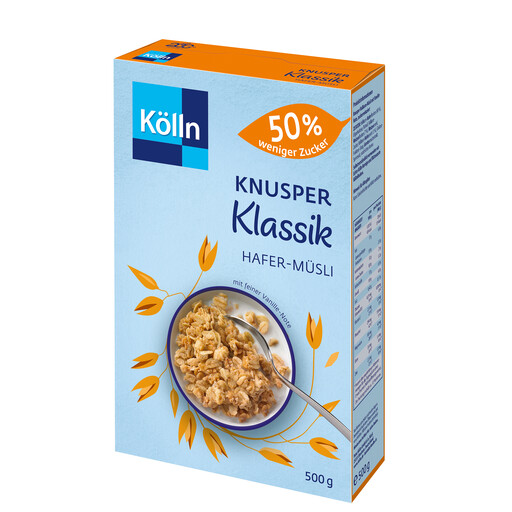 No image available
A crunchy oat muesli option for a suitably labelled buffet. Compare the sugar content per 100 g and the ingredients, and confirm the pack size of your chosen variety before ordering.
 No image available
The 750 g pack is worth considering if you need to replenish a crunchy oat muesli regularly. Check the sugar and fibre content per 100 g, as well as the allergen information on the current pack.
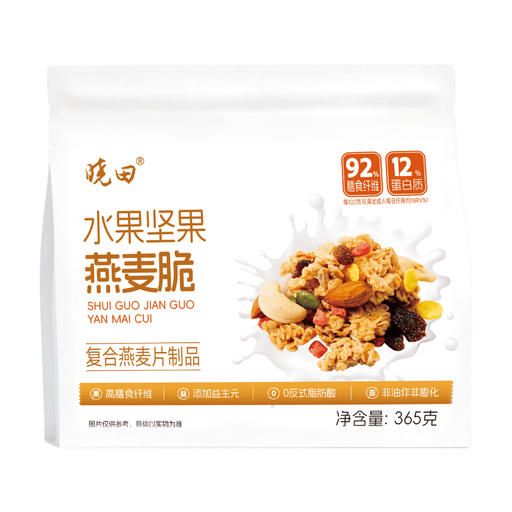 No image available
A 365 g oat crunch with fruit and nuts. Check the current pack for the sugar content, ingredients and allergen information before serving it loose.
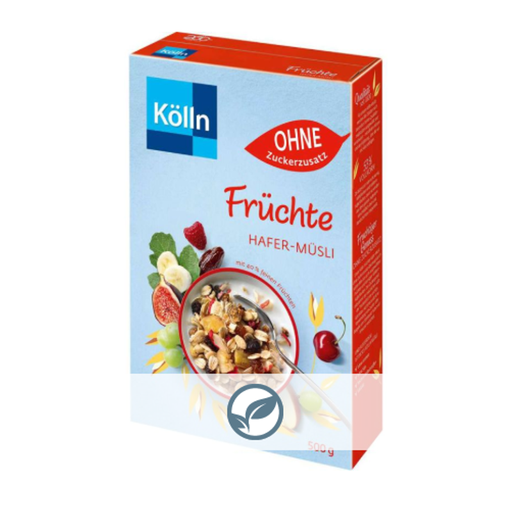 No image available
This 500 g variety is a fruity addition to a muesli selection. ‘No added sugar’ doesn’t mean ‘sugar-free’, so check the sugar content and the full ingredients and allergen information on the current pack.
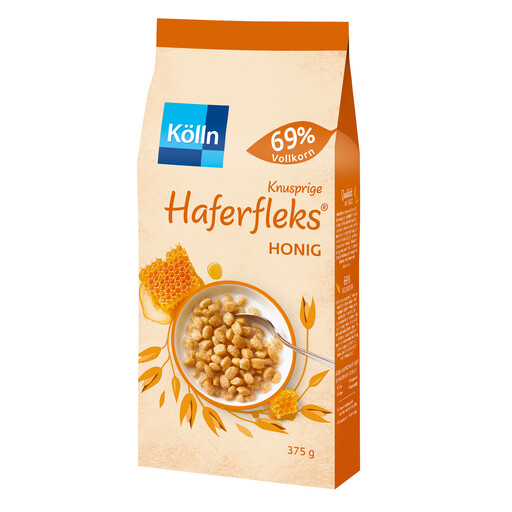 No image available
This pillow-shaped oat breakfast cereal offers an alternative to loose muesli if you’re looking for a different texture. Check the nutritional information and ingredients for the specific variety before labelling it for the buffet.
Check the fibre content per 100 g: Lebensmittelklarheit states that ‘high in fibre’ means at least 6 g per 100 g. A serving-size figure alone isn’t a suitable basis for comparison.
The required information must be clearly visible, prominent and easy to read for each variety. For non-prepacked food, section 4 of Germany’s Food Information Implementing Regulation lists options including a sign, card, notice or written or electronic information that is immediately and easily accessible.
No, the description doesn’t tell you that. Kölln lists 22 g of sugar per 100 g for its fruit and oat muesli with no added sugar, so compare the sugar content of the specific product rather than relying on the front-of-pack claim.
Follow the storage instructions on the relevant pack and reseal opened products accordingly. Kölln recommends storing its crunchy muesli in a dry place away from heat.