What should you consider when choosing?
Checking rooms after sign-off
Suitable if: you want visible features checked in rooms that have already been cleaned and signed off.
Consider: a documented pilot does not prove detection accuracy or that the process can be replicated in other hotels.
Supervised humanoid pilot
Suitable if: you want to trial a range of handling tasks with an integrator and the housekeeping team.
Consider: interfaces, grippers, support and approvals need to be agreed for the specific process; an announced partnership is not proof of performance.
Specialist device for transport or cleaning
Suitable if: the task is limited to moving items or cleaning floors.
Consider: a transport or cleaning device will not automatically check rooms visually.
| Priority |
What to check before buying |
Who is it particularly relevant to? |
| Room checks |
Define the checklist, sign-off signal, how missed or reported issues will be handled, and when a member of staff must check the room. |
If I want cleaned rooms checked, I need a process in which the team can assess and resolve any issues. Around 33% of consumers prioritise room checks. |
| Reducing physical strain |
Assess the loads, routes, trolleys and handling tasks involved in the specific job. |
If I want to tackle repetitive journeys or other physically demanding tasks, I need to check whether the job requires picking things up or simply driving. Around 27% of consumers prioritise reducing physical strain. |
| Integration into hotel operations |
Test door and lift access, charging location, responsibility for faults and on-site service in the intended operating area. |
If I want to fit the robot into shift patterns and building processes, it must be clear who steps in if something goes wrong. Around 20% of consumers prioritise operational integration. |
| Data and safety |
Assess data flows from cameras, microphones and interfaces, as well as hazards in the specific working area. |
If I want to use sensors in areas with staff or guests, I need to clarify data processing and safeguards before the pilot. Around 20% of consumers put data and safe collaboration first. |
The German Social Accident Insurance (DGUV) highlights the risk of collisions when robots operate near people. If a robot is used as work equipment, Section 3 of the German Ordinance on Industrial Safety and Health (BetrSichV) requires a risk assessment; CE marking does not replace one.
Humanoid robots on Joybuy
The Joybuy listings below are for humanoid robots. They may be considered as starting points for a limited technology pilot, but this does not prove they are suitable for room checks or hotel operations.
 No image available
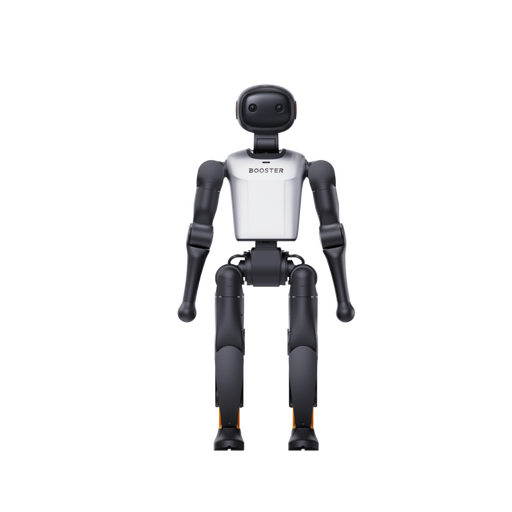
Booster Robotics K1 Geek Humanoid Robot
The K1 could be considered as a development platform for a limited technology pilot; this does not prove it is suitable for hotel operations.
The product title lists 48 TOPS and 22 degrees of freedom.
Joybuy
 No image available
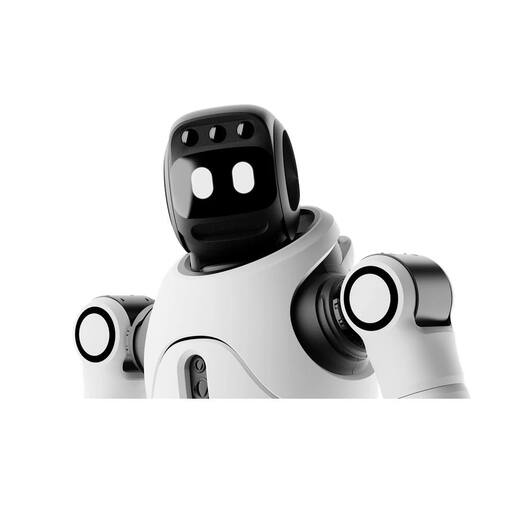
AGIBOT X2 Ultra Humanoid Robot
This model could be assessed as a humanoid platform for a limited technology pilot; specific housekeeping tasks should be tested separately before purchase.
Joybuy
 No image available
AGIBOT X2 Humanoid Robot
This model could be assessed as a humanoid platform for a limited technology pilot; its suitability for a specific hotel process needs to be assessed on site.
Joybuy
 No image available
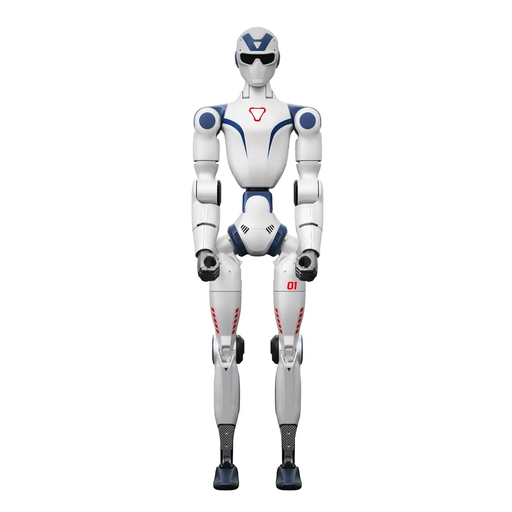
Unitree R1 Air Humanoid Robot, Blue and White
The R1 Air could be considered as a humanoid platform for a limited technology pilot; the product description lists operating limitations that should be taken into account before use.
The product title lists a monocular camera and 20 degrees of freedom. The product description warns against operating it near stairs, edges or uneven surfaces, and highlights the risks posed by moving joints and moisture.
Joybuy
 No image available
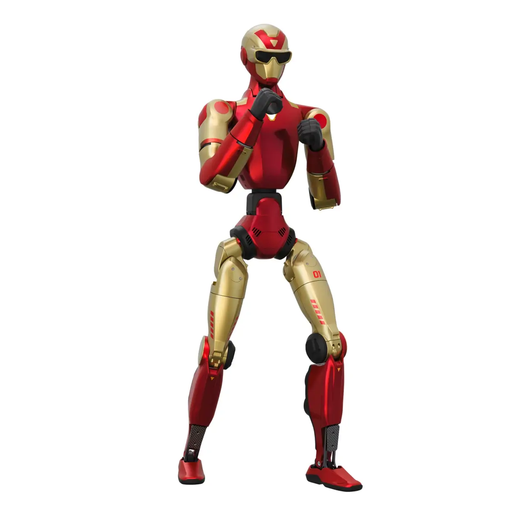
Unitree R1 Humanoid Robot, Red and Gold
This model could be assessed as a humanoid platform for a clearly defined technology pilot; the features listed in the product title do not prove it is suitable for hotel operations.
The product title lists two cameras and 26 degrees of freedom. According to the product description, automatic charging requires a separate charging station; it also specifies supervision and a minimum safety distance of 2 m during autonomous operation.
Joybuy
Frequently asked questions
How can you define room checks as the main task without using guest data?
Only start the robot after a cleaned room has been signed off, and define the room conditions it needs to check, along with the follow-up work to be carried out by staff. Seminaris Hotels describes this approach for its own Billie pilot; for any other installation, check whether images, metadata or other sensors could still capture people.
How should doors, lifts, charging and faults be managed during a pilot?
Test the planned route and access permissions on site, and decide who will step in if a door is blocked, a lift is occupied, the battery is low or a sensor fails. The lift integration described by PUDU Robotics for the T300 and Gausium's charging-time figures for Phantas are manufacturer information, not a guarantee that either will work in your building.
What ongoing services should a hotel quotation include?
Ask for integration, software, training, maintenance, spare parts and fault support to be itemised separately. NEURA Robotics describes a reservation and estimated pricing structure for 4NE1 Gen 3.5; a reservation is not a complete offer for a hotel operation.
Is CE marking enough to use a robot alongside staff?
No. If a robot is used as work equipment, Section 3 of the BetrSichV requires the employer to carry out a risk assessment before deployment; the regulation makes clear that CE marking does not remove this requirement. According to the European Commission, the Machinery Directive 2006/42/EC still applies to machinery first placed on the EU market before 20 January 2027; the new Machinery Regulation generally applies after that date.
Is a data processing agreement always needed when cameras or an external platform provider are involved?
Not just because a camera is involved. First establish whether personal data is being processed and who decides the purposes and means of processing. If a service provider processes data on your behalf, check the data protection roles and whether an appropriate agreement is needed. The German Data Protection Conference has highlighted how widely image-based systems can capture people.


