
Lieferung heute & morgen

Qualitätsgarantie

Willkommens-Angebote freischalten: KOSTENLOSE Lieferung | Bis zu 80 % RABATT | Kostenlose 30-Tage-JoyPlus-Testphase
App herunterladen
A hotplate can be a practical addition to small kitchens, student flats, offices, campsites or households that need extra cooking capacity. However, it does not automatically replace every cooker. Before buying, make sure the heating type, pan compatibility, connected load and footprint suit the intended use.
Many poor purchases are not caused by insufficient power, but by unclear product specifications. An electric hotplate rated at 1500 watts may be sufficient for a small saucepan, while a portable induction hotplate requires different cookware. A heavy cast-iron grill plate is versatile, but it is not designed for frequent repositioning or lightweight camping luggage.
A specification such as 1500-watt hotplate primarily describes the maximum electrical power consumption. On its own, it says little about how quickly a pan will heat up. The heating technology, pan base, cooking-zone size and temperature control are also important.
With a traditional hotplate, heat is transferred via a heating element and the contact surface. Induction, by contrast, heats a suitable pan base directly. The actual speed therefore depends heavily on the cookware being used.
A portable hotplate should be easy to store after use and safe to transport. However, cast-iron models or those with a solid grill surface can weigh several kilograms. This is beneficial when using them on a stable kitchen worktop, but may be impractical for camping or in the office.
You should therefore check the dimensions, weight, cable length and handles. A high level of stability is important, but should not be confused with easy transport.
A simple on/off switch does not allow precise adjustment for simmering, frying or keeping food warm. When choosing a hotplate with a thermostat, look for clear controls and an operating indicator.
Additional features such as overheating protection, automatic shut-off, pan detection or a timer can make operation easier. However, they do not replace the basic rules: the hotplate must be placed on a level, heat-resistant surface and remain freely accessible during operation.
A traditional single hotplate with a metal or cast-iron heating surface is suitable for many pans and saucepans with a flat base. It is generally straightforward to use, but requires some time to heat up and cool down. The surface remains hot for a while after switching off.
An induction hotplate only works with magnetic cookware. You can usually check whether a pan is suitable by holding a magnet against its base. Glass-ceramic or stainless-steel cookware is not automatically induction-compatible. The benefits of this technology include direct control and a smooth, easy-to-wipe surface. At the same time, users must check pan compatibility and the electrical connection.
For occasional heating, simple dishes or use in the office, a portable hotplate with one cooking zone is often sufficient. A double hotplate is useful when you want to cook and heat a side dish at the same time. With two zones, you should pay attention to the total power output: the maximum wattage may be distributed between the cooking zones.
The cooking surface should suit your cookware. A plate with a diameter of around 180 to 185 millimetres is suitable for many medium-sized saucepans and frying pans. For a cast-iron grill plate, the usable grilling surface, weight and compatible heat sources are also relevant.
For cast-iron models, specifications such as induction, gas, Ceran, halogen, oven or grill should be checked carefully. Metal products must not be placed in a microwave. Enamelled surfaces should be cleaned with suitable utensils and without abrasive cleaning products.
In Germany, many appliances use a 220–240 volt connection. A 1500-watt hotplate can be operated from a suitable household socket. Appliances with a higher total output, such as a double induction hotplate with up to 3500 watts, should not be operated using unsuitable multi-way adaptors or extension leads.
Make sure there is sufficient clearance from flammable objects. After cooking, allow the hotplate to cool completely before cleaning or storing it.
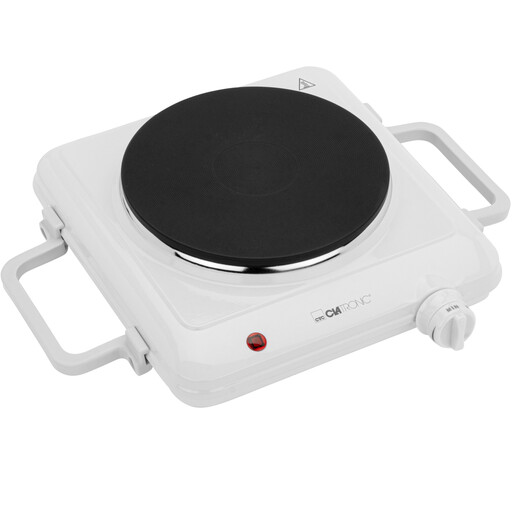
Why this product suits the profile: This electric hotplate features a 180 mm cooking surface, 1500 watts and a continuously adjustable thermostat. It is suitable for small kitchens, office workspaces or occasional camping with a 230-volt connection.
The continuously adjustable temperature control prevents you from being limited to just a few fixed heat settings. The indicator light, overheating protection and high stability are clearly specified.
1500 watts, 180 mm cooking surface, continuously adjustable thermostat and attachable cool-touch handles.
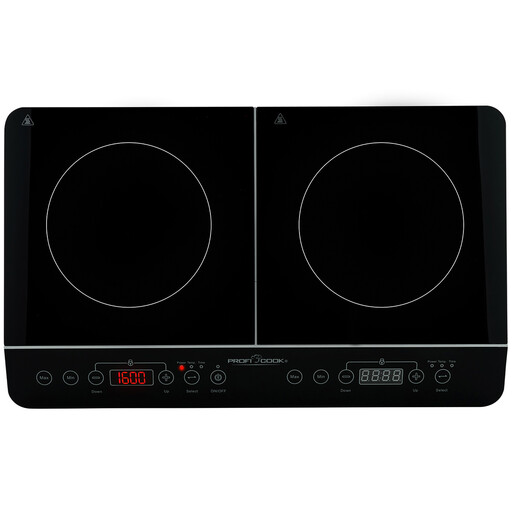
Why this product suits the profile: This double hotplate offers two cooking zones, sensor-touch controls, an LED display and separate power or temperature settings. It is designed for households that want to use several pans at the same time.
Pan detection, shut-off when the pan is removed, overheating protection and a timer help reduce operating errors. Before buying, however, check whether your existing cookware is induction-compatible.
Two cooking zones, 10 temperature settings from 60 to 240 °C, a 180-minute timer and a maximum output of 3500 watts.
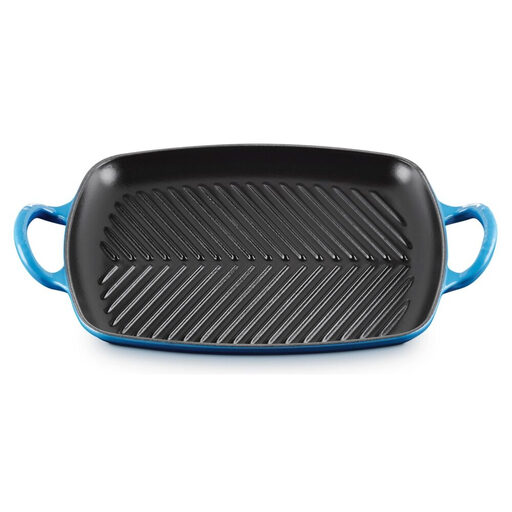
Why this product suits the profile: This enamelled cast-iron grill plate is suitable for gas, induction, Ceran, halogen, ovens and grills. It is ideal for users looking for a separate grilling surface with excellent heat retention.
The compatibility information for different heat sources is specific. The weight of around 3.1 kg and recommended hand washing also make it clear that this grill plate is not intended for particularly lightweight luggage.
30 cm grilling surface, enamelled cast iron, integrated double handles and use with several heat sources.
We have put together a complete, regularly updated list of products that fully meet these strict selection criteria and the safety regulations applicable in the EU.
For camping, a compact portable hotplate with a 230-volt connection is suitable if the pitch has an appropriate power supply. A traditional single hotplate is compatible with many pans. With induction, you must bring suitable cookware. For off-grid outdoor use, you should also consider weight, cable length, stability and protection from moisture.
Its lifespan depends on how often it is used, cleaning, storage and the quality of the heating elements, housing and controls. Allow a hotplate to cool completely before cleaning it, and never immerse an electrical appliance in water. Visible damage to the cable, plug or housing is a reason to stop using the appliance.
At full power, a 1500-watt hotplate uses 1.5 kilowatt-hours per hour. The actual cost depends on your individual electricity tariff and how long the hotplate is used. As thermostats switch the heating on and off according to the temperature, a hotplate will not necessarily run continuously at maximum power during normal use.