For staggered mealtimes
If you’re keeping cheese sauce for a later serving, you’ll need to keep an eye on its temperature. The Federal Institute for Risk Assessment recommends keeping heated food at a minimum of 60 °C throughout until serving.


For a sauce pot that’s suitable for induction, a portable induction hob with an easily accessible low setting is a good option. For other types of pan base, consider cast iron or radiant ceramic glass. If you’re keeping food hot for longer, what matters is the temperature of the sauce itself: the Federal Institute for Risk Assessment recommends keeping it at a minimum of 60 °C throughout until serving. If you’re cooking a side dish at the same time, weigh up the benefits of a second cooking zone against the extra space it takes up.
If you’re keeping cheese sauce for a later serving, you’ll need to keep an eye on its temperature. The Federal Institute for Risk Assessment recommends keeping heated food at a minimum of 60 °C throughout until serving.
If you want to continue using your existing pot, make sure its base is compatible with the heating technology. TÜV SÜD points out that induction only works with ferromagnetic cookware.
If you’re cooking sauce and a side dish at the same time in separate pots, you’ll need two usable cooking zones and enough worktop space. Severin’s DK 1031 double induction hob has two zones.
First, check that the pot base is compatible and that you have the number of cooking zones you need. Then consider how easy it is to select a low setting and whether you can check the sauce’s temperature directly.
| What matters when buying | What to look for | Who it matters most to |
|---|---|---|
| Gentle adjustment | Low settings with precise control; check whether a probe measures the food. | When I’m stirring in cheese, I want to be able to turn down the heat easily without confusing an appliance setting with the sauce’s temperature. Around 36% of consumers are likely to prioritise gentle adjustment. |
| Keeping food safely hot | Check the keep-warm setting and timer limits; monitor the sauce’s temperature itself. | If the next serving is later, I want to keep an eye on the finished sauce until then. Around 29% of consumers are likely to prioritise keeping food safely hot. |
| A compatible sauce pot | Check the pot base and diameter against the specifications of the model you’re considering. | I want to keep using my existing pot, so I need a hotplate that suits its base and diameter. Around 21% of consumers are likely to prioritise pot compatibility. |
| A second cooking zone | Check how many zones can be used, the space required and the connection requirements in the instructions. | If I’m cooking a side dish in a second pot at the same time, I need two cooking zones and enough space. Around 14% of consumers are likely to want to cook dishes in parallel. |
For induction, the base of the pot must be ferromagnetic; TÜV SÜD lists this as a requirement. If you’re keeping food hot for longer, the Federal Institute for Risk Assessment recommends a minimum of 60 °C throughout until serving. A keep-warm function or display alone doesn’t confirm that the sauce has reached this temperature.
The Federal Institute for Risk Assessment’s recommendation applies throughout the food, not to an appliance setting.
If you’re keeping the sauce hot for longer, check its temperature directly and stir it. Don’t rely on a keep-warm programme alone.
Ceramic glass describes the surface, not necessarily the heating technology. Induction also requires a suitable ferromagnetic pot base.
Before you buy, check the appliance’s heating technology, as well as the base and diameter of your pot.
A second zone is most useful when you actually need to heat two pots at once. Double hotplates take up more space.
Choose two zones only if you regularly cook dishes in parallel. Otherwise, ease of use and control over the sauce’s temperature may matter more.
Portable single-zone induction, with optional temperature control using the supplied probe on the TC 2400 Thermo Control.
Offers the portable CT 2020/IN induction hob and the AK 1599/E cast-iron hotplate for different types of pot base.
The portable DK 1031 double induction hob is worth considering if you need to heat sauce and use a second cooking zone at the same time.
The Kult X Mono is a portable single-zone induction hob with its own keep-warm programme.
The Joybuy products below range from individual portable hotplates to hobs with multiple zones. Before buying, check your cookware, available space and connection against the specifications for the model you’re considering.
 No image available
Stepless temperature control may be useful if you want to adjust the heat while making your sauce.
One cooking zone; 1500 W; 18 cm diameter heating ring; stainless steel housing.
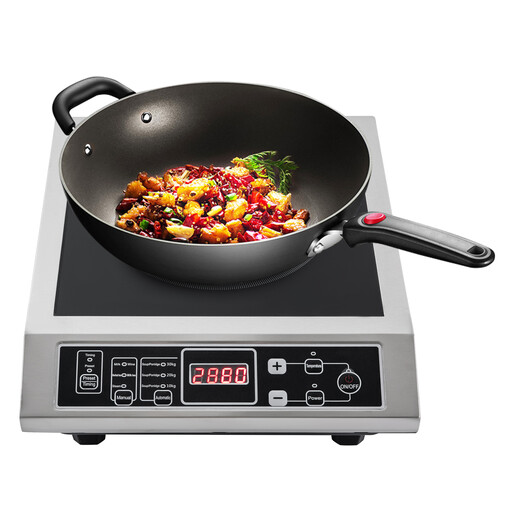 No image available
An option if you’re looking for a tabletop induction hob with adjustable temperature and your sauce pot is induction-compatible.
Power range: 800–3500 W; timer function; overheat protection.
 No image available
Two cooking zones may suit you if you want to make sauce and another dish at the same time.
Five temperature settings; keep-warm function. The function alone doesn’t confirm that the sauce has reached a specific temperature.
 No image available
A single portable cooking zone may be all you need if you don’t have to heat a second pot at the same time and your pot is suitable for induction.
Five power levels; one cooking zone; 1000 W.
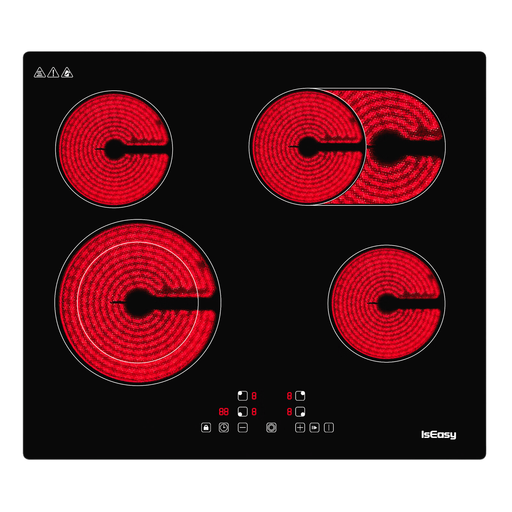 No image available
Four cooking zones are an option if you want to use several pots at once; check that the heating technology is compatible with your cookware.
Four cooking zones; 6600 W; touch controls; oval and double cooking zone. The product description states that a hardwired connection is required.
No. An appliance setting alone doesn’t confirm the sauce’s temperature. For heated food that’s being kept hot until serving, the Federal Institute for Risk Assessment recommends a minimum of 60 °C throughout. So be sure to check the food itself.
Only if the pot has a ferromagnetic base, according to TÜV SÜD. Check the pot’s specifications and make sure its diameter falls within the range supported by the hob.
A cast-iron hotplate is an option if your pot isn’t suitable for induction. Rommelsbacher says cast iron heats up more slowly and retains heat for longer; bear this slower response in mind when adjusting the heat.
Only if you actually want to heat sauce and another dish in separate pots at the same time. A double hotplate gives you two zones for this, but takes up more space than a single hotplate.