What should you look for when choosing?
Induction hob
A good fit if: your pan has a suitable base and fits the cooking zone.
Bear in mind: Cookware that isn’t induction-compatible won’t work with it.
Radiant ceramic-glass hotplate
A good fit if: you want to keep using a pan you already own that doesn’t have an induction-compatible base.
Bear in mind: The cooking zone may stay hot after you switch it off; according to the manufacturer, the ROMMELSBACHER CT 2203/TC has a residual-heat indicator.
Cast-iron hotplate
A good fit if: a single, non-induction cooking zone is suitable for your cookware.
Bear in mind: Let the hotplate cool down before cleaning or putting it away.
For the questions below, focus on the priority that matters most to you when choosing a hotplate for making noodle broth in a shared kitchen.
| Priority |
What to check before buying |
Who is this important to? |
| Controlling boiling and simmering |
Check the power settings and controls on the model you’re considering, and make sure your pan fits the cooking zone. |
If you want to bring the broth to the boil first and then keep it simmering at a lower setting, the controls matter. Around 31 % of consumers prioritise this. |
| Continuing to use existing pans |
Check that the pan base and its diameter are compatible with the heating technology and the stated cooking zone. |
If you use pans already in the shared kitchen, the hotplate should suit their bases. Around 25 % of consumers say pan compatibility is their top priority. |
| Using a shared power supply |
Check the rated power, which other appliances may be running at the same time and the model’s power supply requirements. |
If you share a power supply with other kitchen appliances, what’s actually being used at the same time matters more than whether there’s a spare socket. Around 25 % of consumers prioritise this. |
| Space, cleaning and storage |
Allow for the full appliance dimensions, space for the pan, positioning instructions and cooling time. |
If the hotplate will be used on a shared worktop and put away afterwards, ease of handling and cleaning are important. Around 19 % of consumers prioritise this. |
Hotplates for noodle broth
This Joybuy selection includes individual cast-iron and induction hotplates for use on a worktop. Your pan must be induction-compatible if you choose an induction model.
 No image available
SEVERIN KP 1092 cast-iron hotplate
As a non-induction hotplate, this could be an option if your pan isn’t suitable for induction.
The listing specifies 1.500 W, an 18-cm heating ring and a rotary control. The hotplate gets hot during use and immediately afterwards, so let it cool before cleaning or putting it away.
Joybuy
 No image available
Portable induction hob, 1.000 W, 5 power settings
If you’re looking for a single cooking zone with several heat settings, the listing specifies five power settings for this model.
The stated power is 1.000 W. As an induction hob, it can only be used with suitable induction cookware.
Joybuy
 No image available
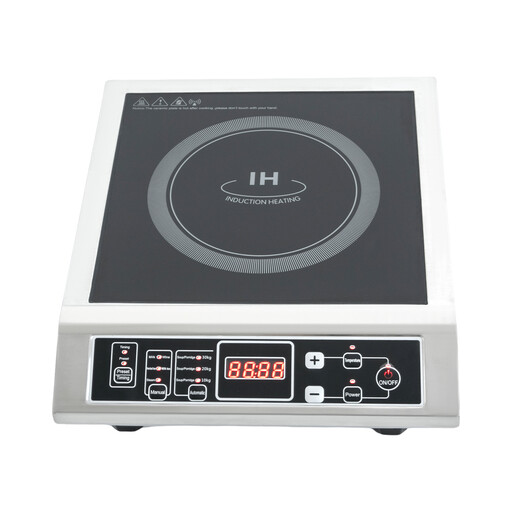
Portable induction cooker, 3.500 W
The listing specifies ten power settings, which can help you switch between higher heat and simmering.
A timer and pre-set function are also listed. You’ll need suitable induction cookware for this model.
Joybuy
 No image available
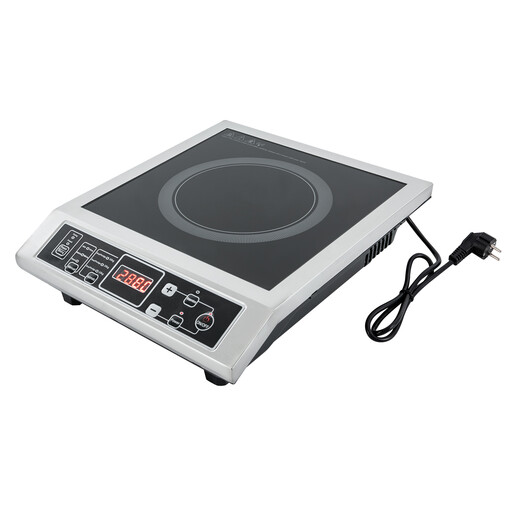
Induction hob, 3.500 W, 8 power settings
If you want to adjust the power to suit each stage of cooking, the listing specifies eight power settings.
The description also lists a timer of up to three hours. Suitable induction cookware is required.
Joybuy
 No image available
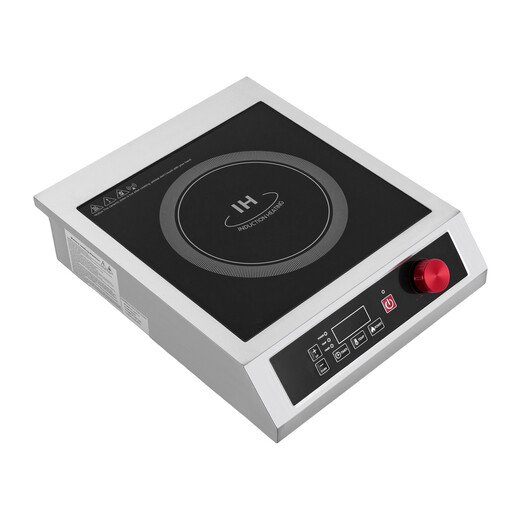
Induction hob, 3.500 W, EU plug
This worktop model could be an option if your pan is induction-compatible and you need an EU plug.
The listing specifies 3.500 W and a 24-hour timer. Check the power supply requirements and use suitable induction cookware.
Joybuy
Frequently asked questions
How can I tell if my pan will work on an induction hob?
Check whether the pan base is suitable for induction, then compare its diameter with the hob manufacturer’s specifications. For example, the manufacturer specifies 12 to 23 cm for the ROMMELSBACHER CT 2010/IN; this range doesn’t apply to all induction hobs.
Can I plug the hotplate into a fully occupied extension lead?
An available socket doesn’t tell you how much load the power supply can safely handle. The Institute for Loss Prevention and Research documented a fire caused by an overloaded extension lead in a shared flat kitchen. Check which appliances are connected at the same time and the hotplate’s power supply requirements, rather than running several high-powered appliances together without checking.
Can I clean and put the hotplate away straight after cooking?
No. Follow the instructions for your model and let hot parts cool down first. The manufacturer specifies a residual-heat indicator for the radiant ROMMELSBACHER CT 2203/TC; the surface of an induction hob can also absorb heat from a hot pan.
What affects running costs?
Running costs depend on factors such as how long you use the appliance, its actual power consumption and your electricity tariff. Germany’s Federal Environment Agency ranks induction as more energy-efficient than radiant ceramic glass and cast-iron hotplates. To reduce energy use when cooking, it also recommends using a lid and choosing a pan that fits the cooking zone.
What labelling and documents should I check when buying in Germany?
Check that the specific listing includes the required CE marking and clear German-language instructions with any necessary usage and safety warnings. Mains-powered appliances covered by the EU Low Voltage Directive must meet its requirements; Germany’s Federal Network Agency lists manufacturer details and German safety information among the points to check. The CE marking is the manufacturer’s declaration of conformity, not an independent product test.
Can an old electric hotplate go in household waste?
No. Germany’s Federal Environment Agency explains that old electrical appliances must be collected separately. Find out about a suitable local collection point or an applicable take-back option.


