
Lieferung heute & morgen

Qualitätsgarantie

Willkommens-Angebote freischalten: KOSTENLOSE Lieferung | Bis zu 80 % RABATT | Kostenlose 30-Tage-JoyPlus-Testphase
App herunterladen
A hotplate can complement a small kitchen, replace a missing cooker in student accommodation or make preparing food easier when camping. The choice ranges from a simple electric hotplate and induction hotplate to a permanently installed induction hob. Wattage is not the only deciding factor. The design, cookware, connection and safety features all determine whether the appliance is genuinely suitable for your household.
A specification such as 2,000 or 3,500 W describes the maximum electrical power consumption. With a double hotplate, this figure may be distributed across several zones. So check whether the power rating is given per cooking zone and whether your electrical connection can support it. An appliance with high power is not a sensible choice if the fuse or socket is not designed to handle other household appliances being used at the same time.
An induction hotplate does not heat the pan using a conventional heating coil. Instead, it requires a magnetic pan base. Suitable cookware generally includes cast-iron, iron or magnetic stainless-steel pots and pans. A simple magnet test on the base of your cookware can provide an initial indication. Aluminium, copper and glass only work if they have a suitable magnetic base.
With a portable appliance, the footprint is what matters. With a built-in induction hob, however, you need to check the overall dimensions and cut-out dimensions separately. For example, a 29 cm-wide hob may require a different worktop cut-out from a standard 60 cm model. Before buying, you should also consider ventilation beneath the hob, cable routing and the electrical connection.
A continuously adjustable thermostat provides flexible control between low and high heat on a conventional electric hotplate. With a hob with touch controls, clearly identifiable power levels, an easy-to-read display and dry control surfaces are particularly important. A hotplate with a timer can monitor the selected operating time and, depending on the model, switch off automatically. The exact time range varies from product to product.
Look for clearly explained features such as:
These features do not replace supervision while cooking. Hot surfaces can still cause burns after the appliance has been switched off. Built-in appliances should be connected in accordance with the instructions and applicable electrical regulations; a fixed connection requires a qualified electrician.
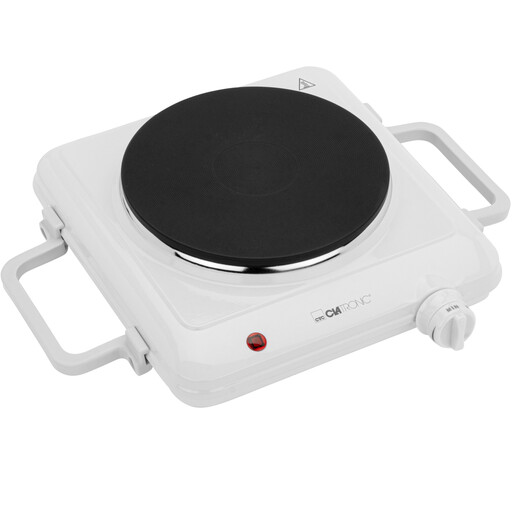
Why this product suits the profile: With a cooking surface of approximately 180 mm and 1,500 W of power, this single hotplate is suitable for simple meals, a small kitchen or use as a portable additional cooking surface.
The continuously adjustable thermostat makes it easy to select the temperature, while the indicator light, overheating protection and high stability are clearly specified.
1,500 W of power, 230-V operation and attachable Cool-Touch handles for transport and handling.
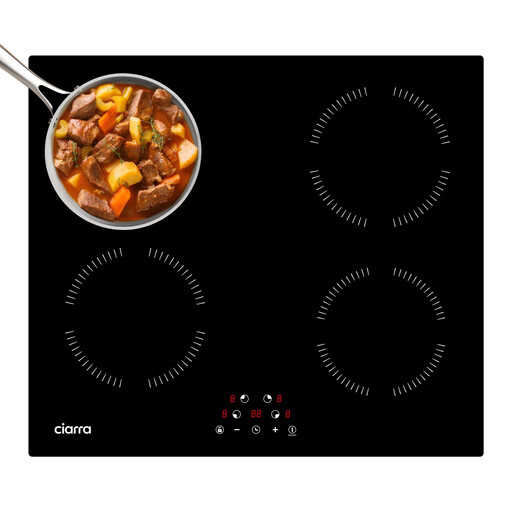
Why this product suits the profile: This 60 cm built-in induction hob is designed for households that need several cooking zones and a permanent kitchen solution.
The overall dimensions of 590 × 520 × 62 mm and cut-out dimensions of 560 × 490 mm are specified separately. This allows you to check the installation requirements before buying.
Four zones, nine power levels, individual timers, pan detection, residual heat indicator and child lock.
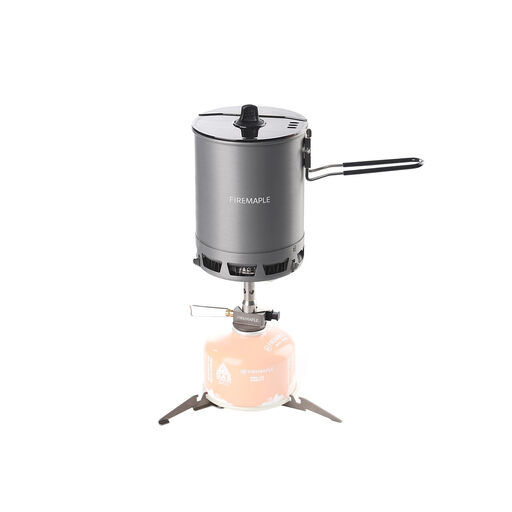
Why this product suits the profile: This camping cooking system is aimed at solo walkers and campers who want to reduce weight and pack volume.
The set is designed to work together and can be stored inside the 600 ml pot. The compatible gas canister must be checked and purchased separately.
A weight of 265 g, a folding handle and a three-point stand for mobile outdoor use.

Why this product suits the profile: This portable hotplate is suitable for small kitchens, offices and households looking for a compact induction surface with touch controls.
The product specifications explicitly state that magnetic cookware is required and include information about ventilation, cleaning and the child lock.
Ten power levels, six preset functions, glass surface, touch controls and safety lock.
We have put together a complete, regularly updated list of products that fully meet these strict selection criteria and the safety regulations applicable in the EU.
Place a portable hotplate on a level, heat-resistant and stable surface. Do not cover the ventilation openings. With an induction model, place the pan on the cooking zone before switching the appliance on; with a conventional electric hotplate, the base of the pan should be as flat as possible and match the size of the heating surface.
Only clean the surface once it has cooled down. A soft, damp cloth is usually sufficient for glass ceramic; burnt-on residue may require a suitable glass scraper. Abrasive cleaners and harsh sponges can damage the surface. Outdoor cooking systems must only be used outdoors or in designated, well-ventilated areas. Never use the gas canister in enclosed spaces.
Consumption depends on the power rating, operating time, pan size and how the appliance is used. An induction hotplate can generate heat directly in a suitable pan base, whereas a conventional hotplate first heats the cooking surface. For a fair assessment, consider not only the wattage but also the actual cooking time and the zone being used.
There is no reliable general answer regarding service life. It depends on how often the appliance is used, cleaning, ventilation and the electrical installation. Keeping the control surface dry, leaving ventilation openings clear and avoiding impacts can help maintain everyday performance. If there are problems with the cable, casing or heating element, stop using the appliance.
Measure the worktop cut-out, overall dimensions and installation depth. Also check the required fuse protection, connected load and clearance from the underside of the cabinet. A permanently installed hob should be connected by a qualified electrician in accordance with the installation instructions and applicable safety requirements.