
Lieferung heute & morgen

Qualitätsgarantie

Willkommens-Angebote freischalten: KOSTENLOSE Lieferung | Bis zu 80 % RABATT | Kostenlose 30-Tage-JoyPlus-Testphase
App herunterladen
Whether you’re cleaning a washing machine, carpet, patio or pool, household cleaners and cleaning appliances vary considerably in how they’re used, how well they perform, how much maintenance they need and what safety precautions are required. If you’re shopping for your home, family or pets, it’s worth looking beyond the price, wattage and marketing claims before you buy.
High suction power or maximum pressure alone says little about how practical a product will be for everyday use. For example, a pressure washer rated at 120 bar may be suitable for patios or fences, but could damage delicate surfaces. With a wet and dry vacuum cleaner, tank capacity, battery life and how easy it is to clean the dirty-water system are also important.
A cleaning appliance may require specialist cleaning products, filters, brushes, batteries or descaler. If you’re considering a robot vacuum, check that dust bags, mop pads and replacement brushes are available. Carpet cleaners also usually need cleaning solution and must be cleaned and dried after each use.
Cleaning products should never be mixed indiscriminately. Products containing chlorine can release dangerous gases when combined with acids. A disinfectant cleaner is not automatically suitable for every surface, fabric or household appliance either. Always follow the label and the manufacturer’s guidance on dosage, contact time and how to use the product.
Start by deciding which surface you need to clean:
For corded appliances, cable and hose length are practical considerations. When comparing cordless models, look at battery voltage, run time and charging time. For wet and dry vacuum cleaners, the capacity of the clean- and dirty-water tanks is also important. A larger tank can mean fewer interruptions, but will usually add weight and take up more space.
Don’t look at a pressure washer’s maximum pressure in isolation. According to the product information, the VEVOR cordless pressure washer runs at 250 W, 21 V, up to 50 bar and up to 4 l/min. This makes it an interesting option for mobile cleaning and watering tasks, while a mains-powered model such as the Kärcher K 3 Power Control Home T 5 operates at up to 120 bar, 380 l/h and 1,600 W, according to its product specifications.
Appliances that use water should be emptied, rinsed and dried after use. The safety instructions for the OMESER W07 state that the main unit must not be submerged in water. The appliance must also be unplugged before cleaning or filling.
When choosing cleaning products, check the hazard symbols, ingredients and dosage instructions. According to the product information, citric acid cleaners such as Heitmann Pure Citric Acid Liquid must not be mixed with bleach or other cleaning products. Eye protection is expressly recommended, as is storing the product out of children’s reach.
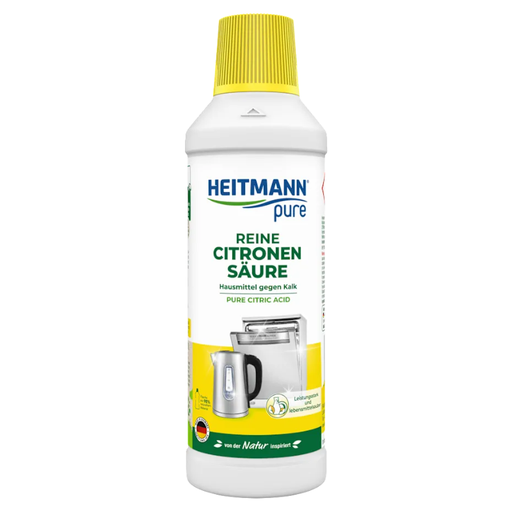
Why it suits this type of user: This liquid citric acid cleaner is ideal if you want to descale individual appliances and taps without buying an additional cleaning appliance.
The instructions give specific quantities for coffee machines and hot water appliances, making it easier to avoid using too much.
500 ml; designed for use with a range of appliances and for manual cleaning.
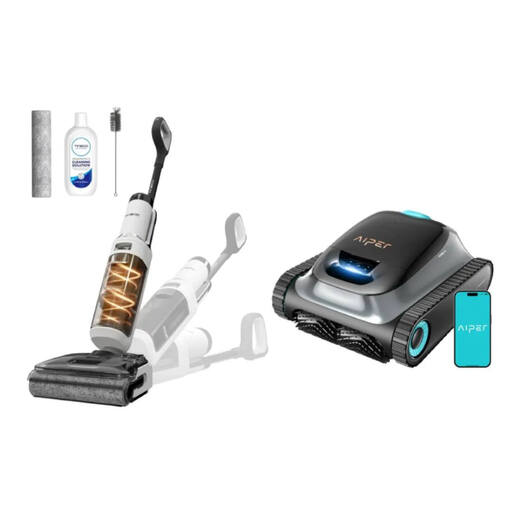
Why it suits this type of user: This bundle pairs a floor cleaner with a pool robot, making it a good fit for homeowners and garden owners with several areas to clean.
With two clearly defined uses, you’re less likely to buy several separate appliances that aren’t up to the job. The product name states that the floor cleaner offers 180° flat cleaning, while the pool component runs for up to 270 minutes.
Combines a vacuum mop and a pool robot; app control, according to the product information.
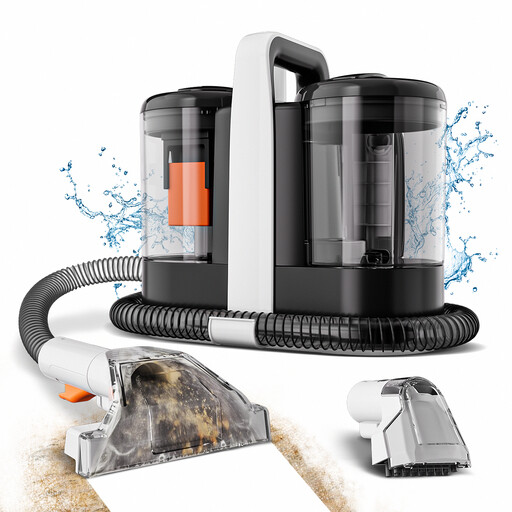
Why it suits this type of user: Families and pet owners can use its portable spray, brush and suction system on carpets, sofas, mattresses and car seats.
Separate tanks for 1.5 l of clean water and 0.8 l of dirty water make it easy to check the capacity before you buy. Be sure not to exceed the maximum fill line.
15 kPa suction power, according to the product information; 3-in-1 functionality with a 1.3 m hose and 3 m power cable.
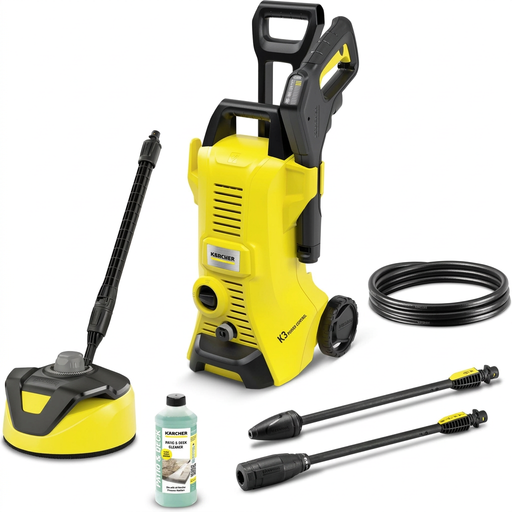
Why it suits this type of user: For patios, fences and garden areas, this set includes a well-matched selection of accessories: a surface cleaner, telescopic handle and adjustable spray gun.
The working pressure is specified as 20 to 120 bar, making it easier to adjust to different surfaces than a model with a single fixed pressure.
7 m high-pressure hose; maximum 120 bar and 380 l/h, according to the product specifications.
We’ve put together a complete, regularly updated list of products that meet these strict selection criteria and comply fully with the safety regulations in force in the EU.
A washing machine cleaner is generally used in a suitable programme, without laundry or detergent. Depending on the product, a temperature of 40 or 60 °C may be required. The product description for Frosch Citrus Washing Machine Hygiene Cleaner recommends running an empty main wash cycle at a minimum of 40 °C. According to its instructions, Heitmann Machine Descaler 3in1 is suitable for washing machines and dishwashers, with different dosages and temperatures specified for each.
Dishwasher cleaners come as powder, liquid or tablets. According to the product information, Finish Machine Care 3 Tabs are intended for monthly use alongside your regular dishwasher detergent. By contrast, the instructions for Finish Machine Deep Cleaner Regular recommend using it in an empty appliance at a minimum of 65 °C, approximately every three months.
Laundry detergents such as Persil Universal Kraft-Gel should be dosed according to water hardness, how dirty the laundry is and the size of the load. Using more detergent won’t automatically improve the wash and may leave residue or cause unnecessary environmental impact.
It depends on how often you use it, your wash temperatures and the water hardness in your area. If you often wash at low temperatures, you can use a washing machine cleaner at regular intervals, following the manufacturer’s instructions. You should also check the detergent drawer, door seal and filter, and leave the door open after each wash.
Key considerations include separate water tanks, run time, charging time, tank capacity and how easy it is to clean the brush roll. Empty and rinse the dirty-water tank after every use. This helps prevent odours and reduces residue building up inside the appliance.
A pressure washer can be a good choice if you regularly clean patios, garden paths, vehicles or fences. Before you buy, check your water connection, storage space, hose length, included accessories and the pressure setting that’s safe for each surface.