
Lieferung heute & morgen

Qualitätsgarantie

Willkommens-Angebote freischalten: KOSTENLOSE Lieferung | Bis zu 80 % RABATT | Kostenlose 30-Tage-JoyPlus-Testphase
App herunterladen
A household and DIY tool set needs to cover a wide range of tasks: furniture assembly, repairs, maintenance, drilling, screwing, and work on your bike or car. In practice, however, poor purchases often happen not because there are too few pieces, but because of an unsuitable combination, bad storage, or a lack of technical specifications.
A tool case with several hundred pieces sounds comprehensive at first. What really matters, though, is which sizes and types of tools are actually included. For household use, for example, screwdrivers, pliers, bits, hex keys and sockets are relevant. For car repairs, you also need the right drive sizes, extensions and a sturdy ratchet set.
Many duplicate bits or rarely needed specialist parts increase the piece count without adding much practical value.
Descriptions like "sturdy" or "professional" mean very little without technical explanation. Look for concrete details about the material, surface treatment and load capacity. Chrome-vanadium steel (Cr-V) is commonly used for sockets, spanners and bits. A polished or chrome-plated surface can make cleaning easier and help protect against corrosion, but it does not replace dry storage.
A tool set with a case needs to be not only portable but also practical for everyday use. Loose parts, poorly fitting inserts or a lid that does not close securely can make work more difficult. So check whether the tools have a fixed place, whether the case closes securely, and whether the weight and dimensions suit your intended storage location.
For general repairs, a combination of 1/4-inch, 3/8-inch and 1/2-inch drives is versatile. Smaller drives are suitable for finer screwing tasks, while larger sockets are used for higher torque. A socket set or ratchet case should also include extensions, a reversible ratchet and common metric sizes.
For UK households, a metric set is particularly relevant. An additional SAE selection can be useful if you maintain vehicles, machinery or imported products.
With a cordless drill set, you should not just look at the voltage rating. Also important are:
An 18V cordless drill driver can offer enough power reserves for many DIY tasks. However, its actual suitability depends on the material, drill bit diameter and scope of work. For concrete or very hard building materials, a specialist hammer drill model may be required depending on the task.
A bicycle torque wrench should have a measuring range that suits the application. On bikes, many sensitive fastenings are in the low newton-metre range. A range of 2 to 20 Nm covers typical finer adjustment work, provided the bike manufacturer specifies the respective torque value.
For a bike repair set, hex, Torx and Phillips bits are also useful. For car repairs, however, socket sizes, extensions and robust ratchets are more important. A general DIY tool does not replace safety-critical specialist tools, for example for brake systems or electrical systems.
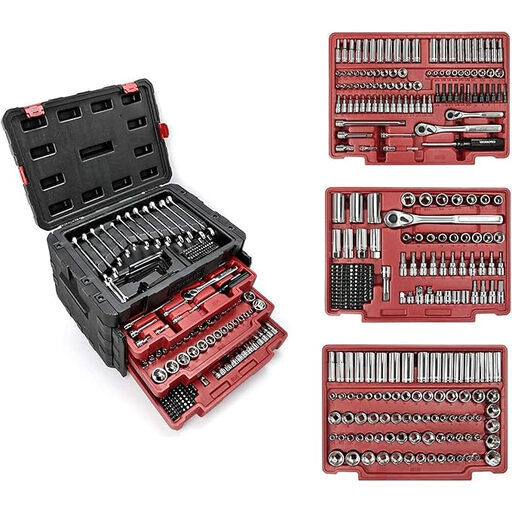
Why this product suits the profile: The comprehensive set covers numerous assembly, household and maintenance tasks and is stored in a case with four inserts.
According to the manufacturer, the pieces are arranged in a blow-moulded case with fixed storage compartments, which reduces loose individual parts.
450 pieces, 1/4-inch, 3/8-inch and 1/2-inch drives, and tools made from chrome-vanadium steel with a chrome-plated surface according to product specifications.
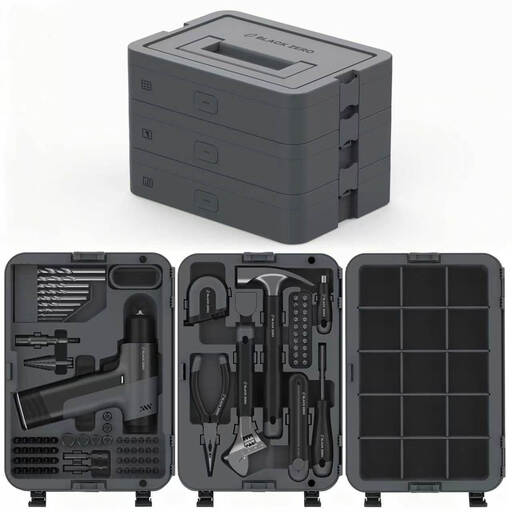
Why this product suits the profile: The three-layer box with a separate drill level is aimed at users who want to combine organisation, transport and quick access.
The separate drill storage compartment separates the power tool from the rest of the accessories. This means the case does not need to be reorganised for every use.
16V tool, 1,600 mAh battery, no-load speed of 0 to 1,000 rpm and case with separate storage compartments according to the product description.
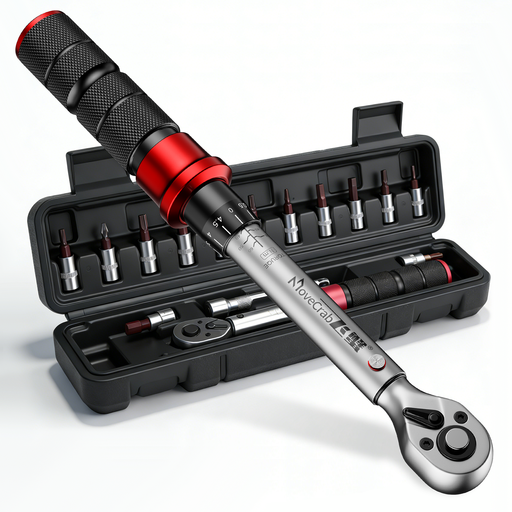
Why this product suits the profile: The set is designed for bike maintenance and is suitable for users who want to tighten fastenings to the specified torque values.
The stated range of 2 to 20 Nm suits many finer bike tasks. However, the scale should still be set correctly before each use and checked against the bike manufacturer's specifications.
2 to 20 Nm with 0.2 Nm fine adjustment, dual-direction ratchet and 11 bits with hex, Phillips and Torx profiles according to product specifications.

Why this product suits the profile: The cordless drill driver is designed for regular drilling and screwing in wood, metal and plastic, and can be integrated into a compatible 18V battery system.
The 20 torque settings allow graduated adjustment rather than just maximum power. The 10 mm keyless chuck makes changing bits and drill bits easier.
38 Nm maximum torque, two speed ranges of 0 to 430 and 0 to 1,630 rpm respectively, and LED work light according to the product description.
We have put together a complete, regularly updated list of products that fully meet these strict selection criteria and the safety regulations in force in the EU.
A tool set will stay usable for longer if you clean dust and moisture off it after use. Hand tools should be stored in a dry place. With a cordless drill, it is advisable to keep the ventilation slots clean, charge the battery according to the manufacturer's instructions, and avoid contact between the contacts and moisture or metal parts.
When planning costs, in addition to the purchase price, you should also consider batteries, charger, wear parts and supplementary bits. A battery system can be economical if you later buy more compatible tools. With a comprehensive tool case, however, you should check whether the included sizes match your own applications.
There is no fixed minimum number. For simple repairs, a compact set with screwdrivers, pliers, bits, hex keys and metric sockets is often enough. If you also assemble furniture, maintain vehicles or regularly carry out DIY projects, you will benefit from extensions, multiple ratchet drives and a larger complete tool case.
For light maintenance work, a ratchet set with metric sockets, extensions and several drive sizes is a sensible foundation. Work on brakes, airbags, suspension or electrical safety systems should only be carried out with the appropriate qualifications, suitable specialist tools and the vehicle manufacturer's specifications.
For many bike components, adhering to the specified torque is important, especially with lightweight parts and clamp connections. A suitable torque wrench supports controlled assembly. The torque specifications from the bike or component manufacturer, and the correct use of the tool, always remain decisive.