
Lieferung heute & morgen

Qualitätsgarantie

Willkommens-Angebote freischalten: KOSTENLOSE Lieferung | Bis zu 80 % RABATT | Kostenlose 30-Tage-JoyPlus-Testphase
App herunterladen
By Joybuy Product Recommendation Officer, 28 July 2026
Household paper is an everyday essential, but choosing the right one involves more pitfalls than you might think. Many consumers grab products in the supermarket that seem appealing due to marketing promises, only to find they are impractical or overpriced in use. This guide will help you identify crucial quality features and avoid common purchasing traps.
The most frequent issues arise from three common marketing traps:
To make an informed purchasing decision, you should focus on objective criteria rather than advertising messages. The following three parameters are crucial for quality and value for money.
The number of plies is an initial indicator of quality. 3-ply toilet paper has established itself as the standard for a balanced ratio of tear resistance and comfort. However, a higher ply count does not automatically mean better quality.
A more precise measure is the basis weight, given in grams per square metre (g/m?). A high-quality, dense 3-ply paper can be superior in absorbency and stability to a thin, loose 4-ply paper. Therefore, pay attention to a firm, dense paper texture instead of being guided solely by the ply count.
The raw material used has a direct impact on the paper's properties and its environmental footprint.
The most telling metric for cost-effectiveness is the total number of sheets in a pack. Don't compare the number of rolls; instead, calculate the price per 100 sheets.
Formula: (Total Price / (Number of Rolls × Sheets per Roll)) × 100 = Price per 100 Sheets
This calculation allows for an objective comparison between a bulk pack of toilet paper and smaller packages, protecting you from misleading offers. A bulk pack of household paper is often only cheaper if the price per sheet is significantly lower.
Based on the objective criteria mentioned above, we have selected products for different household profiles.
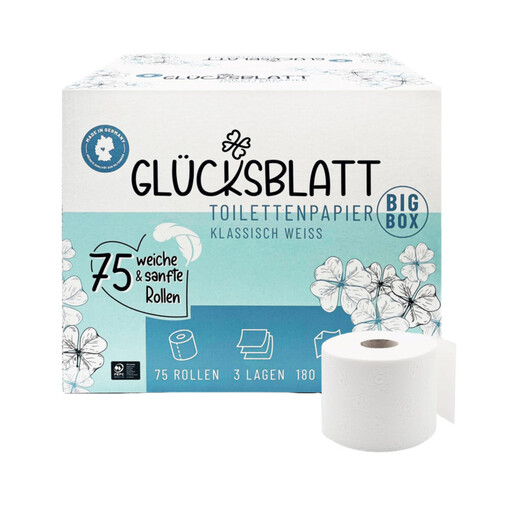
Why it's a good fit: Ideal for families and anyone who wants to shop less frequently and save costs in the long run. The supply of 13,500 sheets secures your stock for months and significantly reduces shopping frequency.
Debunks the "misleading pack size" trap by providing transparent information on the enormous total sheet count. The focus is on pure volume, not a vague "XXL" label.
Extremely high sheet count per pack (13,500 sheets); delivered in a practical, reusable storage box.
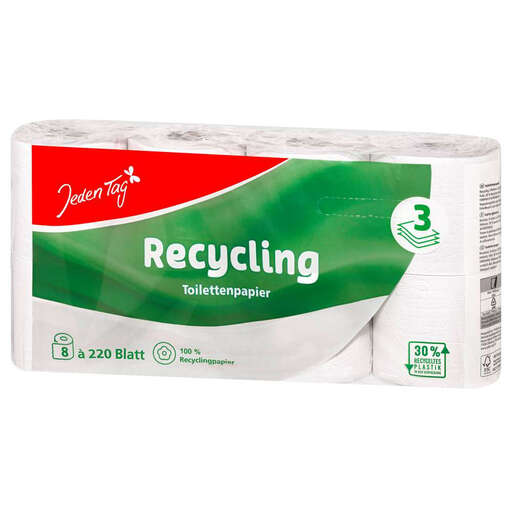
Why it's a good fit: Perfect for consumers who want to actively reduce their ecological footprint without compromising on functionality. A solid choice for daily use.
Provides a clear answer to greenwashing. The product is verifiably made from 100% waste paper and is certified with the "Blue Angel," one of the strictest eco-labels in Germany.
Made from 100% recycled paper and certified with the Blue Angel eco-label, which proves high compliance with ecological standards.
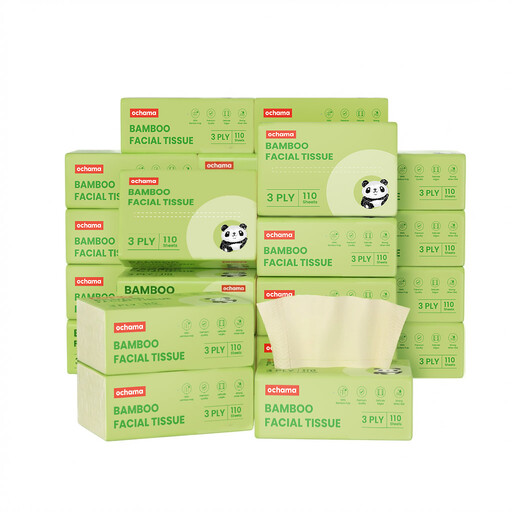
Why it's a good fit: An excellent choice for people with sensitive skin or allergies who react to bleaching agents and chemical additives. The tissues are versatile and can also be used as an alternative to a classic box of tissues.
Bypasses the trap of hidden irritants. The paper is unbleached, free of fluorescent whitening agents, and leverages the natural properties of bamboo, making it especially gentle on the skin.
Made from 100% pure bamboo pulp; unbleached and fragrance-free, ideal for sensitive skin and versatile applications.
We have compiled a complete, up-to-date list of products that fully meet these strict selection criteria and German safety regulations.
3-ply paper typically represents a good compromise between absorbency, tear resistance, and price. 4-ply paper is often noticeably thicker and softer, but can be more expensive per sheet and is more likely to cause blockages in older or sensitive plumbing systems. Ultimately, the quality of the raw material and the basis weight are often more decisive for overall performance than the ply count alone.
Yes, as long as it is certified accordingly. Recycled toilet paper that has been awarded seals like the "Blue Angel" is verifiably made from 100% waste paper. This process conserves wood resources and uses significantly less water and energy in production compared to making paper from virgin pulp.
Ignore the stated number of rolls. The crucial metric is the price per 100 sheets. Divide the total price of the pack by the total number of sheets (number of rolls multiplied by the sheets per roll) and multiply the result by 100. This is the only way to objectively compare a bulk pack of toilet paper with smaller units and identify the most economical offer.