
Lieferung heute & morgen

Qualitätsgarantie

Willkommens-Angebote freischalten: KOSTENLOSE Lieferung | Bis zu 80 % RABATT | Kostenlose 30-Tage-JoyPlus-Testphase
App herunterladen
Household steam appliances cover a range of tasks: smoothing clothes, cleaning floors and worktops, or gently cooking food. However, the product groups differ significantly in terms of steam output, heating time, tank capacity, temperature and accessories. If you focus only on wattage or sweeping marketing claims, you can easily end up with an appliance that does not suit the way you intend to use it day to day.
A high power rating can support rapid heating. On its own, however, it says little about how long steam will be available or whether its intensity can be adjusted. For example, a 2,000 W electric steamer is designed for larger quantities, while a compact garment steamer rated at 1,200 to 1,500 W is intended for individual items of clothing.
A 1.6-litre tank can enable long cleaning sessions with a steam cleaner. For a garment steamer, however, a tank of this size would be impractical and would make the appliance heavier. What matters is the relationship between tank capacity, steam output and intended operating time.
A 2-in-1 steam appliance can be used as a steam mop and handheld steam cleaner. Even so, you should check which attachments are actually included and which surfaces they are designed for. Unsealed wood, delicate fabrics and heat-sensitive plastics can be damaged by hot steam. Accessories are only an advantage when they suit your household.
For steam irons and garment steamers, specifications such as g/min are helpful. The Russell Hobbs Colour Control Pro 27280-56, for example, specifies a continuous steam output of 45 g/min and a steam boost of up to 185 g/min. These figures describe steam output, but do not automatically indicate how quickly creases will be removed. The fabric’s characteristics, the selected temperature and your ironing technique also play a part.
Steam cleaners additionally specify temperature and pressure. The ROUNY Steamo X states 2.5 to 3 bar, a heating time of approximately 25 seconds and two steam settings. According to the product specifications, the Monsga steam cleaner operates at 3.5 bar and takes approximately 15 seconds to heat up. Higher pressure can help loosen stubborn dirt, but is not suitable for every surface.
A smaller tank is sufficient for a few individual shirts, while families may benefit from a larger capacity when cleaning floors or kitchens. The Aucma Handheld Garment Steamer has a 300 ml tank; according to the product description, it is designed to provide up to 15 minutes of steaming. This makes it more suitable for short sessions than for a large pile of laundry.
The Monsga steam cleaner has a 1.6-litre tank and, according to the manufacturer, is designed to operate for up to 48 minutes. Such operating-time claims depend on the selected steam setting. It is therefore worth checking the runtime at maximum output before buying.
In Germany, appliances designed for 220–240 V and 50 Hz are required unless another solution is expressly intended. When comparing products, you should also check for a suitable plug, clear German-language instructions and a responsible contact within the EU.
One example of an important check: the available specifications for the Lubluelu JJ-SC-053A list 100–120 V and 60 Hz. This is not directly compatible with the German power network and must be clarified before placing an order.
For steam irons, automatic switch-off, anti-drip protection, descaling and self-cleaning are also practical safety and maintenance features. The Russell Hobbs model lists these functions, along with a 380 ml tank and a ceramic soleplate.
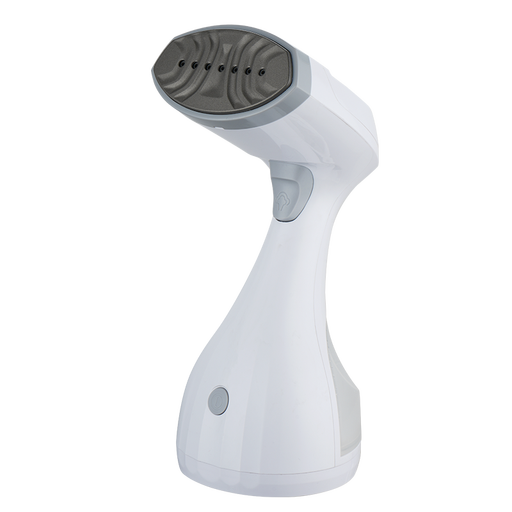
Why this product suits this profile: This compact garment steamer is designed for people who want to smooth clothes quickly at home, in the office or while travelling.
The technical specifications clearly state the tank capacity, steam output and heating time: 300 ml, 23 ± 3 g/min and up to 30 seconds.
Vertical and horizontal steaming, a 1.9 m cable, two steam settings and a ceramic soleplate.
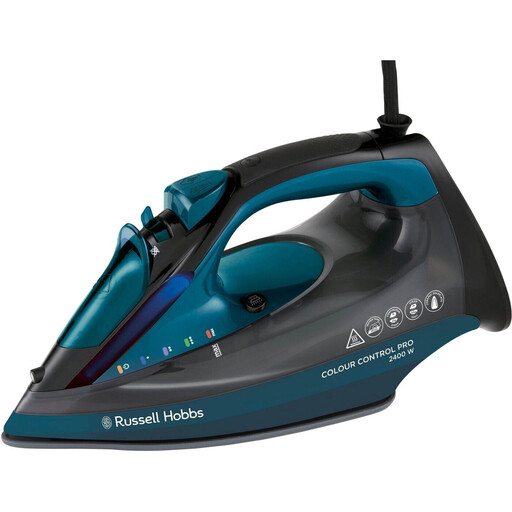
Why this product suits this profile: If you regularly iron shirts, trousers and robust fabrics, this traditional steam iron offers several maintenance and safety functions.
The colour indicator supports temperature selection for different materials. The anti-drip, anti-scale and self-cleaning functions address common maintenance issues.
2,400 W, 380 ml tank, 45 g/min continuous steam, up to 185 g/min steam boost and vertical steaming function.

Why this product suits this profile: For larger households and longer sessions in the kitchen, bathroom, on hard floors or in the car, a large tank with adjustable steam output is a practical choice.
The six steam settings allow you to adapt the appliance to different types of dirt. At the same time, the manufacturer advises caution with delicate materials and recommends testing first in an inconspicuous area.
1.6-litre tank, 15-second heating time, 3.5 bar pressure and ten accessories according to the product description.
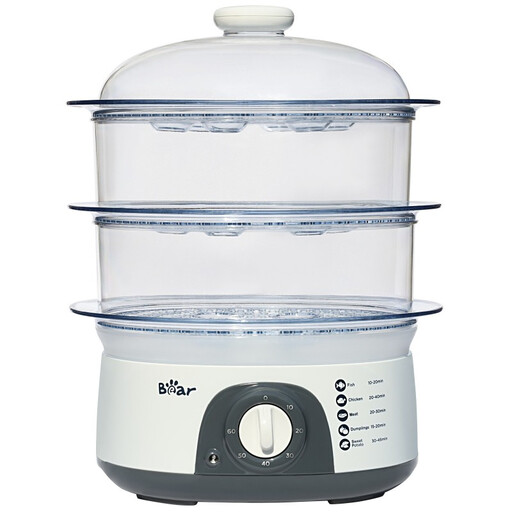
Why this product suits this profile: This 3-tier steamer is suitable for households that want to prepare vegetables, side dishes or several ingredients in one go.
The three removable tiers can be used according to the quantity being prepared. A 60-minute timer and transparent lid make it easier to monitor the cooking process.
10-litre capacity, 650–775 W, removable parts and a drip tray for collecting liquid.
We have put together a complete, regularly updated list of products that fully meet these strict selection criteria and the safety regulations applicable in the EU.
A garment steamer, also known as a clothes steamer, usually works vertically on a hanger and is suitable for quickly touching up hanging clothes. A steam iron is used mainly horizontally and, with its soleplate, provides more pressure for stubborn creases and heavier fabrics. A 2-in-1 appliance combines both types of use, but may involve compromises in terms of tank capacity and weight.
Its lifespan depends on water quality, descaling, storage and frequency of use. An anti-scale system does not automatically extend the appliance’s lifespan. Regular care, emptying the tank after use and following the manufacturer’s instructions are all important.
Energy consumption is determined by power and operating time. A 1,500 W steam cleaner theoretically uses 1.5 kWh when operated for one hour; in practice, the heating element does not run continuously at full power, depending on the model and temperature control. Short heating times and choosing an appliance of the right size can help limit everyday energy consumption.