
Lieferung heute & morgen

Qualitätsgarantie

Willkommens-Angebote freischalten: KOSTENLOSE Lieferung | Bis zu 80 % RABATT | Kostenlose 30-Tage-JoyPlus-Testphase
App herunterladen
If you’re looking to buy household and workshop products online, you’ll often find plenty of offers making similar promises. But the best choice isn’t determined by eye-catching product names or impressive performance figures alone. What matters is how well a product suits your needs, along with its technical specifications, safety features and ongoing costs. That applies just as much to a bedroom dehumidifier as it does to a garden fire pit, an electric detail sander or a wheeled tool cabinet.
For dehumidifiers, the stated moisture removal rate is usually measured under specific conditions, such as 30 °C and 80% relative humidity. In a typical home, actual performance may be lower. Noise ratings also need a closer look: an advertised sleep mode of 32 or 35 dB may differ from a figure of 38 or 40 dB(A) in the technical specifications.
A low initial price can end up costing more if you need to buy filters, sanding sheets, drainage hoses or suitable storage separately. With an air purifier with a HEPA filter, for example, you should look beyond CADR and filter class to check that replacement filters are available and affordable. For an electric detail sander, the right grit and effective dust extraction also affect running costs.
A garden fire pit needs a stable, non-combustible surface and plenty of clearance from buildings, furniture and plants. A tool trolley with drawers needs to fit through doorways and stand securely on the workshop floor. Before buying, check the dimensions, weight, wheel width and space required — not just the number of features.
When choosing a bedroom dehumidifier, pay particular attention to:
A Wi-Fi dehumidifier adds convenience with app control and scheduling. However, Wi-Fi features can’t make up for choosing a model with the wrong capacity. A unit rated at 12 litres per day may be sufficient for a room of up to around 24 m²; larger spaces call for a higher capacity.
For an air purifier with a HEPA filter, filter type, airflow and CADR are important points of comparison. A fan simply moves air around. A combination unit with air circulation and filtration therefore performs two distinct functions, which you should assess separately in the technical specifications.
A smokeless fire pit is designed to reduce smoke through its construction and airflow. However, “smokeless” doesn’t mean it produces no smoke at all when the wood is damp, the wind is unfavourable or the wrong fuel is used. Look for:
A stainless steel fire pit can be easy to maintain, but it still needs to be stored in a dry place and have its ash removed regularly.
An electric detail sander is ideal for corners, edges and smaller surfaces. Wood, metal and plastic all require different sanding grits. A basic selection of coarse, medium and fine grits makes it easier to switch between removing material and finishing a surface. Dust bags and vacuum adapters are handy features, but they don’t replace safety glasses or suitable respiratory protection.
When choosing a wheeled tool cabinet, check its load capacity, drawer runners, lockable wheels and corrosion protection. The drawers should also be the right size for your tools. Perforated side panels with hooks can keep frequently used pliers and spanners close to hand.

Why this product suits this profile: Designed for rooms of up to 24 m², this unit combines a 1.8-litre water tank with app control and three operating modes. It’s a good fit for smaller homes, bedrooms or utility rooms that occasionally get damp.
The stated capacity of up to 12 l/day is measured at 30 °C and 80% relative humidity. This gives you a more realistic basis for assessing the figure.
Wi-Fi control, a 24-hour timer, automatic shut-off when the tank is full and wheels for easy repositioning.
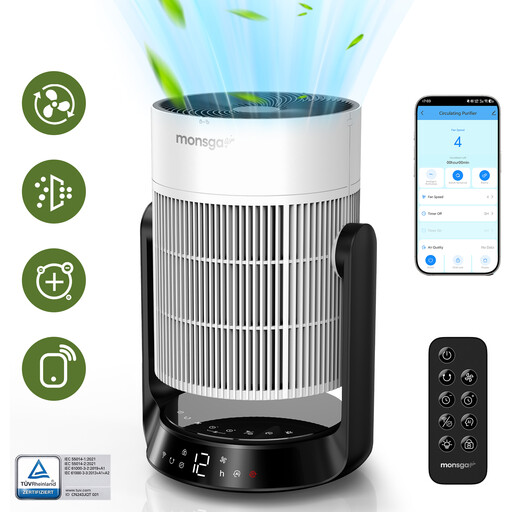
Why this product suits this profile: This combination unit circulates and filters air in living rooms or bedrooms. The manufacturer specifies an H13 HEPA filter, a CADR of 280 m³/h and a sleep mode rated at up to 25 dB.
Filtration is described using specific figures, including H13 and CADR. Before buying, check replacement filter availability, replacement intervals and suitability for your room size.
App, remote and touch controls, 120-degree oscillation and a stated airflow of up to 14.8 m³/min.
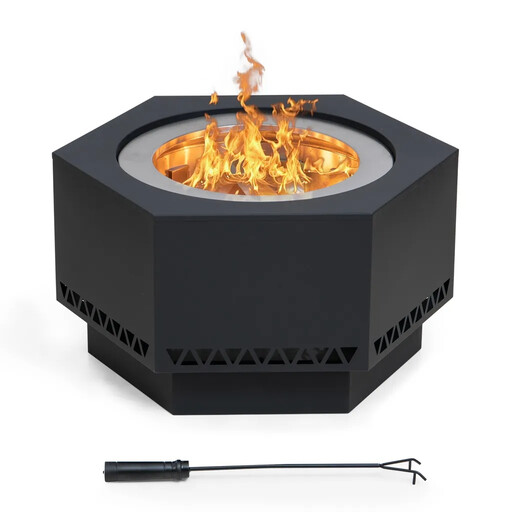
Why this product suits this profile: Designed for outdoor use, this garden fire pit features a double-walled stainless steel construction, a removable ash pan and a fire poker.
The secondary combustion system doesn’t mean the fire pit is completely smoke-free. Dry, untreated wood and a suitable location are still essential.
Approx. 66 × 57 × 38 cm, stainless steel construction, removable ash pan and a hexagonal design.
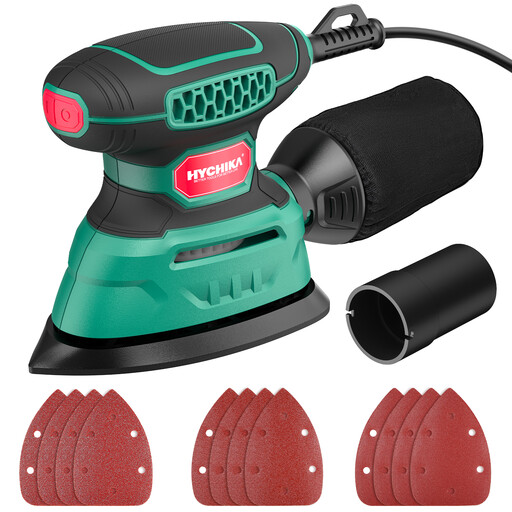
Why this product suits this profile: Its compact delta shape is ideal for edges and hard-to-reach areas. With 140 W, 13,000 OPM, a dust bag and a vacuum adapter, it’s designed for DIYers who sand regularly.
It comes with 12 sanding sheets in P80, P120 and P240 grits, so you won’t necessarily need to buy compatible consumables separately to get started.
Compact design, hook-and-loop sanding sheet attachment, dust bag and adapter for external dust extraction.
For specialist cleaning jobs, a rust and deodorant stain remover such as Dr. Beckmann Stain Devil may be a good choice. According to the product details, it’s suitable for rust, deodorant and perspiration stains on certain washable and non-washable fabrics, as well as rust stains on some hard surfaces. Check the instructions, material compatibility and safety advice before use. If you need more storage, you could also consider a wheeled tool cabinet made from cold-rolled steel, with drawers, lockable wheels and hooks.
We’ve put together a comprehensive, regularly updated list of products that meet these strict selection criteria and fully comply with the safety regulations in force in the EU.
The right choice depends on the room size, moisture levels and temperature. A model rated by the manufacturer at up to 12 litres per day may suit a smaller bedroom. Always compare the stated performance with the test conditions provided.
Running costs depend on the power consumption, how long the unit is switched on and your electricity tariff. The calculation is simple: power consumption in kW × operating hours × electricity price per kWh. Automatic mode and schedules can help avoid unnecessary running time.
Lifespan depends on how a product is used, maintained and stored. Replace filters as recommended by the manufacturer, change sanding sheets when needed, and clean fire pits once they have cooled completely before storing them somewhere dry. For tool trolleys, suitable drawer liners and a dry location help prevent unnecessary wear.