
Lieferung heute & morgen

Qualitätsgarantie

Willkommens-Angebote freischalten: KOSTENLOSE Lieferung | Bis zu 80 % RABATT | Kostenlose 30-Tage-JoyPlus-Testphase
App herunterladen
Household scissors should reliably cut paper, packaging, threads and fabric. In practice, however, it is often only after purchase that you discover whether the size, material and handle are suited to the task. Compact scissors can be practical for delicate work, but quickly reach their limits when cutting cardboard or fabric. Conversely, a large multi-purpose pair of scissors may be awkward for smaller hands or confined work areas.
The most important purchasing decisions can be narrowed down to a few objective factors: intended use, blade material, blade length, handle design and care requirements.
Kitchen scissors with a bottle opener, nutcracker or other functions can be useful in everyday life. However, these additional features do not replace suitable fabric scissors, pruning shears or craft scissors. Scissors used for food should also be hygienic and easy to clean. Scissors intended exclusively for paper or packaging do not belong in the kitchen.
Sharp household scissors do not necessarily perform every task equally well. Fine, smooth blades, for example, are suitable for paper or thin materials. Micro-serrated edges can improve grip while cutting, whereas a sturdy blade is needed for thicker cardboard or multiple layers of fabric. Hard objects such as wire, metal or bones can damage the cutting edges and are not suitable for ordinary household scissors.
A small or overly narrow handle can cause pressure points during extended use. Scissors with an ergonomic handle should sit securely in your hand and allow controlled movement. With kitchen and household scissors, it is also important to consider whether the blades can be removed for cleaning and whether the manufacturer recommends hand washing or dishwasher cleaning. Stainless steel protects against corrosion, but does not automatically make scissors impervious to moisture or harsh cleaning products.
Stainless steel is a practical choice for many household scissors, as the material is corrosion-resistant when properly cared for. With stainless-steel household scissors, buyers should also pay attention to the specific construction:
For forged or specially coated blades, the manufacturer’s information is decisive. A coating can affect surface hardness or corrosion protection, but it does not replace using the scissors correctly.
Blade length affects control and cutting width. Compact models measuring around 10 to 13 cm are easy to store and suitable for smaller everyday tasks. Longer models offer advantages when cutting fabric, cardboard or larger surfaces.
For sewing projects, fabric scissors with sufficiently long, precisely guided blades are a sensible choice. Craft scissors for paper and lightweight materials do not need to have the same dimensions. Plants require specialised types of scissors with a suitable cutting geometry. Pruning shears should not be used as a universal tool for household or DIY tasks.
Right-handed and left-handed users do not always need the same design. For children, suitable left-handed scissors for children with adapted grip zones and a protective cap are a sensible choice. Use should be supervised, as even models with rounded or coated blades can still have sharp edges.
For garden and kitchen scissors, safety features such as a locking mechanism, spring mechanism or secure fastening are important. A spring mechanism can make opening easier, but does not automatically improve cutting performance. Before storing them, scissors should be closed and kept dry.
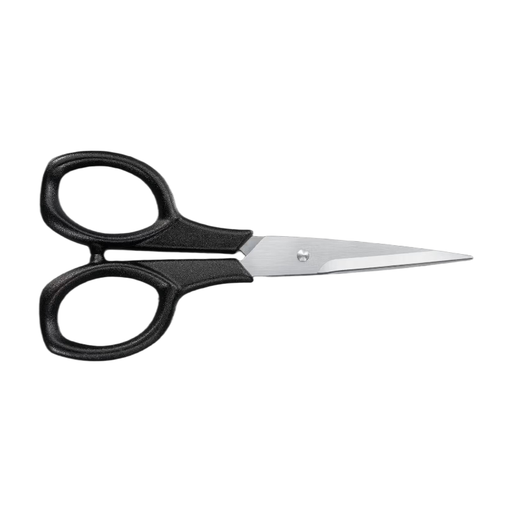
Why this product suits this profile: These compact household scissors are intended for light everyday tasks such as cutting paper, labels and packaging materials. Weighing 25 g, they are easy to store.
The stated blade length of 4 cm and overall length of 109 mm make the intended area of use clear. They are not presented as scissors for thick layers of fabric or branches.
Stainless-steel blades, polyamide handles, low weight and, according to the product information, dishwasher-safe; hand washing is recommended to help preserve them.
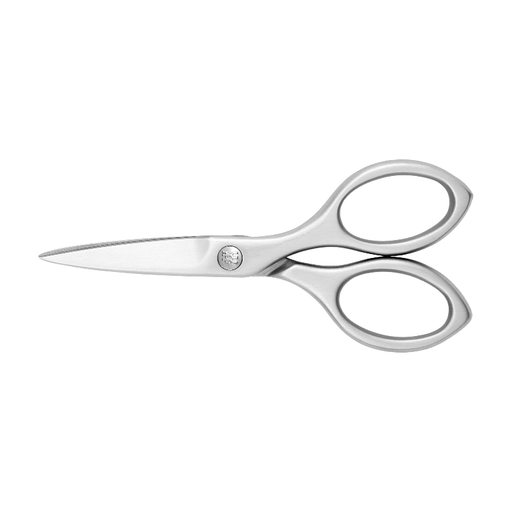
Why this product suits this profile: This model, described as being made entirely from stainless steel, is designed for controlled household tasks and compact storage.
The material and length are clearly specified. This means the scissors are not promoted with unsuitable additional functions, but remain focused on general cutting tasks.
100% stainless steel according to the product description, 13 cm length and a format designed for everyday household tasks.
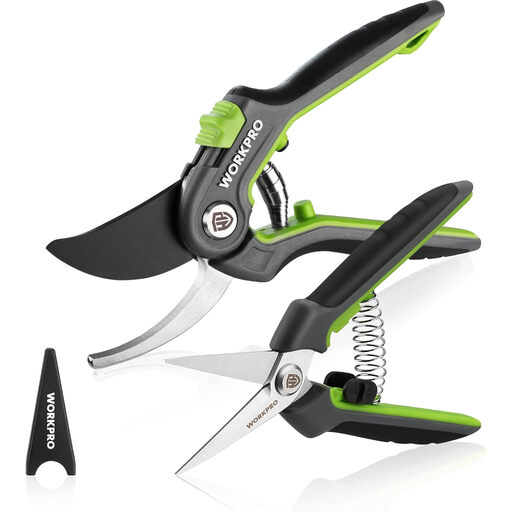
Why this product suits this profile: The set separates heavier cutting tasks from delicate jobs such as harvesting flowers or fruit, making it suitable for keen gardeners.
The limits of use are clearly stated: up to 19 mm for fresh branches and up to 5 mm for the smaller harvesting shears. The tools should not be used for wire or other hard materials.
Two types of shears, SK5 steel blades with rust-resistant coating, automatic spring opening and a safety lock.
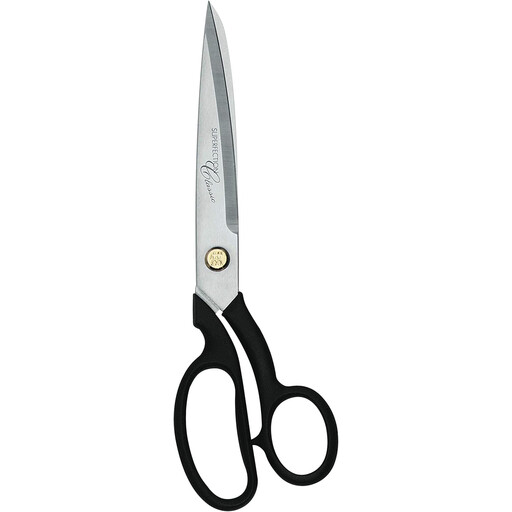
Why this product suits this profile: The longer blade is described as suitable for cutting fabric, wool, paper and cardboard. The glass-fibre-reinforced plastic handle supports controlled handling.
The scissors are clearly identified as cutting scissors rather than a universal tool for gardening or kitchen tasks. This helps prevent unsuitable purchases caused by an overly general product description.
21 cm overall length, rust-resistant special steel, precision-ground blades and adjustable precision screw according to the product information.
We have put together a complete, regularly updated list of products that fully meet these strict selection criteria and the safety regulations applicable in the EU.
For fabric, longer fabric scissors with precisely ground blades are a sensible choice. They should be used exclusively for textiles so that the cutting edge is not affected by paper, cardboard or adhesive residue. With thick or multiple layers of fabric, blade length and handle stability are particularly important.
Their lifespan depends on the material, frequency of use, material being cut and care. Scissors for paper generally stay sharp for longer when used as intended than a model that regularly has to cut cardboard or hard materials. Blunt, damaged or stiff blades should no longer be used. Some models can be readjusted using a screw; resharpening is not suitable for every design.
For children, models with adapted grip zones, a protective cap and a child-friendly size are a possible choice. Left-handed children should use left-handed scissors for children designed for this purpose. Regardless of the design, adult supervision is essential, and the scissors should be stored safely after crafting.