
当日/次日达

品质保障

开启新人专享福利: 全场免邮 | 低至 2 折 | 免费试用 30 天 JoyPlus 会员
下载 Joybuy
With so many options on the shelf, finding the right orange juice can quickly become overwhelming. Between different production methods, fruit content claims, and quality promises, it's not always easy to make an informed decision. This guide will help you understand the key differences and find a product that meets your standards for taste and quality, without falling for marketing hype.
Before you order your next bulk pack of orange juice, you should be aware of three common points of confusion that often lead to the wrong product choice.
To ensure you choose the right product for your household, a few key factors are crucial.
The most important distinction lies in the fruit content, which is clearly regulated by the Juice and Soft Drinks Ordinance:
Both versions can be sold as 100% orange juice but differ in their production process:
Depending on your personal preferences and needs, other criteria may play a role:
Here are some recommendations tailored to different requirements.
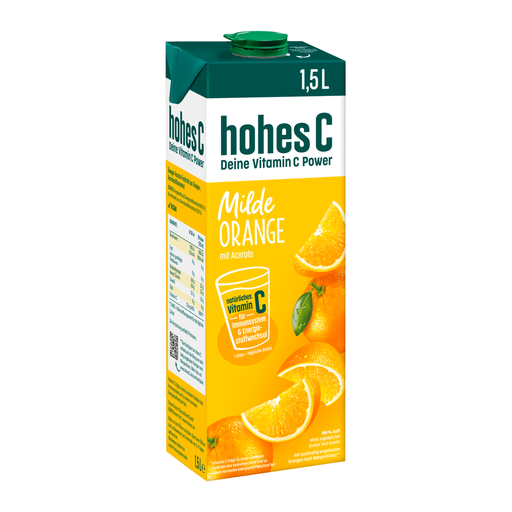
Why it's a great fit: Ideal for families who need a reliable supply for their daily breakfast. The large 1.5-litre bottles in an 8-pack are practical and reduce the frequency of shopping trips.
This product is clearly declared as 100% orange juice from concentrate. There is no risk of confusion with nectars or fruit juice drinks that have a lower fruit content.
The bulk pack offers excellent value for money for regular consumption. The no-pulp version ensures a consistently smooth texture.
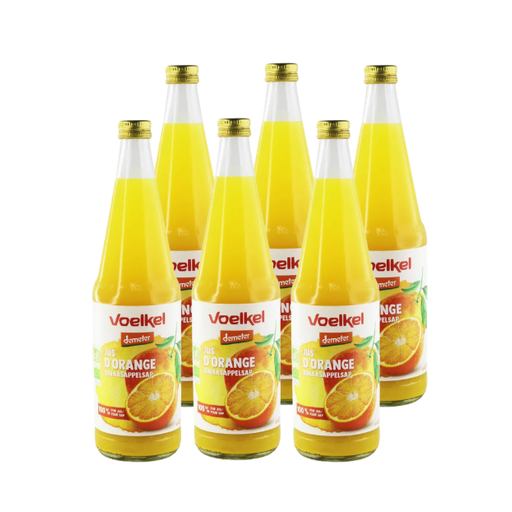
Why it's a great fit: For anyone who values organic farming and a taste that is as natural as possible. The Demeter quality certification represents the highest standards in organic cultivation.
As an organic orange juice and a not-from-concentrate orange juice, this product meets two key quality criteria at once, clearly setting it apart from standard juices made from concentrate.
The juice is pressed directly from sun-ripened oranges, giving it an authentic and full-bodied flavour. The glass bottle is also an eco-conscious packaging alternative.
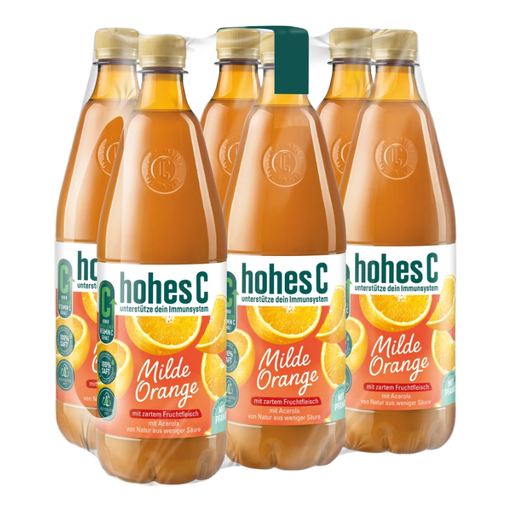
Why it's a great fit: Specially designed for people who love the taste of orange juice but are sensitive to its typical acidity.
This product solves a specific problem (sensitivity to acidity) that is often overlooked when choosing a standard orange juice. It is clearly labelled as a mild orange juice.
By using naturally low-acid orange varieties, this juice offers full fruit flavour while being gentle on the stomach, without compromising on its 100% fruit content.
We've compiled a complete, up-to-date list of products that fully meet these strict selection criteria and UK/EU regulations.
"100% fruit content" means that the entire content of the product originates from the fruit. This applies to both not-from-concentrate juice and juice made from concentrate. No sugar, water, preservatives, or colourings may be added. The juice contains only the sugar that is naturally present in the oranges.
From a nutritional standpoint, there are hardly any relevant differences. While some volatile aroma compounds are lost during the concentration process, these are added back to the juice in the form of natural orange aromas during reconstitution. The vitamin and mineral content is very similar in both varieties after pasteurisation. The choice is therefore primarily a matter of personal taste and preferred production method.
Unopened packs of orange juice should be stored in a cool, dry, and dark place. The best-before date is indicated on the packaging. Once opened, the juice must be kept in the refrigerator and should generally be consumed within 3–4 days to ensure its freshness and quality. Please refer to the manufacturer's specific instructions on the packaging.