
Lieferung heute & morgen

Qualitätsgarantie

Willkommens-Angebote freischalten: KOSTENLOSE Lieferung | Bis zu 80 % RABATT | Kostenlose 30-Tage-JoyPlus-Testphase
App herunterladen
Finding authentic Chinese noodles can be a challenge. Many products on supermarket shelves are often adapted to Western palates, lacking the specific texture or flavour required for traditional dishes. This guide is here to demystify the selection process. As your Joybuy Product Recommendation Officer, I will introduce a curated selection of dried noodles from China and provide objective criteria to help you find the perfect type for your next culinary creation.
To choose the right noodles for dishes like a classic noodle soup or a stir-fry, some basic knowledge is helpful. Here are three objective criteria to make your decision easier.
The shape of the noodle is crucial for the mouthfeel and how well it absorbs sauce or broth.
Authentic Chinese wheat noodles are often distinguished by a minimalist ingredient list. Typically, they consist of only wheat flour, water, and salt. This simplicity is a sign of quality, as the focus is on the quality of the wheat and the processing technique. Look for products declared as dried noodles from China to ensure traditional manufacturing.
Good Asian noodles should hold their structure well, meaning they don't fall apart or cloud the broth, even with slightly longer cooking times. The product packaging usually provides a recommended cooking time, which varies depending on the noodle's thickness. For quick meals, noodles with a cooking time of 3–5 minutes are a convenient choice.
Based on the criteria above, we have curated a selection of noodles from the Jin Sha He brand. Jin Sha He is a well-known manufacturer that combines traditional noodle-making techniques with modern production methods.
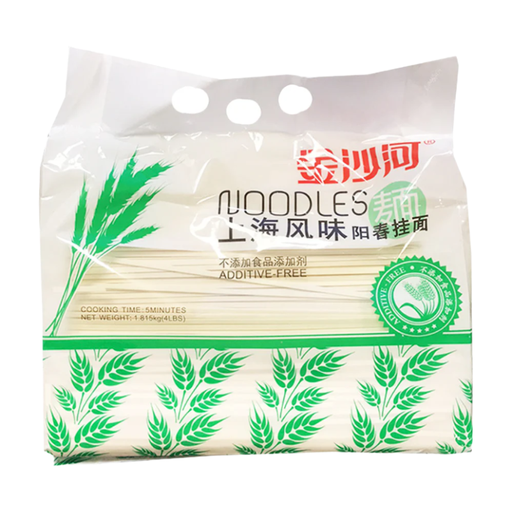
View Product: Jin Sha He Shanghai-Style Fine Dried Noodles 1.815kg
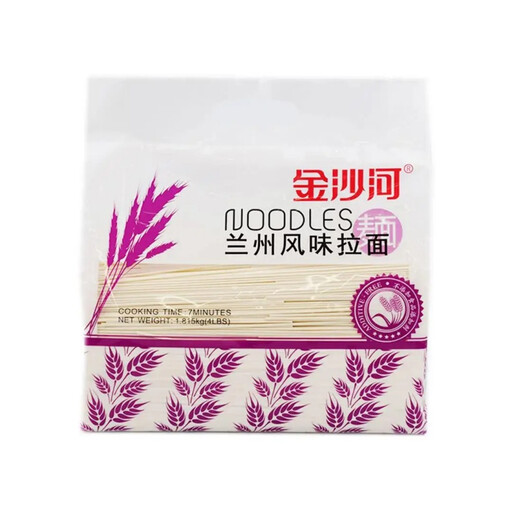
View Product: Jin Shahe Lanzhou Hand-Pulled Noodles 1.815kg
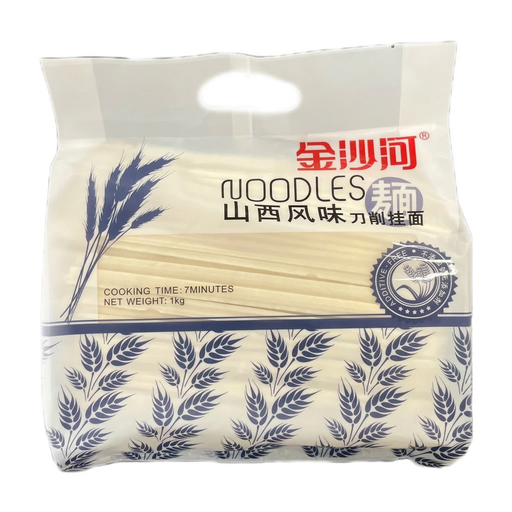
View Product: Jin Sha He Shanxi Style Knife-Cut Noodles 1kg
The world of Asian noodles is vast. If the products featured here aren't exactly what you're looking for, or if you want to explore more varieties, you're sure to find the right fit in our wider selection.
? Explore Our Entire Range of Gold Noodles Here
The main difference lies in the ingredients and production. Most Chinese wheat noodles are made from soft wheat flour, water, and salt. Italian pasta, on the other hand, is traditionally made from durum wheat semolina and may contain eggs, depending on the type. This results in different textures and cooking properties.
For clear broths and light soups, thin, smooth noodles like Shanghai noodles are a great choice. They cook quickly while remaining firm to the bite and absorb the flavour of the broth without overpowering it. For richer soups, like a beef noodle soup, the firmer Lanzhou Lamian are more suitable.
Bring a large pot of water to a rolling boil. Add the dried noodles from China and stir occasionally to prevent them from sticking together. Cook the noodles according to the time indicated on the package until they reach your desired firmness (al dente). Afterwards, drain them and serve immediately with your choice of broth, sauce, or other ingredients.