
Lieferung heute & morgen

Qualitätsgarantie

Willkommens-Angebote freischalten: KOSTENLOSE Lieferung | Bis zu 80 % RABATT | Kostenlose 30-Tage-JoyPlus-Testphase
App herunterladen
Choosing a new premium laptop can be complex. Especially in the 2-in-1 segment, manufacturers advertise a multitude of features that seem compelling at first glance. But all too often, lofty promises turn into costly disappointments. Before you make a decision, it's wise to understand the common pitfalls often hidden behind the marketing.
A common issue is the "AI-ready" label. Many devices are advertised with artificial intelligence but lack the dedicated hardware to accelerate these tasks. The result is lower performance and faster battery drain when running demanding AI applications. Another pitfall is the wrong balance between design and function. An ultra-thin chassis can come at the expense of stability, cooling performance, or battery life, making a device designed as a lightweight notebook for on-the-go use impractical in everyday life. Finally, even a high-resolution display can disappoint if key parameters like refresh rate or colour accuracy don't meet the standards for creative or productive work.
To make an informed purchasing decision, you should focus on objective technical specifications rather than marketing terms. For a modern convertible laptop, three areas are particularly crucial.
A true AMD Ryzen AI laptop is distinguished by an integrated NPU. This specialised processing unit is designed to handle AI workloads efficiently and with low power consumption. An NPU's performance is measured in TOPS (Trillion Operations Per Second). A high TOPS value is an indicator that the device is well-equipped for current and future AI applications, such as those increasingly used in Windows 11 or creative software. Without a powerful NPU, these tasks are handled by the main CPU, which comes at the expense of system speed and battery life.
A 3K OLED display offers significant advantages over conventional LCD panels. Its self-lit pixels achieve perfect black levels and an extremely high contrast ratio, resulting in brilliant and vibrant colour reproduction. For an HP laptop with an OLED touchscreen, however, the refresh rate is also critical. A frequency of 120 Hz ensures visibly smoother motion, which is noticeable not only in videos but also when scrolling through documents or websites. This is a key factor for comfortable work and high-quality media consumption.
For a business laptop with long battery life, it's not just the battery's capacity in watt-hours (Wh) that matters, but also the efficiency of its components. Modern processors and optimised system management are crucial here. At the same time, connectivity must be future-proof. A Wi-Fi 7 notebook offers higher speeds, significantly lower latency, and a more stable connection in congested networks compared to the older Wi-Fi 6E standard. This is especially important for cloud-based work, video conferencing, and streaming high-resolution content. A low weight, as is often the case with a 14-inch convertible notebook with an aluminium chassis, completes the mobility package.
Based on these objective criteria, we have put together a selection of products suitable for different user profiles and their specific requirements.
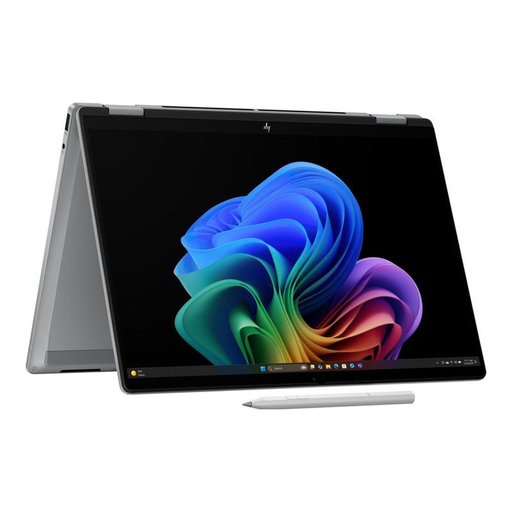
Why it's a good fit: For professionals and creatives who need an uncompromising device for demanding multitasking, AI applications, and high-quality media consumption. The combination of performance and portability is tailored for a mobile work life.
The device (model 14-fk0076ng) features an AMD Ryzen AI processor with a 50 TOPS NPU for true AI performance. The 3K OLED display with 120 Hz delivers excellent image quality, and the robust 1.39 kg aluminium chassis makes no compromises on stability.
The combination of dedicated AI hardware, a high-refresh-rate OLED touchscreen, and future-proof Wi-Fi 7 connectivity in a flexible 360° form factor.
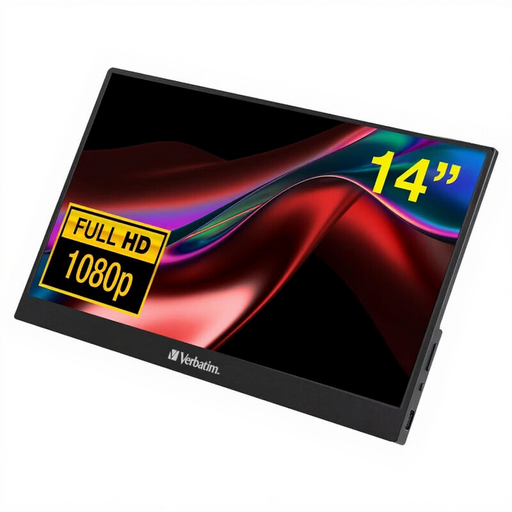
Why it's a good fit: Ideal for users who want to boost their productivity on the go. It easily extends a laptop's workspace and is light enough not to be a burden during daily commutes or on business trips.
This device solves the problem of limited screen real estate when working on the move. Instead of opting for a larger, heavier laptop, it offers a flexible and lightweight (540 g) solution to double the display area when needed.
Simple plug-and-play functionality via a single USB-C or HDMI port and a sturdy aluminium housing for mobile use.

Why it's a good fit: For self-employed individuals and small business owners who need a straightforward and transparent solution for accepting card payments, whether in-store, at markets, or on-site with customers.
It bypasses the complexity and hidden monthly fees of traditional POS systems. As an all-in-one device, it doesn't require a paired smartphone and is ready to use out of the box. The cloud-based TSE is compliant with the German KassenSichV (Cash Register Security Ordinance).
No fixed monthly costs, just a small fee per transaction. Integrated Wi-Fi and a free SIM card ensure a reliable connection.
We have compiled a complete, up-to-date list of products that fully meet these strict selection criteria and German safety regulations.
According to the manufacturer, the 59 Wh battery can last up to 20.75 hours. In practice, the actual duration heavily depends on usage. With mixed use involving web browsing, Office applications, and occasional video streaming at adjusted screen brightness, all-day use without recharging is realistic. Intensive use of creative software or AI applications will result in shorter battery life.
The benefits of the NPU are most apparent in specific applications. A directly noticeable effect occurs when using Windows Studio Effects, which hardware-accelerates features like auto framing, eye contact correction, and background blur in video conferences. This offloads the CPU and improves battery life during calls. Future software updates for operating systems and applications are expected to integrate the NPU even more, which will increase its performance benefits.
Wi-Fi 7 (802.11be) is the next step in WLAN technology. For a mobile device like the HP OmniBook X, this primarily means a more robust and faster connection. Latency is significantly reduced, which is advantageous for real-time applications like cloud gaming or video conferencing. Additionally, the higher bandwidth allows for faster downloads and uploads, speeding up work with large files in the cloud. Even in environments with many Wi-Fi networks, such as offices or public areas, Wi-Fi 7 provides a more stable connection.