What should you look for when choosing?
First decide whether children will speak to the robot or use it to tell stories to one another. If AI features process personal data, you’ll also need to consider their purpose, whether their use in the setting is lawful and the legal basis for processing.
The German Federal and State Data Protection Authorities set out these points in their guidance of 6 May 2024. You should also assess how the system will be used in practice against the requirements of the relevant federal state and school authority.
| Purchase consideration |
What to look for |
Who this matters most to |
| Storytelling and conversation format |
Trial a facilitated lesson with specific speaking tasks, and clarify how the teacher can step in. |
If children are to develop stories with the robot, I want to trial the planned dialogue with the teacher. Around 33% of consumers prioritise the storytelling and conversation format. |
| Processing of voices and images |
For every feature you enable, check what data is collected, transmitted or stored, and who can access it. |
If the camera or microphone is active in class, I want to know where the data goes and who can access it. Around 33% of consumers put data processing first. |
| Support and operation |
Agree training, maintenance, support and a plan for lessons without the device in advance. |
If several teachers use the robot, I want responsibilities, supervision and help with faults to be clear. Around 25% of consumers prioritise support and reliable operation. |
| Trial and contract |
Compare the scope of services, training, service access and contract terms for a demonstration, rental or purchase. |
If the teaching approach hasn’t been decided yet, I want to try it out in practice first and understand what the contract covers. Around 9% of consumers prioritise the trial arrangement and scope of services. |
Joybuy products related to this topic
These Joybuy products are humanoid robots for use in education and research. Before using one at school, check its specific voice features, the supervision required and how it processes data. A product name alone doesn’t show that it is suitable for language development.
 No image available
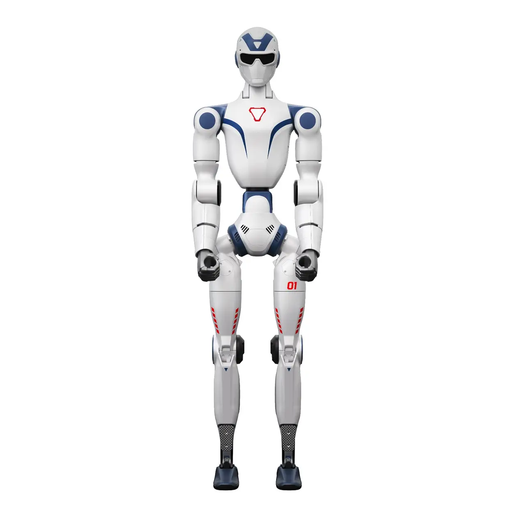
Unitree R1 Edu, Blue-white
Could be of interest to a school looking at a humanoid platform for education and research. Check in advance which voice features are included in the specific configuration.
The product title mentions support for secondary development.
View at Joybuy
 No image available
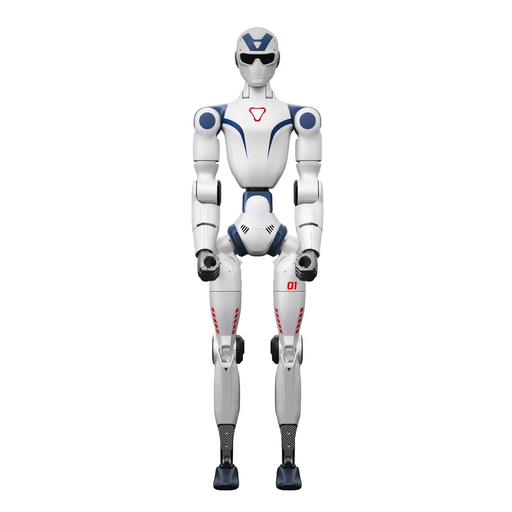
Unitree R1, Blue and White
Could be considered for a supervised trial of spoken interactions. Check the specific dialogue, data flows and supervision arrangements for the lessons you have planned.
The product title mentions an integrated AI language model, two cameras and 26 degrees of freedom. According to the product information, children must use it under the direct supervision of an adult.
View at Joybuy
 No image available
Unitree R1 Air, Red and Gold
Could be of interest to a school looking at a humanoid robot with a language model mentioned in the title. Check how the feature would be used in lessons.
The product title mentions a monocular camera, 20 degrees of freedom and an AI language model.
View at Joybuy
Frequently asked questions
Do you need to obtain consent from every child as a matter of course?
No. Consent is not automatically the legal basis for every use of AI in schools. The German Federal and State Data Protection Authorities list purpose, whether use in the setting is lawful and the legal basis for processing as points to check in their guidance of 6 May 2024. If consent is to be the legal basis, it must be freely given; the European Data Protection Board explains this in its guidance on consent from April 2026. Voluntary participation in the Heilbronn project does not create a general rule for other schools.
If images are processed locally, do conversations also stay within the school?
Not necessarily. United Robotics Group describes image processing on the uMe Uno itself, but says that voice dialogue currently uses an external AI service. For the system being offered, clarify the transmission routes, storage and deletion arrangements for each feature separately.
How can lessons continue if the robot stops working?
Plan storytelling activities so that the teacher can take over the questions and guide the conversation, and assign responsibility for setup, faults and training. Training and educational support are part of the Heilbronn project; for uMe Uno, the manufacturer describes an introduction as part of the service offered.
Is renting automatically cheaper and simpler from a data protection point of view than buying?
No. You can’t tell from the purchase or rental option alone. United Robotics Group offers uMe Uno for purchase or rental. Compare the specific offers in terms of features, integration, training and contract conditions, and assess data processing for the same planned classroom scenario.
Does a robot’s use at another German school mean it is approved for our school?
No. The Heilbronn project documented by aim is a supervised project, not approval for other schools. The German Federal and State Data Protection Authorities describe their guidance of 6 May 2024 as guidance on AI and data protection, not a definitive list of requirements. Check the specific configuration against the requirements of your federal state and school authority.


