Who are humanoid research platforms for?

Teams developing their own motion control

You need documented development access to test control or perception on the humanoid, rather than simply playing back pre-set movements. Unitree Robotics and Booster Robotics provide development tools and interfaces for their respective systems.

Labs researching grasping and interaction

Your trials depend on the hands or grippers and sensors included in the specific configuration. Information from reichelt elektronik and Generation Robots shows that specifications can vary within the same model family.

Teams weighing up an investment

If your test setup and conditions aren’t yet defined, an external trial can help you establish what you need before making a purchase. Fraunhofer IOSB-AST describes testing in real-world conditions; the scope and access arrangements need to be agreed for each project.

What should you consider when choosing?

Open development platform

A good fit if: your team wants to test its own control, locomotion or perception software on the hardware. Unitree recommends the G1 EDU rather than the standard G1 for customisation; PAL Robotics describes TALOS as a ROS-based platform.

Bear in mind: SDK information for a model family doesn’t confirm access for every variant or its delivery date; TALOS is available by quotation request.

Platform for grasping and manipulation trials

A good fit if: your trials involve actual grasping or combining movement with manipulation, and you need to choose the hands or grippers specifically.

Bear in mind: you can’t assume that the base model’s specifications apply to higher-spec variants. The Booster T1 comes in different versions: Standard, Gripper and Hand.

Try before you buy

A good fit if: payload, grasping task, human–robot interaction or test area requirements are still undecided, and you want to assess a specific trial first.

Bear in mind: an external trial doesn’t replace checking the configuration you later order or putting safety measures in place at your own workplace.

What matters What to check before buying Who is this important to?
Development access Ask for written confirmation of SDK permissions, documentation and supported interfaces for the full model number. If we’re developing our own control or AI software, we need documented access for the exact variant on offer. This is the main concern for around 33% of consumers.
Grippers and trial configuration Check which hands or grippers are included, along with the sensor and computing data available for the specific configuration. For our manipulation lab, the end effectors and available data need to suit our planned grasping tasks. Around 27% of consumers prioritise these specifications.
Safe testing Make sure the risk assessment, installation, safety plan, maintenance and support are suitable for the planned trial. If we’re using the robot in a lab with employees, its operation and support need to suit the specific setup. Safe testing is the top priority for around 20% of consumers.
Buying or trying first Ask for a confirmed delivery date and institutional quotation terms, or arrange an external trial. If our trial isn’t fully defined yet or we’re working to a fixed deadline, we need to decide whether we already need our own platform. Around 20% of consumers prioritise this approach to purchasing and testing.

Common purchasing pitfalls with research robots

  • Assuming a demonstration model is an open development platform

    Unitree states that the standard G1 doesn’t support secondary development and recommends the EDU version for customisation.

    Before ordering, check the full model number and the SDK permissions you need against the quotation.

    Switching to an EDU version may mean revisiting your configuration and project plans.

  • Assuming all models in a family have the same grasping capabilities

    G1 and T1 versions differ in features such as hands and grippers. A general model name therefore doesn’t confirm which equipment is included in a specific offer.

    Ask for the end effectors, sensors and development access to be listed in the quotation for the same configuration.

    If end effectors aren’t included, you may need extra integration and testing for your planned trials.

  • Assuming a listed T1 offer is new and guaranteed to be available

    Generation Robots describes a used demonstration model; RobotShop EU lists the T1 Hand version as discontinued. These details refer to different offers and configurations.

    Before finalising your project plan, confirm the condition, exact variant, guaranteed delivery date and support in writing.

    A demonstration unit may require extra work to assess its condition and arrange support.

Key brands to consider

Unitree

The G1 family includes standard and EDU versions, which don’t offer the same development access.

  • Unitree Robotics documents a G1 SDK with interfaces for motor and motion control.
  • The manufacturer says the standard G1 doesn’t support secondary development; check the permissions for the specific EDU variant on offer.

PAL Robotics

TALOS is a larger ROS-based research system for projects with the right space, integration and procurement resources.

  • PAL Robotics lists a simulation model and configurable head and gripper options.
  • The manufacturer asks customers to request a quotation. Confirm the configuration and delivery date for your project.

Booster Robotics

The T1 family is a development platform with different versions for movement and grasping.

  • Booster Robotics publishes an SDK and a ROS 2 interface.
  • Generation Robots describes a used T1 demonstration model; RobotShop EU lists the T1 Hand version as discontinued. This doesn’t guarantee that a brand-new T1 is available.

ROBOTIS

OP3 is a small humanoid research and teaching platform for suitably sized experiments, not necessarily a substitute for a large manipulation system.

  • ROBOTIS documents the OP3’s computing hardware and sensors.
  • The manufacturer’s shop showed the international OP3 version as out of stock. Check separately how your institution can source it.

Humanoid robots at Joybuy

The Joybuy products below are humanoid development platforms for AI, motion and interaction trials. For each model, check that the specifications, development access and safety measures suit your specific lab project.
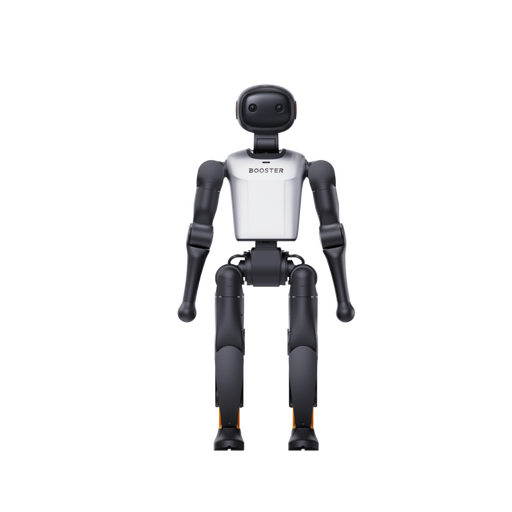
Booster Robotics K1 Geek humanoid robot

Booster Robotics K1 Geek, 48 TOPS, 22-DoF

The product description lists programming and AI experiments as potential uses for this development platform.

The product title specifies 48 TOPS and 22 degrees of freedom.

Joybuy
Booster Robotics K1 Edu humanoid robot

Booster Robotics K1 Edu, 117 TOPS, 22-DoF

The product description lists university labs, education and technical development as potential uses for this platform.

The product title specifies 117 TOPS and 22 degrees of freedom; the description lists software APIs and development tools.

Joybuy
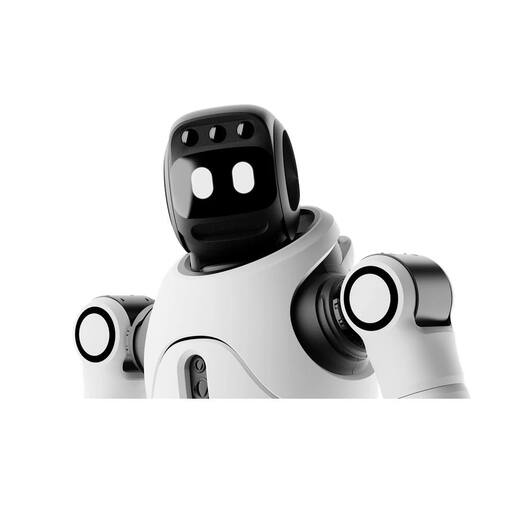
AGIBOT X2 Ultra humanoid robot

AGIBOT X2 Ultra Humanoid Robot

The product title mentions secondary development and autonomous navigation; the product description lists perception and navigation functions.

For this Ultra version, the description specifies 31 degrees of freedom, LiDAR, an RGB-D camera and Orin NX. It also warns of crushing and impact hazards from moving joints and autonomous movement: operate the device under supervision, keep your distance and use a clear test area. The description warns against water ingress and requires the supplied charger.

Joybuy
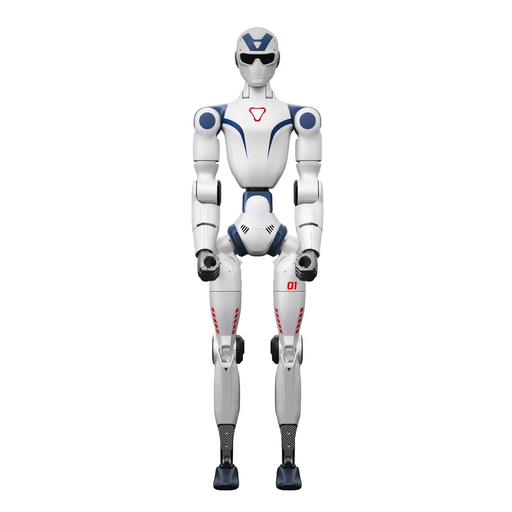
Unitree R1 humanoid robot in blue and white

Unitree R1, 26 degrees of freedom, blue and white

The product title highlights embodied intelligence and intelligent interaction as features of this humanoid.

Listed features include 26 degrees of freedom, two cameras and an integrated AI language model. The description warns you to keep clear of the movement area when starting the robot and during fast movements, and not to force the joints when they’re switched on.

Joybuy
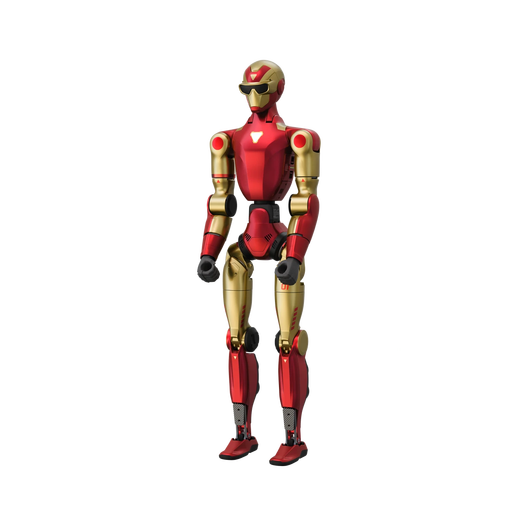
Unitree R1 Air humanoid robot in red and gold

Unitree R1 Air, 20 degrees of freedom, red and gold

This version may suit motion and interaction trials if a monocular camera fits your test setup.

The product title specifies 20 degrees of freedom, a monocular camera and an AI language model. The description warns against operating near stairs, edges or uneven surfaces, and highlights the risks from moving joints, water and high humidity. It requires the supplied charger.

Joybuy

Frequently asked questions about humanoid research robots

Is the standard Unitree G1 suitable for developing your own control software?

No. According to Unitree’s product information, the standard G1 doesn’t support secondary development; the manufacturer recommends the EDU version for customisation. Ask for confirmation that the specific EDU configuration on offer includes the access you need.

Do you need a risk assessment before carrying out trials with employees?

When employees use a robot as work equipment, the German Federal Institute for Occupational Safety and Health describes a risk assessment under the German Ordinance on Industrial Safety and Health as the basis for assessing hazards and identifying safety measures. The measures required depend on the robot, setup and trial. This is separate from Unitree’s recommendation to use a protective mount.

Is a device bought for research automatically exempt from machinery requirements?

No. A university purchase alone doesn’t automatically qualify for the narrowly defined research exemption in the Machinery Directive. The exemption applies to machinery specifically designed and built for research purposes and used temporarily in laboratories. According to the German Federal Institute for Occupational Safety and Health, the Machinery Directive 2006/42/EC continues to apply to machinery placed on the market until 19 January 2027; the EU Machinery Regulation applies from 20 January 2027. The classification of the specific platform and its use must be assessed separately.

What should an institutional enquiry cover?

Ask about the exact platform configuration, grippers and accessories, delivery, installation, training, maintenance and technical support together. For used demonstration units, also confirm their condition and the agreed service arrangements, rather than assuming what’s included from a general product description.