
Lieferung heute & morgen

Qualitätsgarantie

Willkommens-Angebote freischalten: KOSTENLOSE Lieferung | Bis zu 80 % RABATT | Kostenlose 30-Tage-JoyPlus-Testphase
App herunterladen
The acquisition of an advanced robotics platform represents a significant investment for research institutions and R&D departments. A humanoid robot for development is more than just a piece of hardware; it is a central tool that can fundamentally shape progress in AI, autonomous systems, and human-machine interaction. A poor decision not only leads to financial losses but can also set back research projects by months or even years. As your Joybuy Product Recommendation Officer, I will help you identify the crucial factors and avoid common pitfalls.
Many platforms are advertised with impressive marketing promises that often do not stand up to scrutiny. Before you buy a humanoid robot, you should pay special attention to three prevalent issues:
To make an informed decision, you should focus your evaluation on objective technical parameters. These three criteria are non-negotiable for successful deployment in research and development.
The Software Development Kit (SDK) is the heart of any research platform. A capable platform must provide an open and comprehensively documented SDK. Pay attention to the following points:
A robot's ability to perceive and navigate its environment depends directly on its sensory equipment. For true autonomous navigation, the following components are of central importance:
The physical capabilities of a humanoid robot define its range of applications. The number of degrees of freedom indicates how many independent axes of motion the robot possesses.
Based on the criteria above, we have identified platforms that are well-suited for different professional users.
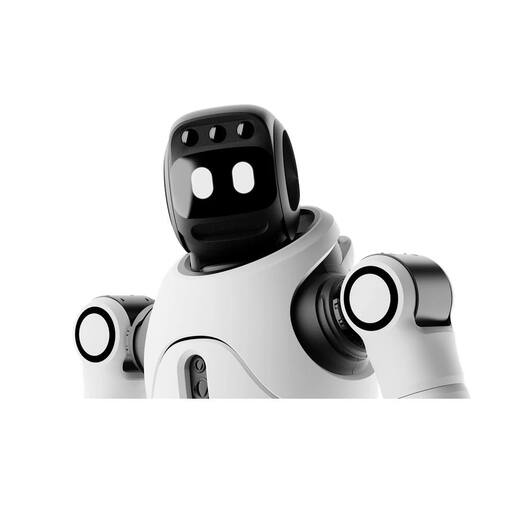
Why This Fits Their Persona: This platform is specifically designed for demanding research and development purposes. It targets teams that require an open, high-performance, and mechanically advanced foundation for projects in autonomous systems, AI, and human-robot collaboration.
Offers full support for secondary development, thus bypassing closed ecosystems. Its equipment with 3D-LiDAR and an RGB-D camera enables true autonomous navigation. With 31 degrees of freedom and a peak joint torque of 120 N·m, mechanical limitations are avoided.
The combination of a highly agile bionic body and a powerful computing unit (Orin NX with 157 TOPS) for on-board AI processing. The open architecture allows for deep integration into research projects.
Why This Fits Their Persona: Not every project requires a full humanoid platform. System integrators and developers designing an enterprise service robot or a specialized application often need modular components like robotic arms, mobile bases, or specific sensor systems.
By selecting specific components, you avoid investing in an oversized and expensive all-in-one solution. Developers retain full control over the system architecture and can assemble a custom solution tailored exactly to the use case.
Maximum flexibility and cost control. Enables the construction of highly specialized systems by combining components from different manufacturers. Ideal for prototyping and integration into existing infrastructures.
We have compiled a complete, up-to-date list of products that fully meet these strict selection criteria and German safety regulations.
A bionic robot is distinguished by a design that mimics biological principles to achieve more human-like and efficient movements. This often manifests in a higher number of degrees of freedom, elastic actuators, and a design that considers natural gait analysis. Conventional humanoid robots may focus more on industrial precision with stiffer, but less fluid, motion sequences.
The requirements vary by platform. However, basic knowledge of Python and C++ is almost always necessary. For advanced applications, especially in autonomous navigation and complex sensor processing, experience with the Robot Operating System (ROS/ROS 2) is highly beneficial. Many manufacturers also offer their own APIs and simulation environments that require familiarization.
In addition to the acquisition cost, you should plan for ongoing expenses. These include energy consumption (especially during charging), regular maintenance of mechanical components, and the potential replacement of wear-and-tear parts like batteries. Some manufacturers also offer paid software licenses or support contracts, the terms of which should be reviewed before purchase.