Who is considering an industrial humanoid pilot?

Health and safety leads responsible for demanding tasks

You define a physically demanding or risky task and assess human–robot interaction before employees work in the pilot area. The German Federal Institute for Occupational Safety and Health and the Institute for Occupational Safety and Health of the German Social Accident Insurance (IFA) identify risk assessment and the integration of tools and moving objects as important points to check.

Production teams with changing workstations

You want to establish whether a robot needs to work across several stations, or whether fixed-position manipulation and separate transport will be enough. Fraunhofer IPA, OMRON Europe and Universal Robots document different industrial tasks and automation approaches that can help inform this comparison.

Pilot leads facing staff shortages

You’re looking for support with processes that are difficult to staff, but need a suitable use case and clear responsibilities for integration and ongoing support. Bitkom surveys German industrial businesses on skills shortages; documented examples from BMW Group, Agility Robotics and GXO each relate to specific tasks and sites.

What to look for when choosing

Humanoid platform

A better fit if: the task combines movement and manipulation across several existing workstations, and you can test the specific sequence on site.

Consider: A human-like design does not in itself guarantee safe collaboration or the required throughput. Grippers, workpieces, routes and safety measures all need to be assessed too.

Rental or lease with support

A better fit if: technical support matters more than owning the platform for a time-limited trial.

Consider: Services, response times, software access and responsibilities need to be agreed in the contract. Renting does not replace safety or conformity checks.

Specialist automation

A better fit if: a cobot is to handle repetitive machine tending, or a mobile robot is to transport items between designated handover points.

Consider: Specialist solutions still need suitable integration and site-specific safety measures; this does not prove a blanket cost or safety advantage.

Priority What to check before buying Who it matters most to
Workplace safety Include the operating area, end effector, workpieces and operating concept in the risk assessment. If I’m letting employees work in a shared area, I want to assess risks across the entire process; around 33% of consumers prioritise safe operation and collaboration.
Task and integration Define the parts, handover points, routes, cycle-time requirements and interfaces; compare the same process with a specialist solution. If a process connects several stations, I want to know whether movement and gripping really need to happen in the same process; around 27% of consumers prioritise task coverage and integration.
Reducing the workload Before the test, decide which handovers, staff interventions, errors and stoppages will be measured. If a task is difficult to staff, I want to understand how much staff input will still be needed for that specific process; around 27% of consumers focus on support with staff shortages.
Support and operating model Set out the services, responsibilities and software access for the specific version in writing. If a pilot requires external support or in-house integration, I want to know who will handle setup, updates and faults; around 13% of consumers prioritise support and the scope of the contract.

How to avoid pilot-planning mistakes

  • Assuming a deployment at another factory will work for your task

    The Figure-02 deployment documented by BMW Group involved handling sheet-metal parts at a specific US site. Figure describes a different task using Figure 03 as a demonstration; this does not prove that other models or factories will be suitable.

    Ask for a test using your parts, handover points and typical fault scenarios. Be clear about the difference between a demonstration, a pilot and planned ongoing operation.

    Testing, integration and support may add to the cost and effort.

  • Automatically choosing a humanoid for transport or a fixed machine station

    Mobile transport robots and stationary cobots are designed for different tasks. This alone does not establish whether either option is suitable or what the overall effort would be at your factory.

    For the same task, compare a humanoid with a suitable cobot or mobile transport robot, and factor in the safety concept for each option.

    Integrating grippers, navigation and interfaces may increase the effort involved in the pilot.

  • Checking only the model family, not the version on offer

    Unitree distinguishes between G1 and G1-EDU configurations. Documented SDK support does not prove which features and interfaces are included with every version on offer.

    Get written confirmation of the model and configuration, interfaces, documentation and support for the specific version.

    Different hands, software or interfaces may require additional modifications.

  • Treating rental or manufacturer claims as safety approval

    The Digit RaaS case documented by Agility Robotics and GXO relates to a logistics site in the US, not to the obligations of a pilot operation in Germany.

    Set out the provider’s and operator’s responsibilities in the contract. Complete the site-specific risk assessment before deployment.

    Without clear responsibilities, setup, maintenance and safety measures may remain unresolved during the pilot.

Key brands to consider for your shortlist

Agility Robotics

Digit is a potential candidate for container handovers and similar handling tasks.

  • Agility Robotics and GXO document a deployment in which Digit moves containers to conveyor systems.
  • The case relates to a US logistics site and does not prove contractual availability in Germany or suitability for manufacturing, welding or hazardous-substance tasks.

Unitree

G1 and G1-EDU configurations may suit development-led manipulation trials and should be considered separately.

  • Unitree documents a G1 SDK and lists different configurations.
  • An SDK or development version does not prove that a specific configuration is ready for industrial use or CE compliant.

NEURA Robotics

4NE1 may be worth considering when enquiring about an industrial pilot in Germany.

  • NEURA Robotics presents the platform for industrial processes.
  • Manufacturer descriptions of perception, manipulation and collaboration are not proof of performance or safety at a specific site; the product page describes a reservation.

Figure

Figure 02 is a historical reference case for handling sheet-metal parts. Figure 03 should be considered separately as a different model with its own evidence base.

  • BMW Group describes the Figure-02 deployment in Spartanburg. Figure demonstrated a sequencing task using Figure 03.
  • On 30 September 2026, Figure announced that it was retiring its Figure-02 fleet. The earlier deployment does not prove that Figure 03 or another model is suitable for your site.

UBTECH

Walker S2 is a manufacturer option to consider when enquiring about industrial handling trials.

  • UBTECH lists a 15 kg rated load and battery swapping among the product features.
  • The manufacturer’s claim is not independent proof of performance for your task; load and operating conditions need to be checked for the specific trial.

Humanoid platforms at Joybuy

The products below include humanoid platforms, including models for development and movement trials. Their suitability for a specific manufacturing process, the safety measures required and the relevant conformity documents must be assessed separately before a pilot.
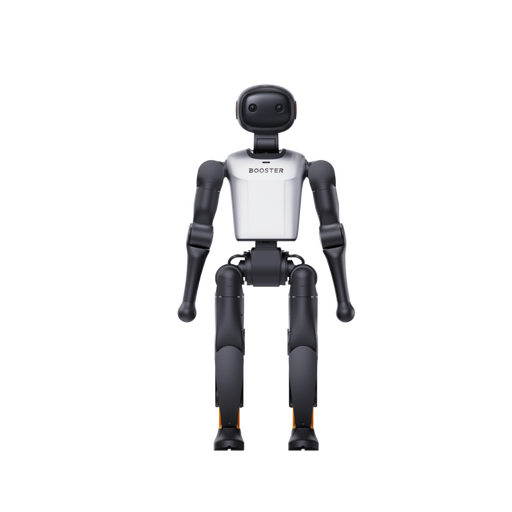
Booster Robotics K1 Geek humanoid development platform

Booster Robotics K1 Geek Humanoid Robot, 48 TOPS, 22 DoF

Described as a development platform for your own programming and AI trials; the product description lists computer vision and autonomous navigation as areas for development.

The product title lists 48 TOPS and 22 degrees of freedom. These figures alone do not prove suitability for a particular industrial task.

Joybuy
Booster Robotics K1 Edu humanoid development platform

Booster Robotics K1 Edu Humanoid Robot, 117 TOPS, 22 DoF

Described for development and research trials; the product description lists software APIs, development tools and programming for complex tasks.

The product title lists 117 TOPS and 22 degrees of freedom. Before integrating it, check which APIs and tools are included with the configuration on offer.

Joybuy
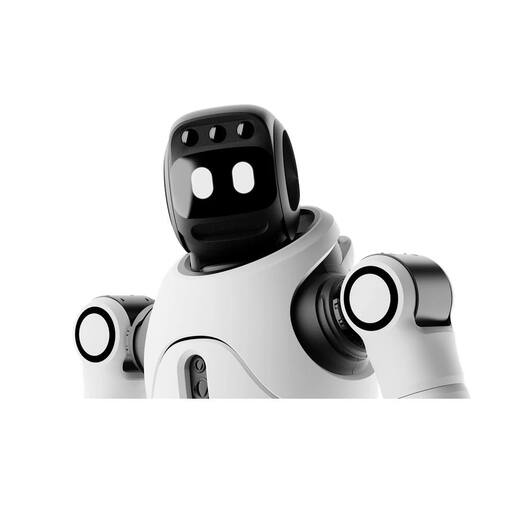
AGIBOT X2 Ultra Humanoid Robot

AGIBOT X2 Ultra Humanoid Robot

Relevant for trials involving movement and motion control; the product title lists autonomous navigation and obstacle avoidance.

The accompanying description lists 27 degrees of freedom and a 437 mm arm reach for the X2 configuration. Check whether these figures apply to the specific version on offer.

Joybuy

AGIBOT X2 Humanoid Robot

AGIBOT X2 Humanoid Robot

The product title lists autonomous navigation, obstacle avoidance and support for secondary development.

The description requires supervision during autonomous operation and warns that obstacles such as transparent surfaces and drop-offs may not be detected. Its payload figures are for the X2 Ultra configuration; check before testing whether they apply to the X2 version on offer.

Joybuy
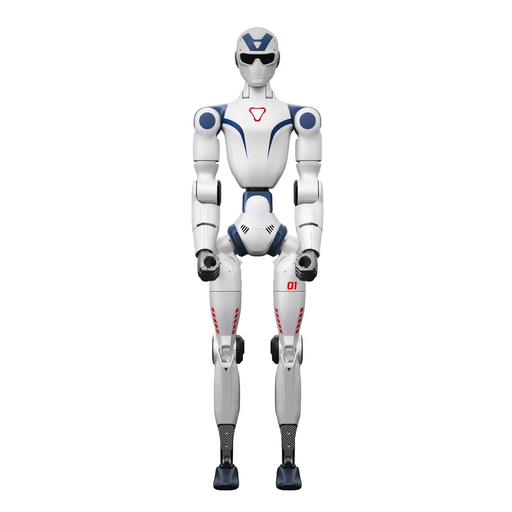
Unitree R1 Humanoid Robot in blue and white

Unitree R1 Humanoid Robot, Blue and White, 26 Degrees of Freedom

Described for development and exploratory trials; the product title lists two cameras and an integrated AI language model.

The product title lists 26 degrees of freedom. For an industrial pilot, check whether the version on offer supports the interfaces and tasks you need.

Joybuy

Frequently asked questions about industrial humanoid pilots

Is a CE mark enough to use a robot in a factory?

No. A CE mark must be assessed in the context of the EU legislation that applies to the specific product. Check the relevant conformity documents; you’ll also need a workplace risk assessment covering the work area, end effector and moving objects.

Which machinery rules apply in October 2026?

For machinery first placed on the EU market before 20 January 2027, the European Commission cites Machinery Directive 2006/42/EC. The Machinery Regulation (EU) 2023/1230 becomes mandatory from 20 January 2027. Whether and how a specific robotic system, including any modifications, is covered must be checked against its configuration.

When might additional AI obligations apply?

This depends on the AI functions enabled and the legal role of the business. The European Commission describes an obligation for providers and operators to promote AI literacy among people working with AI systems. For high-risk AI in regulated products such as robotics, it gives 2 August 2028; this does not mean every humanoid robot automatically qualifies as high-risk AI.

What should a testing and support plan include?

Record the task, parts, routes, handovers, operation, training, safety measures, interventions in the event of faults and responsibilities. Check with the provider what setup, updates and support are included for the version on offer or the contract you choose.

Does a listed SDK automatically apply to every Unitree G1 version?

No. Unitree documents a G1 SDK and distinguishes between G1 and G1-EDU configurations. Before integrating the system yourself, get confirmation of which interfaces are included with the specific version on offer and the associated contract.