Which approach is right for you?

Businesses handling a variety of items

If different objects need to be moved and picked up at workstations already designed for people, a humanoid robot pilot may be worth exploring. Fraunhofer IML describes humanoid robotics as an approach for these kinds of working environments. Its performance in a specific process still needs to be tested on site.

Businesses with long transport routes

For moving materials between handover points, the priorities are routes, loads and interactions with employees. Businesses should compare AMRs and AGVs with a humanoid approach for this task. Additional gripping capability is only relevant if the process requires it.

Businesses with fixed handover stations

For repetitive picking or packing at a small number of locations, a robot cell can be weighed against mobile or humanoid solutions. The reach, payload, gripper and feed system all need to suit the specific station.

What to consider when choosing

Humanoid robots

Consider one if: the same process involves moving between locations and handling different items in an existing, people-centred environment.

What to weigh up: picking failures, availability, safety and total effort need to be validated at your own site.

AMRs and AGVs

Consider them if: the main requirement is transporting goods between defined handover points, with no need to handle a variety of items.

What to weigh up: plan for traffic routes, handovers and fleet management. Picking tasks require additional handling equipment.

A robot arm at a workstation

Consider one if: picking, sorting or packing is repeated at a small number of handover points.

What to weigh up: the reach and payload need to be sufficient for the specific gripper and process. A mobile base brings additional integration work.

Conventional warehouse automation

Consider it if: items, handovers and processes can be standardised sufficiently, and changes to the process are practical.

What to weigh up: specialisation and modifications can limit flexibility. Compare cost-effectiveness and safety for the same site and process.

Requirement What to check before buying Who this matters most to
Picking up a variety of items Record the product mix, gripper changes, successful picking cycles and how failed picks are handled during a process trial. If I need items of different shapes and sizes picked up and put down at existing stations, I need trials using exactly that product mix. Around 31% of consumers are likely to have this as their main requirement.
Transporting materials Check the load including any attachments, aisle and doorway widths, handover points, charging times and interactions with other traffic. MiR specifies a payload of up to 250 kg for the MiR250 and a 1.450 mm operating corridor in its standard configuration. Both are manufacturer specifications for the configurations stated. If I mainly need to move materials between warehouse areas, reliable journeys and suitable handovers matter more than handling different items. Around 25% of consumers are likely to prioritise transport.
Safe integration Plan the risk assessment, traffic routes, response to faults, emergency stop, fleet integration and maintenance together, for the actual site. If people, vehicles and robots share the same operating areas, I need a safety plan for both normal operations and faults. An estimated 25% of consumers are likely to prioritise safe integration with existing operations.
Repetitive work at a station Compare picking trials, the reach and payload required, changeover effort and performance in your own process. If I want to automate similar handling tasks at fixed handover points, mobility beyond the station should deliver a clear process benefit. Around 19% of consumers are likely to prioritise this type of work.

Common selection mistakes

  • Treating a cumulative number of items handled as a throughput guarantee

    On 20 November 2025, Agility Robotics reported that more than 100,000 totes had been moved at a GXO site in the USA. This cumulative figure for a specific workflow is neither an hourly rate nor proof of performance for another generation of Digit or at a site in Germany.

    In your own process trial, record successful cycles per operating hour, downtime and employee interventions. Don’t assume results from older deployments will apply to Digit 5 without checking.

  • Assuming humanoid picking capability is needed for transport-only routes

    AMRs are designed for moving goods within a site. Whether items also need to be picked up at the handover point is a separate process question.

    Start by measuring transport and picking separately, then compare the suitable approaches for the same workflow.

  • Treating specifications or the term ‘collaborative’ as site approval

    For transport robots, corridor widths depend on the configuration. The term ‘collaborative’ also does not replace an assessment of the actual working environment and processes.

    Include the layout, contact with people, faults and maintenance access in your site-specific risk assessment.

    Depending on traffic routes and the safety plan, you may need to adapt routes, protective measures or the way operations are organised.

Key brands to consider

Agility Robotics

Digit is positioned for industrial logistics workflows. The latest Digit 5 generation should be distinguished from evidence relating to earlier deployments.

  • Agility Robotics reported that more than 100,000 totes had been moved at a GXO site in the USA.
  • This cumulative figure is not an independent comparison, an hourly throughput rate, or proof of the same performance or German safety approval for Digit 5.

Apptronik

Apptronik positions Apollo for picking, packing and moving goods in warehouses.

  • The manufacturer describes pick, pack and transport tasks in warehouses.
  • This positioning is no substitute for testing picking failures and availability at your own site.

Mobile Industrial Robots

The MiR250 is designed for moving goods within a site, while MiR Fleet is intended to coordinate compatible vehicles.

  • MiR specifies a maximum payload of 250 kg for the MiR250 and compatibility with MiR Fleet.
  • The configuration and environment affect the appropriate payload and corridor requirements. Without additional handling equipment, an AMR cannot carry out variable picking tasks.

Universal Robots

Businesses can consider the UR12e-1300 robot arm for repeatable handling at a workstation.

  • Universal Robots specifies a 12.5 kg payload and 1.300 mm reach for the UR12e-1300.
  • The gripper, feed system and complete installation also need to suit the specific process.

KUKA

KR AGILUS ultra is a conventional industrial robot range for compact handling or packing cells.

  • KUKA specifies a payload of up to 16 kg and applications such as pick-and-place and packing.
  • These specifications describe the product range, not the performance of a complete warehouse installation.

Humanoid robots at Joybuy

The following Joybuy products fall under the humanoid robot category. Details in product titles alone do not establish suitability or performance in warehouse operations.
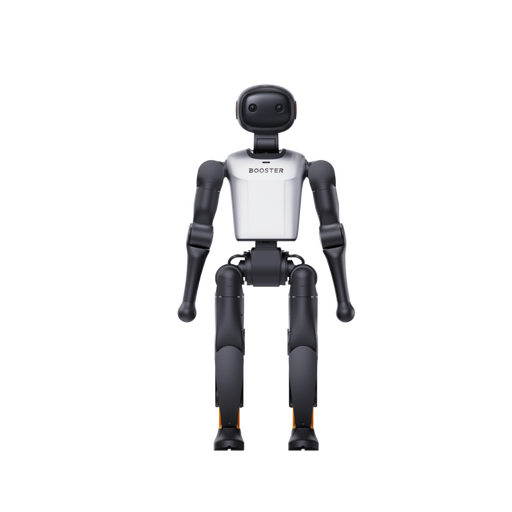
Booster Robotics K1 Geek Humanoid Robot

Booster Robotics K1 Geek Humanoid Robot, 48 TOPS AI, 22-DoF

This model is worth considering as a humanoid robot for varied warehouse tasks only if its ability to pick and transport items has been demonstrated in a trial of the specific process.

The product title lists 48 TOPS AI, 22-DoF and a development platform for embodied AI. These details do not demonstrate picking performance in a logistics setting.

View at Joybuy
Booster Robotics K1 Edu Humanoid Robot

Booster Robotics K1 Edu Humanoid Robot, 117 TOPS AI, 22-DoF

You can only assess this model for warehouse tasks after trialling it with the intended product mix and actual handover points.

The title lists 117 TOPS AI, 22-DoF and a development platform for education and research. These details do not demonstrate warehouse performance.

View at Joybuy
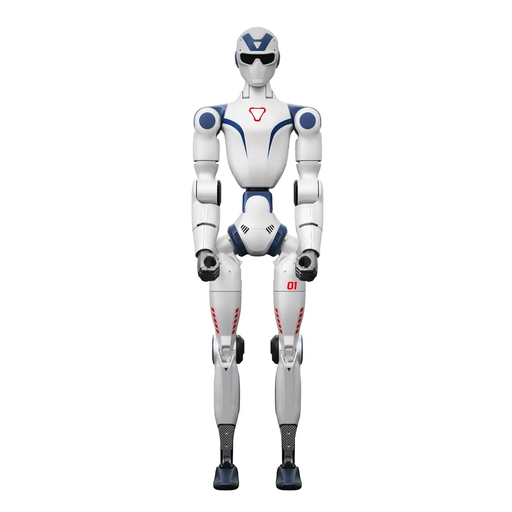
Unitree R1 Air Humanoid Robot

Unitree R1 Air Humanoid Robot, 20 degrees of freedom

For a pilot involving object manipulation, test the specific task. The product title alone does not prove warehouse performance.

The title lists a monocular camera and 20 degrees of freedom. According to the product information, no SDK/API is available for this version, and retrofits or custom modifications are not authorised.

View at Joybuy
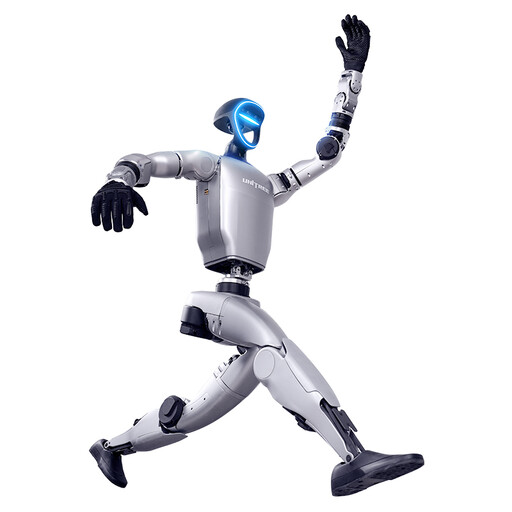
Unitree G1 Humanoid Robot

Unitree G1 Humanoid Robot, 20 degrees of freedom

A trial in the intended process will show whether this model is suitable for varied warehouse tasks. Details in the title are not proof of performance.

The product title lists a monocular camera and 20 degrees of freedom, and notes that SDK/API is not yet available. The safety notice says not to operate the robot near stairs, edges or uneven surfaces, and to protect it from water and high humidity.

View at Joybuy

Frequently asked questions

What performance figures should I ask for before buying for my warehouse task?

For the same product mix and shifts, record successful handovers per operating hour, picking failures, employee interventions, downtime and charging time separately. On 20 November 2025, Agility Robotics reported that more than 100,000 totes had been moved at a GXO site in the USA. This cumulative figure is not an hourly rate directly comparable with your process.

How should I plan the fleet, traffic routes and response to faults?

For several compatible AMRs, businesses should consider task allocation and traffic coordination. MiR describes MiR Fleet for this purpose. The DGUV recommends a risk assessment for automated guided vehicles that takes into account the operating area, vehicles, systems and people. Responsibilities and protective measures for faults and maintenance need to be defined for the specific installation.

Which German safety requirements apply before use?

Under § 3 BetrSichV, employers must assess risks before work equipment is used and put appropriate protective measures in place. The Federal Institute for Occupational Safety and Health recommends starting the risk assessment before selecting and purchasing equipment. It must be suitable for the intended operation at the site; it is not blanket approval for a robot model.

Is the new EU Machinery Regulation already in force?

No. According to EUR-Lex, the EU Machinery Regulation 2023/1230 will replace the Machinery Directive from 20 January 2027. As at 19 October 2026, it must not be presented as legislation that has already generally replaced the Directive.