Teams handling manual handovers
You need to do more than move materials: you also need to pick them up and put them down at existing workstations. The specific picking task, load and handover height all matter when choosing a solution.


For transport between fixed handover points, start by comparing AMRs and AGVs. If the robot also needs to pick up and put down items at changing workstations designed for people, consider a mobile manipulator or a humanoid pilot setup. Your decision should be based on the actual load at the gripper, routes and handovers, integration, and a site-specific safety and compliance plan reviewed by a qualified professional. A demonstration does not prove that a system is approved for continuous operation.
You need to do more than move materials: you also need to pick them up and put them down at existing workstations. The specific picking task, load and handover height all matter when choosing a solution.
You move standardised loads between fixed points and want to find out whether an AMR with suitable handover equipment can take on the task.
You plan journeys close to employees, so your site planning needs to account for traffic management, collision risks, protective measures and training.
First, check whether the system only needs to drop off a load at its destination or actively pick something up there. This will determine which type of system is worth comparing.
Suitable when: standardised loads can be moved between prepared points and handed over without humanoid handling.
Consider: the attachment, traffic routes, safety configuration, mapping and charging windows must all suit the specific application. MiR specifies different operating aisle widths for the MiR250, depending on its configuration.
Suitable when: transport involves active picking at specific workstations and a specialist arm-and-gripper combination can carry out the task.
Consider: the arm, gripper, positioning and mobile base must be designed as one complete process and assessed for safety. KUKA describes the KMR iiwa as a combination of a mobile platform and a robot arm.
Suitable when: changing handovers designed for people are part of a pilot project, and the required picking and placing operations need to be tested. Fraunhofer IPA has carried out a material transport scenario using a Unitree G1 demonstrator.
Consider: check the gripper option, reachable positions and arm load for the specific task. A demonstrator does not confirm that the system is suitable for a particular site.
| Selection criterion | What to check before buying | Who it matters most to |
|---|---|---|
| Load and handover | Separate the total load being transported from the load carried by the arm. Check the gripping position, container, centre of gravity and handover height for the version you plan to use. | If I need to pick up and put down containers at changing workstations, I need clear evidence that the exact process will work. This is a key concern for around 29% of consumers who prioritise active handovers. |
| Route profile | Measure usable door and aisle widths, and test corners, obstacles and handover positions with the planned load and safety configuration. | If doors, narrow spaces or changing obstacles shape my routes, I need to test the solution in that exact environment. Around 24% of consumers say that challenging routes in existing facilities are their main concern. |
| People safety | Ask a qualified professional to assess traffic routes, clearances, potential collisions, safety functions, emergency procedures and training needs for your site. | If employees use the same areas, I need to identify risks and protective measures before the system goes live. This is a key concern for around 29% of consumers who prioritise safety in shared work areas. |
| Integration and operation | For the same transport task, compare mapping, job handovers, fleet management, charging windows, maintenance and changeovers. | If the system needs to connect to existing IT and workflows, interfaces and predictable operations matter to me. Around 18% of consumers prioritise integration and day-to-day operation. |
The MiR250’s stated maximum transport payload of 250 kg is not the load a robot arm can handle. Unitree specifies a maximum arm load of around 2 kg for the G1. These figures relate to different functions and are not directly comparable.
Record the total load being transported separately from the load the arm needs to move.
A gripper, attachment or adjustment to the handover point may involve additional integration and set-up work.
MiR specifies a width of just 850 mm for the MiR250 only with a reduced footprint and muted safety fields; the standard configuration is listed at 1,450 mm. Neither figure replaces a safety assessment of your actual route.
Plan around the safety configuration you intend to use and include oncoming traffic and potential collisions in your site-specific assessment.
Depending on the application, you may need to change the route, move handover points or add protective measures.
Fraunhofer IPA distinguishes between testing a material transport demonstrator and assessing technical feasibility, safety and commercial viability.
Compare humanoid platforms, AMRs or AGVs, and mobile manipulators against the same task and operating conditions.
Your comparison should also include integration, charging, training, maintenance and set-up for new tasks.
Humanoid platforms such as the G1 could be assessed for a clearly defined material transport pilot.
The MiR250 is an AMR option to compare for the internal transport of standardised loads.
The KMR iiwa combines a mobile base with a robot arm, making it a hybrid option to compare for active handovers.
The LD-250 is another AMR option for transporting items between workstations, production lines and warehouses.
The manufacturer describes the 4NE1 platform as available in different variants for a range of environments, including wheeled versions.
The Joybuy products below are humanoid platform options for a material transport pilot. You will need to check whether a particular version meets your site’s planned load, gripping and safety requirements.
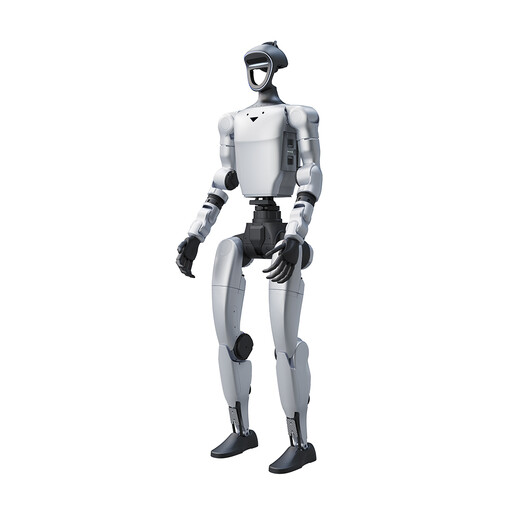 No image available
As a humanoid platform, this version could be considered for a pilot involving planned handovers. Its suitability for specific loads and gripping tasks needs to be assessed separately.
The product title specifies 29 degrees of freedom in total and 16 joint degrees of freedom.
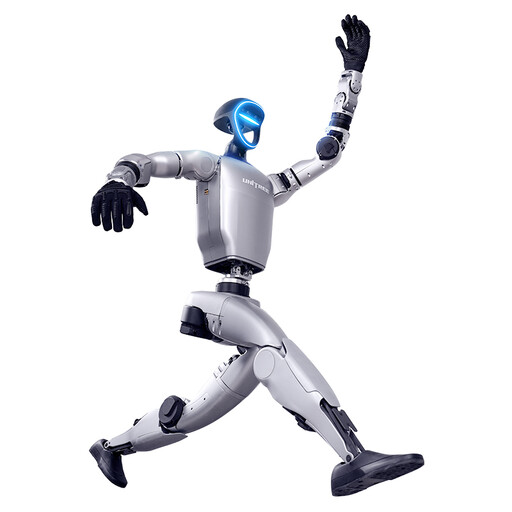 No image available
The product title specifies force-controlled hands for manipulating objects. Check whether this version can carry out your specific gripping task and integrate with your systems.
According to the product title, an SDK/API is not available for this version.
Start by finding out how transport jobs are triggered and how blocked routes or lost connections are handled. OMRON describes SLAM mapping and integration options for MES, ERP and WMS for the LD-250; MiR describes MiR Fleet as a tool for prioritisation and traffic management. Test the pilot to check whether these features work with your IT systems and handover points.
Match transport journeys and gripping cycles to the charging windows of the specific version. MiR specifies up to 13 hours of active operating time for the MiR250 at maximum load; this manufacturer figure does not guarantee the same shift output at every site. Also include charging infrastructure, maintenance and changeovers in your operational comparison.
No. The German Federal Institute for Occupational Safety and Health makes clear that CE marking is not an independent safety certification mark. Check the product requirements that apply to the complete system, and ask a qualified professional to assess its specific use around people, on your routes and during handling. For humanoid applications, Fraunhofer IPA recommends consulting safety specialists, implementing protective measures and training everyone affected.
The Machinery Directive 2006/42/EC will continue to apply to the placing of machinery on the market up to and including 19 January 2027. From 20 January 2027, Regulation (EU) 2023/1230 will apply instead. Check which other product requirements apply to a specific integrated system based on its configuration.