Teams dealing with frequent product changes
You want to handle changing workpieces at existing workstations and need to test whether the benefits of flexible manipulation justify the changeover and integration effort.


For frequently changing, two-handed handling tasks, a humanoid platform may be worth testing. For a clearly defined joining task, a robot arm with a suitable end effector is the more direct comparison. The key is to test with your workpieces and the same process objective for every solution: manufacturers’ figures for grip load or repeatability do not prove that a system can carry out assembly or operate safely once integrated. Fraunhofer IEM notes that fine motor tasks remain challenging.
You want to handle changing workpieces at existing workstations and need to test whether the benefits of flexible manipulation justify the changeover and integration effort.
You need proven process accuracy for a specific gripping or joining task and are comparing robot arms with a humanoid platform.
You need to clarify safety measures and the business case for the complete system before people work in the area.
Compare humanoid platforms, robot arms and specialist gripper solutions using the same workpieces, quality targets and complete workflows.
Worth testing if: you want to trial changing handling tasks or two-handed work at existing workstations. Fraunhofer IEM identifies assembly and joining for changing products as a potential application.
Trade-off: The expected benefit when handling product variants needs to justify the integration, safety and engineering effort for the specific process.
Worth testing if: a repeatable gripping or joining task has a defined workspace and a measurable positioning requirement.
Trade-off: The tool, fixture, programming and safety assessment for the specific application are still part of the solution.
Worth testing if: flexible feeding is combined with a gripping or joining task that requires a specially designed tool.
Trade-off: Tool development, gripper changes, integration and safety checks all need to be planned alongside the complete workflow.
| Purchasing priority | What to check before buying | Who it matters most to |
|---|---|---|
| Grip workpieces securely | Check the grip type, surface, mass and orientation for every relevant parts family. Unitree Robotics gives a maximum of 500 g for the Dex3-1 hand when gripping a hard, round object with a diameter of 5 cm, under the stated hand orientations and at room temperature. | If I need to grip different shapes and surfaces, I want to test the hold on my actual parts; around 29% of consumers put secure gripping first. |
| Change over between products | Compare several actual variants in the same test set-up, including set-up time, programming and tool changes. | If our workpieces or workflows change frequently, I need a straightforward changeover process; around 24% of consumers prioritise ease of changeover. |
| Position and join | Set the process tolerance and measure complete cycles with your parts. A manufacturer’s repeatability figure for an arm does not prove the joining tolerance achieved. | If a defined joining task has tight requirements, I want to know the deviation on the finished workpiece; around 18% of consumers prioritise joining accuracy. |
| Operate safely in the workspace | Include the robot, gripper, workpiece, movements and operating modes in the application-specific risk assessment. In TRBS 1111, BAuA describes how to assess hazards and determine suitable protective measures. | If people will be working in the intended area, I want to clarify the risks and protective measures before the pilot; around 18% of consumers prioritise safe human-robot interaction. |
| Cost-effectiveness of the complete system | Compare all solutions against the same output and quality target, taking account of purchase, peripherals, engineering, support and product changes. Fraunhofer IPA identifies purchase costs, productivity in the comparison process and specific engineering effort as important factors. | If I am assessing a solution for a particular mix of product variants, I need to know the cost per successful assembly task; around 11% of consumers prioritise process costs. |
The 500 g grip load stated by Unitree for the Dex3-1 hand relates to a specified hard, round test object and particular hand orientations. It does not prove that the hand can grip workpieces with other shapes and surfaces.
Request a trial using your critical parts and the hand configuration on offer.
Different fingers or an additional gripper may require further development and integration work.
Manufacturer figures for a robot arm do not automatically describe the accuracy of the complete process with the gripper, workpiece and joining movement.
Set the allowable deviation and measure it on the joined workpiece over the complete cycle.
The process may require additional fixtures, sensors or development work.
The risk assessment must take account of the specific use and hazard area; a product label is no substitute for this assessment.
Before the pilot, have the tool, workpiece, operating modes and people’s routes assessed by a suitably qualified person.
The G1 and G1 EDU are humanoid platforms for trials involving changing handling tasks. The Dex3-1 hand should be checked as an optional extra for the relevant configuration.
The 4NE1 Gen 3.5 is a humanoid option with integrated hands and manufacturer-stated development interfaces for potential industrial trials.
Diana 7 is a seven-axis robot arm to compare for defined, force-guided handling and assembly tasks.
The UR10e is a collaborative arm to compare for repeatable handling tasks in a defined workspace.
The Joybuy products below are humanoid robots; their product titles alone do not prove that they are suitable for industrial assembly. Check the specific configuration, process and safety concept before use.
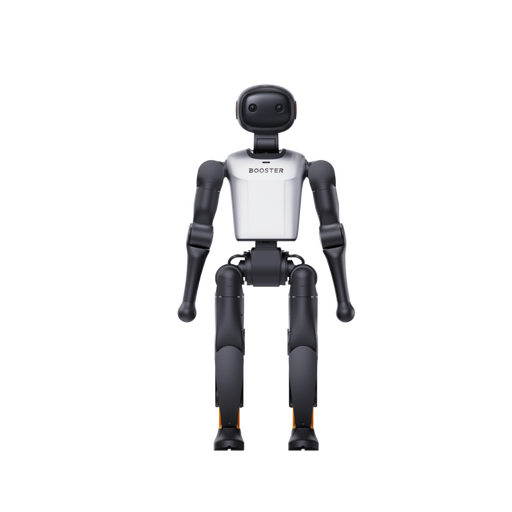 No image available
The title describes this model as a humanoid robot; its suitability for your assembly process needs to be checked with the specific configuration and your workpieces.
Specifications stated in the product title: 48 TOPS AI and 22 DoF.
No image available
The title describes a platform for education, research and development; before an industrial trial, check whether the specific configuration can handle your assembly task.
Specifications stated in the product title: 117 TOPS AI and 22 DoF.
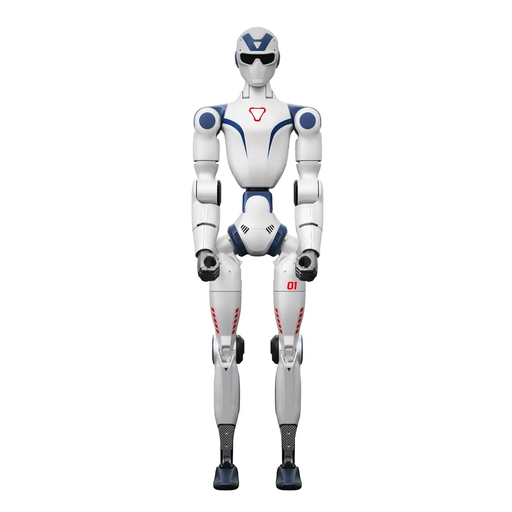 No image available
This model is listed as a humanoid robot; the features in the title are no substitute for testing gripping, positioning or joining in the intended workflow.
Specifications stated in the product title: 20 DoF, monocular camera and AI language model.
The product warning advises against operating near stairs, edges or uneven surfaces and highlights crush hazards at moving joints. Follow the warnings and operating instructions.
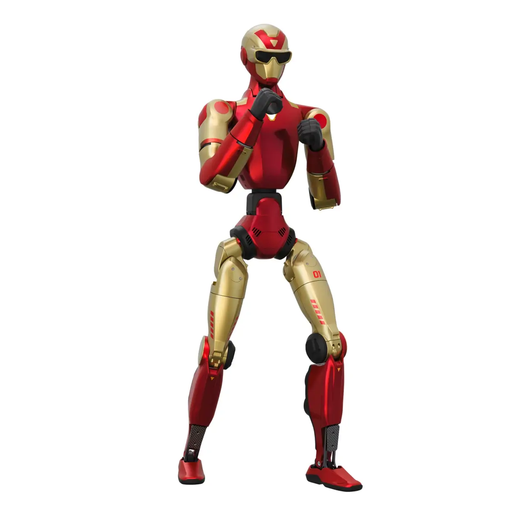 No image available
The product title describes a humanoid robot; the stated features do not prove that it is suitable for an industrial assembly process.
Specifications stated in the product title: 26 DoF, dual cameras and AI language model.
The product warning identifies the robot’s swing range as an injury risk and specifies an emergency stop for erratic movements. Follow the warnings and operating instructions.
First, define the parts families, surfaces, gripping and placement positions, and allowable process deviation. Measure complete cycles, including changes between variants, and compare the humanoid platform, robot arm and, where appropriate, specialist gripper against the same quality target. A single figure for hand load or arm repeatability is no substitute for this evidence.
Plan for the end effector, peripherals, set-up, protective measures, training and responsibilities for faults and changes. The risk assessment must cover the specific use of the work equipment and identify the necessary protective measures.
No. Fraunhofer IPA identifies purchase costs, productivity in the comparison process and specific engineering effort as important factors. Compare quotes for the same process scope and quality target.
For machinery, BAuA currently refers to the Machinery Directive 2006/42/EC and its implementation in German law, including the requirements for conformity assessment and CE marking. Regulation (EU) 2023/1230 replaces the Directive from 20 January 2027. For machinery first placed on the market or put into service from that date, the changeover must be taken into account; the requirements that apply to a specific complete system depend on its classification and the relevant date.