Motion control teams
You develop walking, balance or learning methods and need suitable control interfaces and a way to simulate them before carrying out real-world tests.


Choose a humanoid platform based first on the specific research question. For your own motion control, you’ll need confirmed access to joint controls and data, along with a suitable simulation route. For perception or manipulation, the sensors or grippers must match the configuration on offer. Then check the safety arrangements, approval for modifications and support available for that exact configuration. Evidence of an SDK for a model family does not confirm that every interface is available or that the supplied system is compliant.
You develop walking, balance or learning methods and need suitable control interfaces and a way to simulate them before carrying out real-world tests.
You study navigation or human-robot interaction and need to coordinate sensor access, computing configuration and the test environment.
You test grasping or whole-body tasks and need to plan hands, joint access, a safe set-up and ongoing support together.
Start with the interfaces and data your research question actually needs. Then check that the configuration, safe test set-up and purchasing services are suitable for the specific model.
| Requirement | What to check before buying | Who is this especially important for? |
|---|---|---|
| Development access | Ask the supplier to confirm joint commands, state data and a compatible ROS or SDK version for the configuration on offer. | If we’re developing our own motion control, the commands and data need to work with the specific firmware. Around 31% of consumers say development access is their top priority. |
| Sensors and computing configuration | Check the sensor list and data access, and confirm the exact computing unit in the chosen configuration. | For perception or navigation tests, I need the right sensor data and a suitable computing unit. For around 25% of consumers, access to data and computing is the main consideration. |
| Manipulators and test set-up | Check that the gripper, joint control and operating instructions suit your test scenario; plan safeguards for the specific set-up. | If we’re testing grasping or movements on the real robot, the gripper and test set-up need to work together. Around 25% of consumers prioritise manipulation and safe hardware testing. |
| Purchasing and support | Set out the term, integration, training, maintenance and spare parts arrangements in your individual quote. | If integration, training or maintenance is part of the project, I want the term and services confirmed in writing. Around 19% of consumers put the purchasing model and ongoing support first. |
Development features and actual access depend on the model, configuration and software version. An interface available for one product family does not automatically mean every feature you need is available.
Ask the supplier to demonstrate the required commands and data streams on the configuration being offered, and record the versions in writing.
The hand on the R1 EDU depends on the configuration; PAL Robotics lists customisable grippers and a simulation model for TALOS. If the supplied configuration does not match your assumptions for the test, you may need to adapt your planned set-up.
Agree the end effector, model version and test scenario with the supplier.
The German Federal Institute for Occupational Safety and Health explains that substantial modifications may mean the system needs to be reassessed as machinery. Unitree lists unauthorised modifications as a reason for its voluntary manufacturer’s warranty to become void.
Document any planned changes in advance, and clarify manufacturer approval, risk assessment and contractual cover separately.
Terra Robotics lists a minimum lease term of 3 years for the R1 EDU, with maintenance described as an optional extra. The term and support arrangements may therefore extend beyond the actual testing period.
Compare the contract term, training, repair arrangements and return conditions with your project schedule.
The R1 EDU and G1 development configurations may suit tests involving humanoid movement and custom software. Specifications vary by configuration.
The T1 platform may interest teams looking for SDK or ROS 2 integration and tools for locomotion testing.
TALOS is designed for research into ROS-based whole-body control and manipulation.
The Joybuy products below are humanoid platforms whose product titles mention development, research, movement or interaction tasks. Check that the supplied configuration matches the interfaces and specifications your tests require.
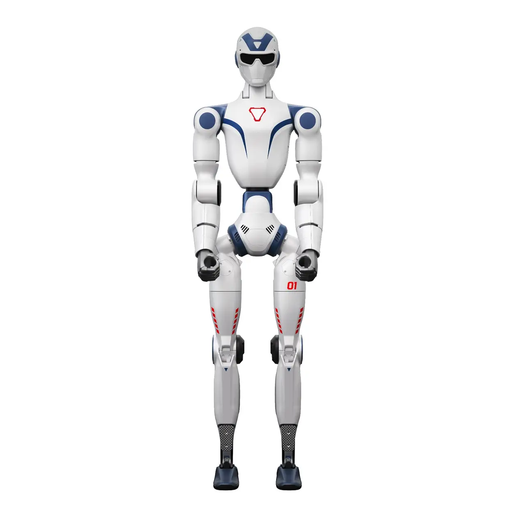 No image available
May be suitable for custom development work on a humanoid platform; confirm that the configuration on offer provides the access you need.
The product description recommends an open, obstacle-free area of at least 6 × 6 m for large movements.
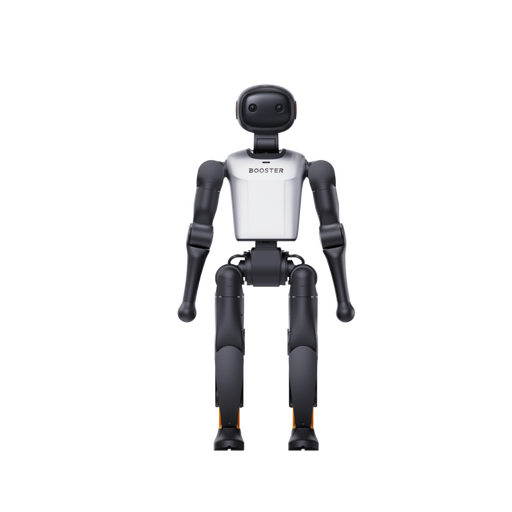 No image available
The product title describes this model as an embodied AI development platform. Check that the supplied specification meets your research needs.
The product title lists 48 TOPS and 22-DoF.
No image available
The product title describes this model as a research and development platform. Check the exact configuration against your requirements.
The product title lists 117 TOPS and 22-DoF.
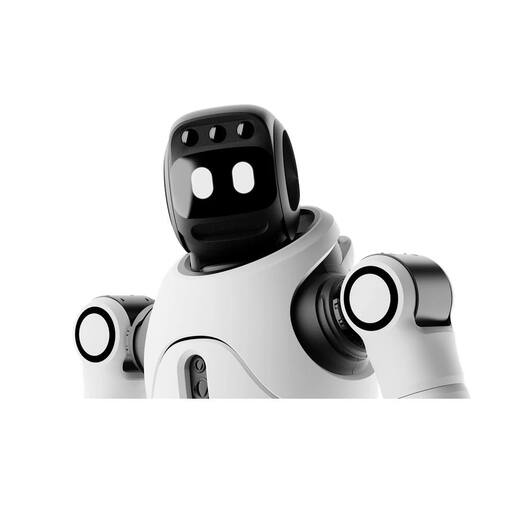 No image available
The product title mentions development support, navigation and interaction features. Confirm that the interfaces needed for your planned test are available.
The product description lists autonomous navigation, obstacle avoidance and support for secondary development.
 No image available
May be suitable for motion control and interaction tests; check which features are accessible in the specific configuration.
The product title lists Rich Motion Control and Intelligent Interaction.
No. For a system first placed on the EU market before 20 January 2027, you must first check whether Directive 2006/42/EC applies to the specific configuration. If it does, check the relevant CE marking and EC Declaration of Conformity. The Directive includes a narrowly defined exemption for machinery specially designed for research purposes and for temporary use in laboratories. Simply using a commercially available robot in a laboratory does not prove that these conditions are met. For new cases from 20 January 2027, you must take account of the Machinery Regulation, which becomes mandatory on that date. The European Commission, the European Parliament and the Council of the European Union explain these dates and the EU legal framework.
Development features do not mean blanket approval for every modification. For the specific change, clarify the interfaces, manufacturer support and contract terms, and assess any new risks. According to the German Federal Institute for Occupational Safety and Health, substantial modifications, including changes to control software, may mean the system needs to be reassessed as machinery. Unitree explicitly lists unauthorised modifications as a reason for its voluntary manufacturer’s warranty to become void.
Set up the system according to the instructions for the version actually supplied. Unitree’s G1 quick-start guide describes a safety frame for the suspended start shown there; you should also assess your own test environment and operating mode.
This depends on the purchasing arrangement you agree. Terra Robotics lists purchase, lease and project enquiries for the R1 EDU, and describes technical support and training depending on the model, as well as an optional maintenance contract. Make sure the offer sets out the details of spare parts, response times and any other contractual services.