AI and robotics research teams
If you want to develop your own algorithms, check that the documented control options match the hardware version you need. Unitree and ROBOTIS provide developer documentation for specific versions.


For developing your own AI and movement systems, you’ll need a model version explicitly designed for this purpose, accessible interfaces and suitable documentation. For guided programming and interaction projects, a different software starting point may be a better fit. Before purchasing, check the exact configuration being supplied, the availability of spare parts and repair services, and where you plan to use the robot. The relevant EU requirements for machinery depend on the date and configuration. If employees will be using it, you’ll also need to carry out a risk assessment.
If you want to develop your own algorithms, check that the documented control options match the hardware version you need. Unitree and ROBOTIS provide developer documentation for specific versions.
For programming, language and interaction exercises, it’s important that the software and learning activities suit your course. Génération Robots lists Choregraphe, as well as Python and C++ SDKs, among the tools available for NAO V6.
If you’re planning to use a robot in a teaching or laboratory space, you’ll need to consider safety measures, maintenance and repair options as well as the platform itself. Under section 3 of the German Betriebssicherheitsverordnung (BetrSichV), a risk assessment is required when employees use the robot; ROBOTIS advises customers to contact their distributor about repairs.
A good fit if: you want to develop your own algorithms for movement, perception or embodied AI on a larger system.
Things to consider: According to the manufacturer, the standard Unitree G1 does not support Secondary Development. Equipment and features vary between EDU variants.
A good fit if: guided programming and human-robot interaction are your main focus, or you’re looking for a compact research platform.
Things to consider: NAO and OP3 use different software workflows. With OP3, you’ll need to match the revision to the right ROS documentation.
A good fit if: building and making your own components are part of your learning or research goals, or you need external integration and support.
Things to consider: The Poppy kit described does not include 3D-printed parts. For the Booster T1, check availability and how to obtain spare parts particularly carefully.
| Purchasing priority | What should you check before buying? | Who should pay particular attention? |
|---|---|---|
| Development access | Check the model and version, available SDK or API features, and the examples that go with them. | If you’re developing your own AI or movement algorithms, the interfaces and documentation need to match the version actually supplied. Around 33 per cent of consumers say development access is their main purchasing priority. |
| Safe operation | Request conformity documents and operating instructions for the exact configuration, and factor the room and intended use into your safety planning. | If you’re using the robot in a teaching or laboratory space, you’ll need suitable operating and safety plans. Around 27 per cent of consumers put safe operation in the intended space first. |
| Teaching and interaction | Check the course software, supported programming languages and required sensor access against a specific exercise. | For repeatable programming and interaction exercises, the software starting point needs to suit your course objectives. Around 20 per cent of consumers prioritise teaching and human-robot interaction. |
| Operation and support | Ask separately about compatible spare parts, repair options and any software, cloud, maintenance or training costs. | If a project needs support over an extended period, the availability of spare parts and access to repair support are important factors. Around 20 per cent of consumers put operation and support first. |
Unitree states that the standard G1 does not support Secondary Development. If you want to develop your own software, you could end up buying a version that isn’t suitable.
Before placing your order, ask the seller to confirm the full EDU model name and the SDK and API features available for the exact configuration.
An unsuitable version could mean having to buy another one.
When employees use the robot, CE marking does not replace the risk assessment required under section 3 of the German Betriebssicherheitsverordnung (BetrSichV).
Include the planned movements, the people involved and the actual room conditions in your assessment. Set appropriate safety measures before use.
Depending on how you use the robot, you may need extra safety measures and additional organisational work.
The seller’s offer described here does not include 3D-printed parts, so making and assembling them needs to be part of your project plan.
Check the parts list and what’s included against your own manufacturing capabilities before choosing the offer.
You’ll need to factor in 3D-printed parts and the work involved in making them.
The offer described here is for a used demonstration unit, while another EU retailer lists the T1 as discontinued. Don’t assume it will remain available or that future supplies will be guaranteed.
Before signing a contract, get written confirmation of the unit’s condition, warranty, spare-parts arrangements and software maintenance.
G1 EDU is aimed at teams considering a larger bipedal platform for developing their own software.
OP3 is offered as a compact humanoid research platform, and the exact revision matters when choosing a model.
The NAO V6 on offer is designed for guided programming and human-robot interaction projects.
Poppy Humanoid may suit teams whose learning or research project involves open construction and hardware customisation.
T1 is a development platform built around ROS2 and APIs. The German offer described here is for a used demonstration unit.
The Joybuy offers below are for humanoid development and learning projects. Interfaces, equipment and limitations vary by model and version, so check them before buying.
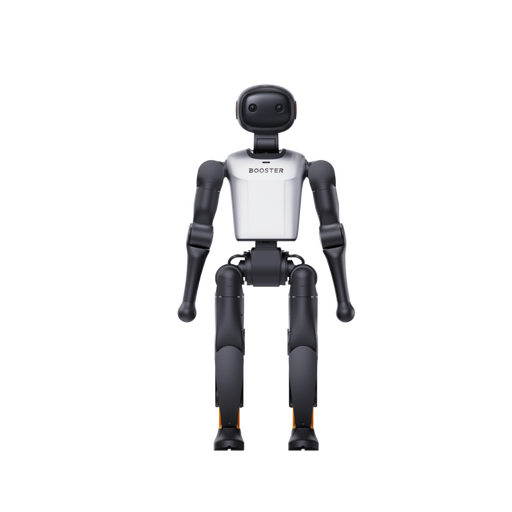 No image available
For development and AI projects; the product description mentions programming and experimenting with AI algorithms.
Product title: 22 DoF and 48 TOPS AI. The description lists software APIs and development tools.
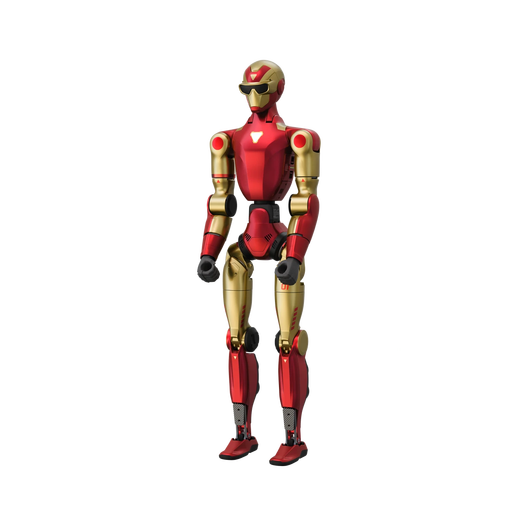
No image available
For education and research projects involving the development of custom software and AI tasks.
Product title: 22 DoF and 117 TOPS AI. The description lists software APIs and development tools.
 No image available
The product description lists development and education projects, as well as AI interaction, as possible uses.
Product title: monocular camera, 20 DoF and AI Voice Model. The product warning advises against operating the robot near stairs, edges or uneven surfaces, and warns against getting hands, hair or loose clothing near moving joints.
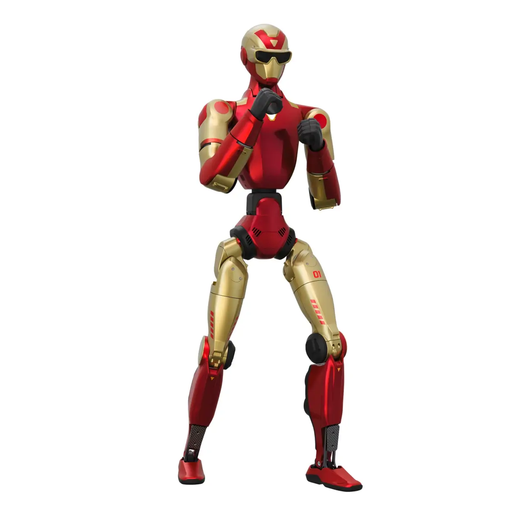 No image available
For development, education and interaction projects; the product description presents it as a platform for development and education.
Product title: dual cameras and 26 DoF. The product details also list binocular cameras and 3D depth sensors. The product warning advises keeping clear of the immediate swing area during start-up or rapid movements, and not forcing powered joints by hand.
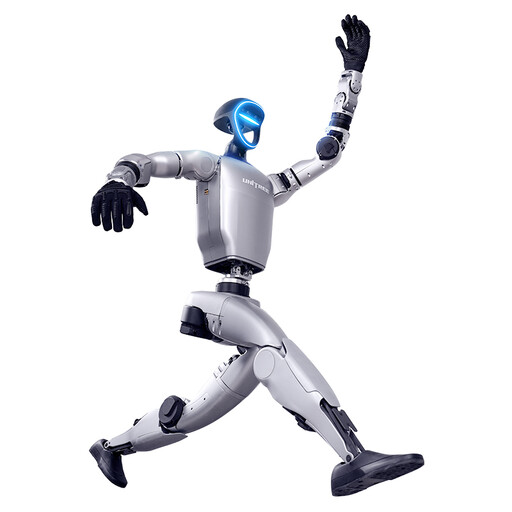 No image available
For projects focused on dynamic movement and interacting with objects; the product description states that this version does not include SDK or API access.
The product description also states that further development or custom modifications are not available for this version.
According to the European Commission, machinery first placed on the EU market before 20 January 2027 must comply with Machinery Directive 2006/42/EC. The Machinery Regulation (EU) 2023/1230 will become mandatory from that date. You’ll need to check whether the documentation is sufficient for the specific robot configuration.
No, if employees use the robot as work equipment: section 3 of the German Betriebssicherheitsverordnung (BetrSichV) requires a risk assessment and suitable safety measures before use. The German Federal Institute for Occupational Safety and Health also points out that CE marking is not a safety certification mark. Supervision, clearances and operating limits need to be determined based on the specific configuration and how the space is used.
First, make sure the software guides match the revision you’re actually receiving. For OP3, there are instructions for both the ROS2-focused relaunch and older ROS Kinetic versions. For repairs, ROBOTIS directs buyers to the distributor they purchased the product from, so check the local process in advance.
Ask separately about replacement batteries and compatible chargers, repairs, maintenance, training, and any software or cloud fees. A replacement battery for NAO is sold separately, while the Poppy kit described here does not include 3D-printed parts. Check what’s included and what ongoing services are available for the exact configuration.