For introductory lessons, humanoid platforms with pre-prepared activities and training may be suitable. If learners are to develop their own applications, documented programming tools and technical support are more important. Buying can make sense for regular use, while renting or Robot-as-a-Service may suit a time-limited trial. The key considerations are your specific lesson plan, what is included in the service, and checking data flows, access rights and documentation before making a purchase.
Who is a humanoid classroom robot for?
Whether a humanoid robot is right for teaching depends above all on who prepares the activities, what learners are expected to develop themselves and who will support its operation.
Teachers looking for a guided introduction
If you want to introduce programming, sensors or AI using pre-prepared classroom activities, check what training is required, whether the robot can be operated without developing your own software, and how user permissions are managed. United Robotics Group describes these potential uses for its education platform.
Project courses and university groups
If learners are expected to develop dialogues, movements or their own applications, documented tools, interfaces, and time for testing and support are important. SoftBank Robotics provides development documentation for NAO, while the Berlin University of Applied Sciences and Technology describes teaching projects using NAO and Pepper.
Procurement and implementation teams
When planning a pilot or longer-term use, consider the duration of use, installation, training and ongoing responsibilities together. United Robotics Group lists purchase, rental and Robot-as-a-Service as possible procurement options for its platform.
What matters when choosing one?
First, decide whether the robot should support ready-made teaching activities or be used as a tool for programming work. Then consider the number of devices and the usage model. For both types of platform, you’ll need to check data protection, support and the required documentation.
Platform with pre-prepared activities
Suitable if: Teachers want to prepare initial dialogues and demonstrations without developing their own software.
Consider: United Robotics Group describes uMe Uno as having pre-prepared functions, while also stating that its voice dialogues use an external AI service.
Programmable platform
Suitable if: Learners are expected to develop and test robot behaviour themselves as part of project courses or university modules.
Consider: Development tools make it possible to set your own project work, but you’ll need to allow time for technical support and software maintenance.
| Consideration |
What to check before buying |
Who it matters to |
| Getting started with teaching and support |
Which planned activities can be prepared, and what training and support does the offer include? |
If I’m running a lesson on my own, I need to be able to prepare the activities and deal with any issues. For around 31% of consumers, being able to manage this initial setup is a priority. |
| Programmability |
Which development tools, interfaces, licences and support periods apply to the specific model? |
In my project course, learners should develop their own applications rather than simply trigger a demonstration. Around 25% of consumers prioritise hands-on programming. |
| Data and access rights |
What data is transmitted by the camera, microphone, voice service and remote access, and who can access it? |
Whenever sensors or online services are used in teaching, I want to understand their data flows and permissions in advance. Around 25% of consumers prioritise this level of control. |
| Usage model |
Compare purchase, rental and Robot-as-a-Service over the same period of use and with the same services included. |
For a time-limited teaching period, I want to know who is responsible for setup, support and return. This contract planning is a priority for around 19% of consumers. |
Which mistakes can make procurement more difficult?
-
Assuming that a demonstration proves it can be programmed
A voice or movement demo doesn’t show whether learners can complete the planned tasks themselves using the available development tools.
Ask for a task from your curriculum to be demonstrated in the intended environment, and check the versions, licences and support available.
For independent projects, you’ll also need to allow time for lesson planning, testing and software maintenance.
-
Assuming local camera processing provides complete data protection
Even when perception features work locally, voice services, logs or remote access may still process or transmit data. United Robotics Group states that uMe Uno uses an external AI service for voice dialogues.
Check the data flows for every enabled feature with the relevant data protection and IT leads. The Rhineland-Palatinate data protection authority highlights possible transfers to third countries for comparable telepresence systems.
-
Comparing purchase and rental packages with different services included
A comparison is only useful to your organisation if the usage period and included services are defined on the same basis. With rental or Robot-as-a-Service, onboarding, maintenance and returns may be handled differently.
Make sure each quote states whether installation, training, software, support, a replacement device and returns are included.
-
Waiting until after delivery to request documentation
If the operating and safety documents required for the specific model variant are missing, approval for classroom use may be delayed. The applicable legal requirements depend on how the system is classified.
Request the operating instructions in German, safety information and conformity documents before making a decision, and ask the responsible team to check whether they apply.
Brands and platforms to consider
The providers below illustrate different approaches to teaching. Check the suitability of each option for the specific model variant, planned task and support available on site.
United Robotics Group
United Robotics Group offers its uMe platform to education providers, among others, and describes both pre-prepared functions and programming projects.
- For uMe Uno, the provider lists pre-prepared activities, teleoperation and training; it also describes purchase, rental and Robot-as-a-Service as procurement options.
- According to the provider, voice dialogue uses an external AI service. Your organisation will need to check what data is transmitted and which services are included in the contract for its chosen configuration.
SoftBank Robotics
NAO and Pepper feature in documented education and university projects; SoftBank Robotics provides development documentation for NAO.
- SoftBank Robotics’ developer documentation lists Choregraphe and a Python SDK for NAO V6. The Berlin University of Applied Sciences and Technology describes programmed teaching scenarios using NAO and Pepper.
- For a new purchase, check the model generation, licences, support and documentation for the specific variant being offered.
A Joybuy model for robotics projects
The following model is designed for programming-focused robotics projects. Use a specific course to assess which development tools and support you’ll need.
 No image available
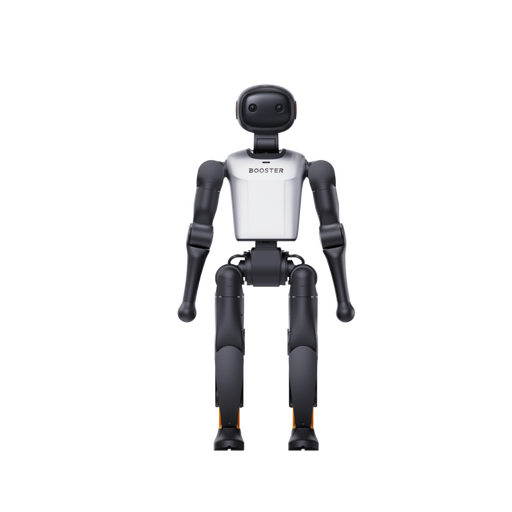
Booster Robotics K1 Edu, 22-DoF
Designed for project work involving programming a humanoid robot. The product name specifies 22 degrees of freedom. Before using it, check which development tools you’ll need and who will provide technical support during the course.
View on Joybuy
Frequently asked questions
Does a humanoid classroom robot need a constant internet connection?
That depends on the model and the features you enable. United Robotics Group says uMe Uno doesn’t need a constant internet connection, although its voice dialogue uses an external AI service. Check the network requirements of each feature you plan to use in class.
What should we consider when using cameras and microphones in the classroom?
Before use, clarify how recordings are captured, stored and transmitted, as well as who has access to them. For comparable telepresence systems, the Rhineland-Palatinate data protection authority highlights information duties and possible transfers to third countries. The specific robot should be assessed by your organisation’s data protection leads.
Which documents should we request in German?
Request the operating instructions, safety information and conformity documents for the model variant being offered. The relevant procurement or safety team should check how and to what extent the requirements of § 2 MaschinenDG apply to the specific system, based on its legal classification.
When might renting be a better option than buying?
Renting or Robot-as-a-Service may be particularly suitable for a time-limited teaching period or trial, while buying may be worth considering if you plan to use the robot regularly. United Robotics Group offers these usage options for its education platform. For your planned period of use, compare training, maintenance, support and return obligations in particular.


