What should you consider when choosing?
Supervised humanoid robot hire
Suitable if:You need an existing character, set-up and operator for a one-off shoot or exhibition.
Consider:A hire offer does not automatically include independent control, insurance cover or availability on your chosen date.
Remote-controlled or programmable system
Suitable if:Dialogue, facial expressions or repeatable movements are central to the scene, and the necessary functions have been confirmed for the configuration on offer.
Consider:Models vary. A head-and-shoulders figure such as Mesmer Desktop Gen 2 is not a substitute for a walking, full-body figure.
Bespoke design or modified platform
Suitable if:The silhouette, costume or type of movement is central to the concept and no existing model can meet your requirements.
Consider:Development, approval and support must be agreed individually; significant modifications may require a fresh assessment.
The figures show the share of consumers in each row whose main consideration when choosing a robotic character for a film, exhibition or staged creative production is the stated factor.
| Priority |
What to check before buying |
Who considers this important? |
| Date, transport and set-up |
Confirm availability for the location and dates, packed dimensions, weight, set-up and return transport for the exact configuration. |
If we have a fixed filming location and a tight schedule, delivery and set-up need to fit the plan. Around 25 % of consumers put dates and transport first. |
| Repeatable movements |
Ask for a demonstration of the model configuration, control access and ability to replay the required sequence on the system being offered. |
If several takes need the same movement, I need to know who controls and repeats it. Around 20 % of consumers put control of the scene first. |
| Character impact and visuals |
Check the image format, visible construction, range of movement and costume in a camera test for the specific scene. |
For a close-up or a particular character shot, the on-screen effect matters more to me than getting around. Around 20 % of consumers put appearance first. |
| Support and safe operation |
Clarify the operator’s role, space required, stop procedures, briefing and risk assessment for the intended use. |
If staff or the public will be nearby, I want responsibilities and procedures agreed before use. Around 20 % of consumers put support and safe operation first. |
| Contract and follow-up services |
Compare the scope of services, liability, insurance, rehearsals, modifications and return transport in writing. |
For a project with a limited budget, I need to know exactly which services are included and which are not. Around 15 % of consumers prioritise the contract scope and follow-on costs. |
If the robot is used at work where employees are present, its intended use must be included in the risk assessment. § 3 BetrSichV makes clear that CE marking does not replace this assessment. For wireless functions, the Bundesnetzagentur lists the declaration of conformity and German operating and warning instructions among the points to check. Ask to see the documentation for the specific configuration.
Relevant brands and suppliers
The brands and suppliers listed here represent different product ranges and project services. Their inclusion does not confirm that a particular model is available or suitable for a specific scene.
Unitree
The G1 is a full-body platform for scenes where a visible character and movement matter; consider the G1 and G1 EDU separately.
- Manufacturer specifications list dimensions, weight, sensors and different configuration options.
- These specifications do not confirm any particular choreography or programmability for the configuration on offer. The Joybuy description of the G1 currently says SDK/API access is unavailable.
Engineered Arts
Ameca Full Size Gen 2 for a visible humanoid character; Mesmer Desktop Gen 2 for head, facial expression and dialogue scenes.
- The manufacturer’s documentation describes audiovisual interaction and a head-and-shoulders form for the desktop model.
- Custom options can affect the range of movement. Confirm the specific configuration and operation for your shoot.
H&S Robots
German supplier of hire robots and bespoke moving figures, including, according to its own description, specialist robots for film.
- The supplier describes both hire and custom builds.
- Dates, operating arrangements, insurance and conformity documents must be agreed for each project.
TONEART-Rent
German hire supplier listing Unitree humanoid robots; TONEART describes their use as supervised hire.
- The supplier mentions an operator and technical specialists, along with project-dependent motion set-up and branding.
- The scope, suitability for the scene and insurance must be set out in the individual offer. TONEART is a supplier, not the manufacturer of every robot it lists.
PAL Robotics
TIAGo Pro is a wheeled robotic display and development platform for situations that do not require a walking, full-body figure.
- PAL Robotics documents ROS 2-based development, a screen, speakers and a mobile base.
- The system moves on wheels. This does not establish that it can be presented as a bipedal humanoid or that it is suitable for a particular film scene.
Humanoid robots at Joybuy
This selection includes humanoid platforms for visible characters, as well as technically designed movement and interaction scenes. Development access and safety requirements vary by model. Before using a robot at work, check the documentation for the specific configuration and the risk assessment for the location.
 No image available
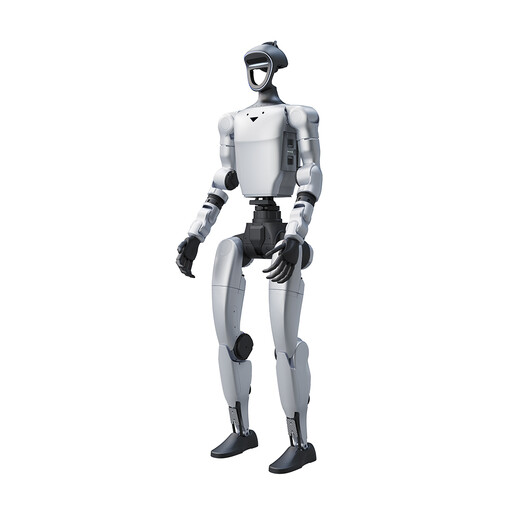
Unitree G1 Pro, 29 degrees of freedom
For a visible humanoid character in content productions or commercial demonstrations, as stated in the product title.
The product title gives a total of 29 degrees of freedom.
View product at Joybuy
 No image available
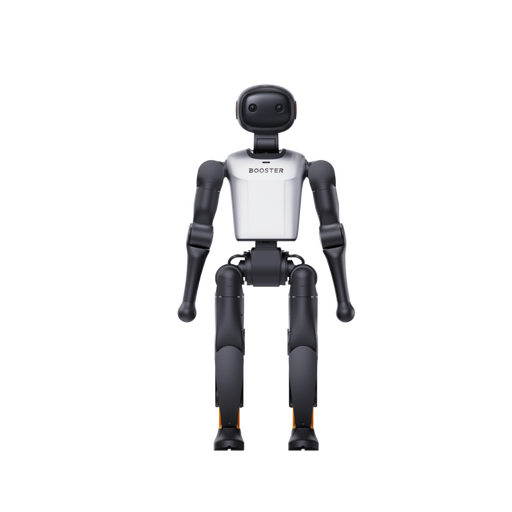
Booster Robotics K1 Geek
For technical creative work with a robotic character when programming and development are part of the project.
The product title lists 22 degrees of freedom and 48 TOPS AI; the product description mentions programming and development.
View product at Joybuy
No image available
Booster Robotics K1 Edu
For developing a humanoid character when your own programming is part of the project.
The product title lists 22 degrees of freedom and 117 TOPS AI. The product description mentions software APIs and development tools, as well as use in education and research.
View product at Joybuy
 No image available
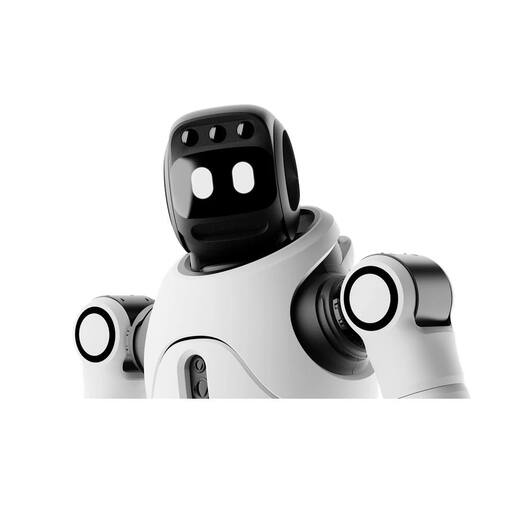
AGIBOT X2 Ultra
For movement- and interaction-led scenes where secondary development and remote control are relevant.
The product description lists autonomous navigation, obstacle avoidance, secondary development and remote control beyond line of sight. According to the product description, automatic charging requires a designated charging station.
The safety instructions warn of a crushing risk from moving joints and require supervision and a distance of at least 2 m during autonomous tasks.
View product at Joybuy
 No image available
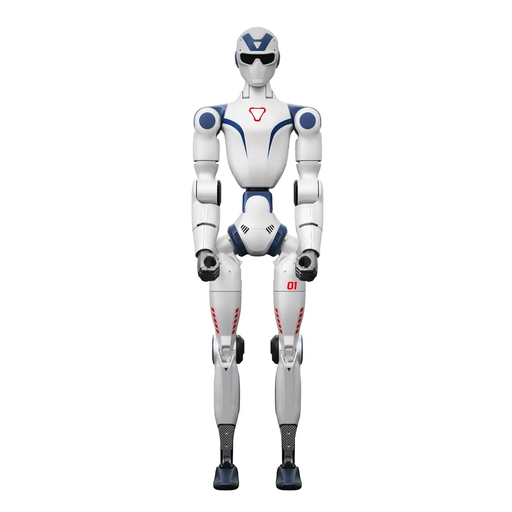
Unitree R1 Air, 20 degrees of freedom
For a visible character with movement or voice interaction, provided these functions suit your planned scene.
The product title and description list a monocular camera and an integrated language model; the title gives 20 degrees of freedom.
The safety instructions rule out operation near stairs, edges or uneven ground and warn about moving joints.
View product at Joybuy
Frequently asked questions
How can I check whether a robot can be used at my filming location?
Ask the supplier to confirm the packed dimensions, weight, power supply, access route, set-up time and a rehearsal of the planned movement for the exact configuration. Unitree lists the folded G1 as 690 × 450 × 300 mm and around 35 kg with battery. These manufacturer specifications do not confirm availability for a hire date or suitability for your filming location.
Can I prepare movements or dialogue myself for multiple takes?
It depends on the model, the functions you are authorised to use and the contract. Engineered Arts documents animation assets and timelines for Tritium; even so, ask to see the required sequence performed on the system being offered. Do not assume that SDK access is available for a listed G1.
Who is responsible for operation, insurance and damage when I hire a robot?
TONEART describes an operator and technical specialists as part of its supervised hire service. This does not imply general insurance cover; make sure the contract for your project sets out who operates the robot, liability, insurance, damage and arrangements in case of cancellation or breakdown.
Is a CE mark enough for use at work?
No. Under § 3 BetrSichV, CE marking does not remove the need for a risk assessment before using work equipment. For products with wireless technology, the Bundesnetzagentur lists CE marking, a declaration of conformity and German operating instructions and required warnings among the points to check. Review the evidence for the specific configuration separately.
What should I consider when modifying a film prop?
Not every decorative modification is automatically a substantial change. According to the interpretation paper from the Bundesanstalt für Arbeitsschutz und Arbeitsmedizin, a substantial modification may trigger requirements for a newly created machine; a qualified specialist must assess the specific changes. For placing machinery on the market, the BAuA gives 20 January 2027 as the date when Regulation (EU) 2023/1230 starts to apply; as at 19 October 2026, that date had not yet arrived.


