What should you look for when choosing?
Start by defining the task and the different parts involved. Then check safety and integration, and clarify what is included and what support is available for ongoing operation.
| Need |
What to check before buying |
Who is it relevant to? |
| Handling different parts |
Test the gripper and different parts during the pilot. Assess the stated payload only for the specific model and configuration. |
If you want the robot to pick up or assemble different parts, you’ll need to test it with the actual parts and gripping points. Around 29% of consumers put handling performance first. |
| Safety and conformity |
Check the risk assessment, the protective measures required and the documentation for the specific system configuration. |
If you plan to have staff and a robot working in the same area, you must clarify the protective measures for that exact workspace. Around 29% of consumers prioritise safety and conformity. |
| Integration with the workstation and material flow |
Check the robot’s movement, reach, handover points and interfaces against the existing setup. |
If you want to integrate a robot into an existing process, consider routes and handover points in the workplace. Around 24% of consumers put integration first. |
| Operating costs and support |
Compare what is included, maintenance, spare parts, service and responsibilities for the same task. |
If you plan to use the robot long term after the pilot, you’ll need clarity on support and what’s included. Around 18% of consumers prioritise operating costs and support. |
Humanoid robots at Joybuy
The following Joybuy listings include humanoid platforms for technical evaluation or a development pilot. Product information is no substitute for testing with the intended parts or carrying out a risk assessment and conformity check for the specific configuration.
 No image available
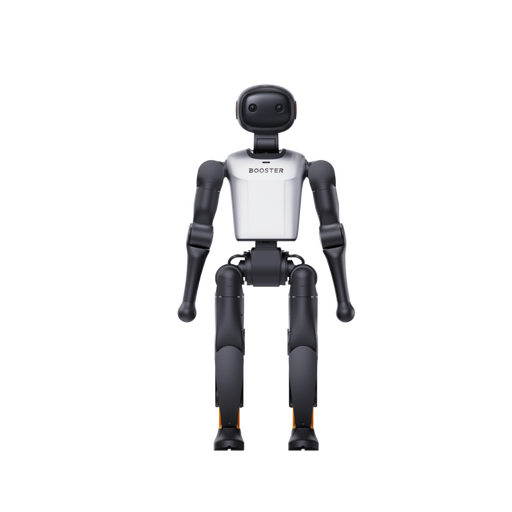
Booster Robotics K1 Geek
Described as a development platform, this listing may be suitable for technical evaluation, but it doesn’t prove the robot is suitable for a long-term production process.
As stated in the product name: 48 TOPS AI and 22-DoF.
View at Joybuy
No image available
Booster Robotics K1 EDU
This listing describes an education, research and development platform. Check whether this focus suits your planned pilot rather than treating it as proof of suitability for long-term industrial use.
As stated in the product name: 117 TOPS AI and 22-DoF.
View at Joybuy
 No image available
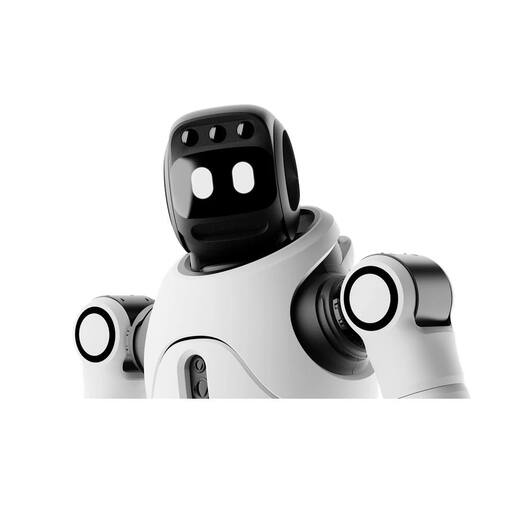
AGIBOT X2 Ultra
The listing title mentions autonomous navigation and development features. Test these in the intended workspace and process before relying on them for your own task.
The product description gives a payload of up to 3 kg in certain postures and up to 1 kg throughout the full range of motion, in both cases without an end effector.
View at Joybuy
 No image available
AGIBOT X2
The listing describes the model as a humanoid robot. Before a pilot, clarify which parts, grippers and processes you want to test with the specific configuration.
The product description gives a payload of up to 3 kg in certain postures and up to 1 kg throughout the full range of motion, in both cases without an end effector.
View at Joybuy
 No image available
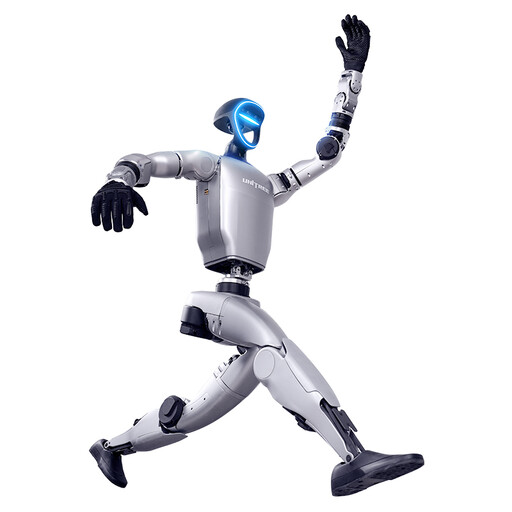
Unitree G1
The listing title mentions hands for object manipulation. For a development pilot, note that the same title says SDK/API is currently unavailable for this version.
Check in advance whether the development access you need and integration with your process are possible.
View at Joybuy
Frequently asked questions
How do I define a meaningful pilot?
Specify the parts, variations, handover points and intended workspace, then test the complete process, including the gripper and peripheral equipment. A demonstration or deployment at another factory doesn’t automatically prove that the process will work long term under your conditions.
Does the AgiBot G2 come with a gripper suitable for my parts?
No. According to Dögel GmbH, the G2 base unit is offered without an end effector; the gripper must be selected separately. You should test whether it suits your parts as part of the specific process.
What makes up a complete system configuration?
As well as the robot, consider the parts, peripheral equipment and charging infrastructure; Fraunhofer IPA lists these as components to consider when assessing a humanoid robot system. For picking tasks, you should also clarify which end effector is needed and who will handle integration and support.
Are CE marking and the manufacturer’s information enough to use a robot alongside staff?
No. Before using it as work equipment, you need a risk assessment for the intended area of use, with protective measures based on its findings. The BAuA also explains that machinery must meet the requirements of the 9. ProdSV when it is made available. Check the conformity of the specific system configuration and the relevant date.
Which machinery legislation applies if the machine is made available in 2027?
According to the BAuA, the Machinery Directive 2006/42/EC continues to apply to machinery placed on the market up to and including 19 January 2027. From 20 January 2027, Regulation (EU) 2023/1230 applies. The relevant factors are the actual date the machine is made available and the specific system configuration.


