What should you look for when choosing?
Buying a research platform
A good fit if: your team wants to develop control, perception or manipulation in-house over several trial cycles, and the necessary interfaces are available for the specific model variant.
Consider: In-house access to the hardware brings integration, maintenance and support responsibilities. An SDK proves neither that the robot is suitable for the task nor that it is safe for the workplace.
Supported rental
A good fit if: you want to trial a clearly defined task using real hardware for a limited period, and can agree support arrangements and responsibilities.
Consider: Development access, costs, insurance and responsibility for protective measures are not guaranteed simply because rental and support are offered.
Simulation and demonstrators
A good fit if: movement sequences or software integration are still being worked out and you want to explore them first without employees working alongside moving hardware.
Consider: Simulation can help you explore workflows, but it cannot prove that gripping or protective measures will work in the conditions of the real workplace.
For industrial humanoid research and pilot projects in Germany, the key questions when choosing depend on the task, development access, the effort involved and the intended workspace. The figures below group consumers by their main priority.
| Priority |
What to check before buying |
Who it matters most to |
| Safety in the workspace |
Clarify the robot’s range of movement and operating modes, as well as the planned workflow’s stopping and protective functions. |
If employees might come close to moving hardware, I want to be able to assess risks in the specific workplace. Around 29% of consumers put safety first. |
| Feasibility of the pilot task |
Define the task, objects, routes and measurable success criteria; consider what the humanoid form is intended to achieve compared with a specialised solution. |
Anyone wanting to test a clearly defined industrial task needs a credible feasibility trial, not just a demonstration. For around 29% of consumers, task feasibility is the main priority. |
| Development access |
Confirm which interfaces, control permissions and software integrations are available for the exact model variant. |
If my team wants to develop its own control systems or movement sequences, access must match the platform supplied. Around 24% of consumers prioritise development access. |
| Effort and responsibilities |
Set out services and responsibilities for integration, support, maintenance, spare parts and insurance in writing. |
Anyone planning a limited trial will want to understand ongoing tasks and responsibilities early on. Around 18% of consumers put predictable overall costs first. |
Humanoid robots at Joybuy
The Joybuy products below are intended for buying humanoid hardware for research and development trials; their product names alone do not prove that they are suitable for a specific industrial workplace.
 No image available
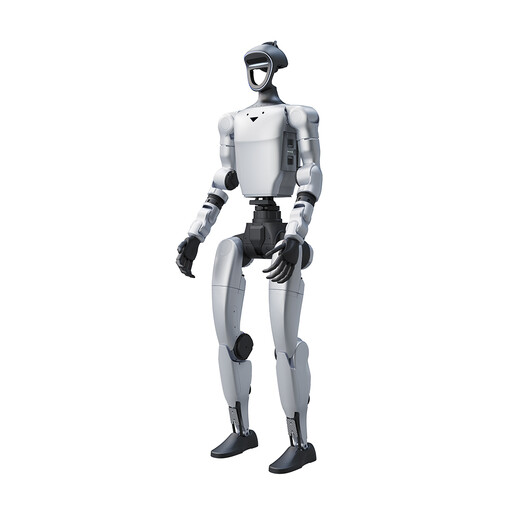
Unitree G1 Pro Humanoid Robot – 29 total Degrees of Freedom, 16 Joint Degrees of Freedom
The product title describes a humanoid robot with interactive features for trials involving movement and interaction.
It lists 29 Degrees of Freedom in total and 16 Joint Degrees of Freedom.
View at Joybuy
 No image available
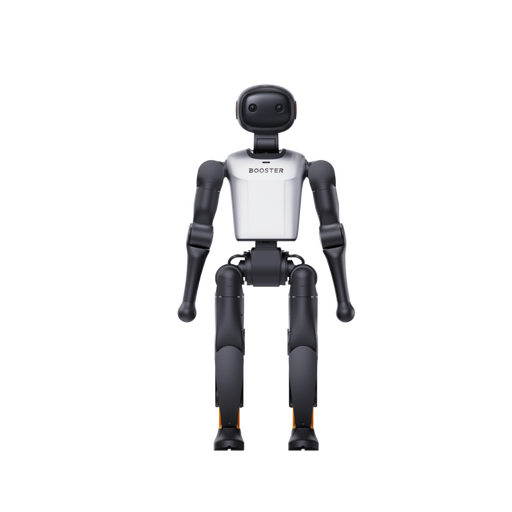
Booster Robotics K1 Geek Humanoid Robot – 48 TOPS AI, 22-DoF
The product title describes the K1 Geek as a humanoid development platform for hardware trials.
The product title lists 48 TOPS AI and 22-DoF.
View at Joybuy
No image available
Booster Robotics K1 Edu Humanoid Robot – 117 TOPS AI, 22-DoF
The product title describes the K1 Edu as a platform for research and development.
The product title lists 117 TOPS AI and 22-DoF; the description mentions software APIs and development tools.
View at Joybuy
 No image available
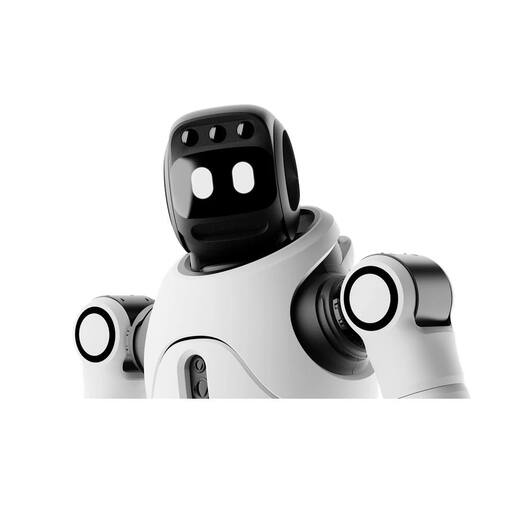
AGIBOT X2 Ultra Humanoid Robot
The product name lists development access, movement control and autonomous navigation as features for development trials.
The product description recommends supervised operation and a distance of at least two metres. It also warns that the sensors may not detect every obstacle.
View at Joybuy
 No image available
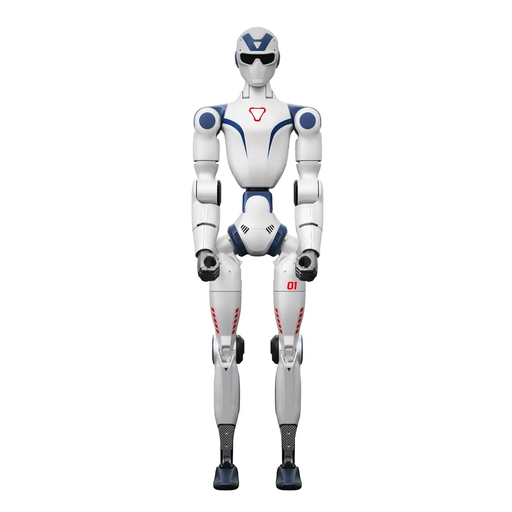
Unitree R1 Air Humanoid Robot – Monocular Camera, 20 Degrees of Freedom
The product title mentions a camera and a language model for humanoid interaction trials.
Features listed include a Monocular Camera and 20 Degrees of Freedom.
View at Joybuy
Frequently asked questions
What documents do I need for a pilot workspace where employees may be nearby?
Ask for details of the intended use, operating modes, range of movement, tools and moving objects, as well as the relevant manufacturer and integration documents. Employers must assess the risks associated with the actual use and identify suitable protective measures; the manufacturer’s assessment alone does not replace this step. This is explained by the DGUV Institute for Occupational Safety and Health and § 3 BetrSichV.
Is an emergency stop button or a camera enough for a pilot trial?
No, not as a blanket assurance. The stopping and monitoring functions, sensors and other measures required must be assessed in relation to the robot’s movements and proximity to employees in the configured workspace. DGUV guidance on collaborative robots is a useful reference, but it does not automatically approve a humanoid robot for use.
Can I move straight from a simulation to testing with employees alongside the robot?
No. A simulation does not replace a risk assessment before real hardware is used. It can help you prepare scenarios and software workflows; for the actual workplace, you must assess the specific risks and define the protective measures required.
What should I ask about rental and support services?
Ask for a quote covering the defined trial workflow, including commissioning, operation and development access, technical support, maintenance, spare parts, insurance and each party’s responsibilities. Also check which development rights are included with the rental.
Will the new EU Machinery Regulation already apply generally in October 2026?
No. Regulation (EU) 2023/1230 generally replaces the Machinery Directive from 20 January 2027, so that general date of application has not yet been reached in October 2026. Regardless, employers must assess the risks before work equipment is used. The timing and configuration are relevant to a specific delivery and commissioning; the European Union lists the date on which the Regulation applies.


