What matters when choosing a robot?
First, decide what the pilot needs to prove. Then compare the configuration required, access for development and the conditions for a limited trial.
| Consideration |
What to check before buying |
Who it matters most to |
| Evidence for the pilot task |
Agree in advance on test parts, load including gripper and container, route, cycle time and success criteria. |
If we’re testing material handovers, we need results for our parts and workflows, not a general demonstration. Around 31% of business buyers put measurable evidence of process performance first. |
| Workplace safety |
Carry out a risk assessment covering the robot, work area, objects and potential faults; define safety measures for the specific configuration. |
If employees and robots are due to share a work area, we want to clarify risks and safety measures before the trial. Around 25% of business buyers prioritise workplace safety. |
| Development and integration |
Compare the model number, access to the SDK or API, hand and camera options, and any training and service commitments. |
If we’re developing workflows ourselves or integrating with existing systems, we need reliable access to the complete configuration. Around 25% of business buyers put access for development and integration first. |
| Keeping the pilot commitment limited |
Compare buying, hiring or leasing based on the term, returns, integration, training, maintenance and agreed support. |
If we want to trial a task for a limited period first, the contract needs to set out services and responsibilities clearly. Around 19% of business buyers prioritise a limited pilot commitment. |
Joybuy products for technical trials
The following Joybuy listings include humanoid platforms described as suitable for development or trial use. Their suitability for an industrial workplace and the documentation for the specific configuration must be checked separately.
 No image available
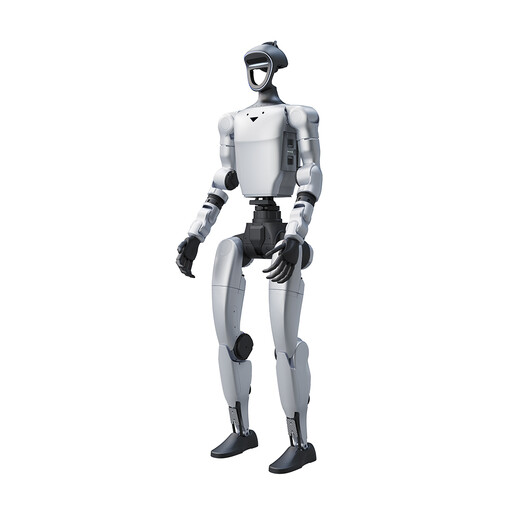
Unitree G1 Pro, 29 degrees of freedom
A candidate for early technical development trials. The product listing specifies 29 degrees of freedom, but makes no claims about payload, cycle time or workplace safety.
View on Joybuy
 No image available
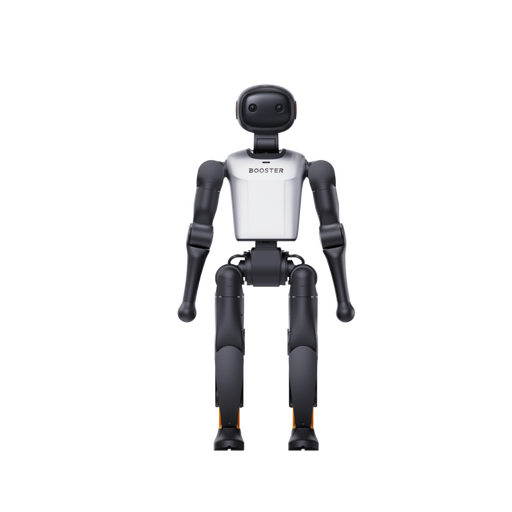
Booster Robotics K1 Geek, 48 TOPS, 22-DoF
For technical development trials with a humanoid platform. The product name specifies 48 TOPS and 22 degrees of freedom, but this doesn’t indicate how it will perform in a process.
View on Joybuy
No image available
Booster Robotics K1 EDU, 117 TOPS, 22-DoF
For technical research and development trials. The product name specifies 117 TOPS and 22 degrees of freedom, but this doesn’t indicate whether it’s suitable for a particular workplace.
View on Joybuy
 No image available
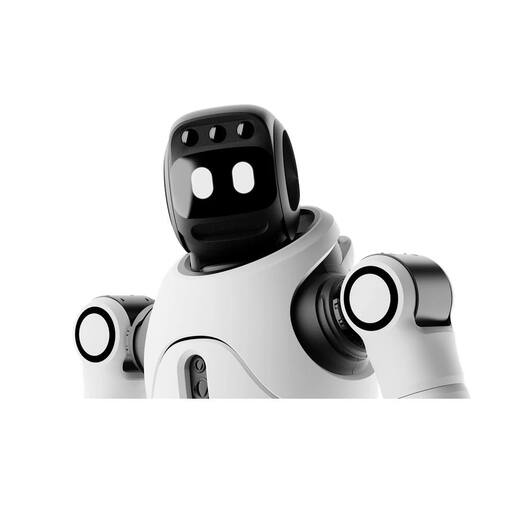
AGIBOT X2 Ultra
The product description lists navigation, LiDAR, RGB-D cameras and secondary development as features for a technical trial set-up. It gives a maximum payload of 1 kg across the full range of motion without an end effector; up to 3 kg is possible only in certain postures.
The description warns that LiDAR and cameras may not detect transparent surfaces, thin objects or sudden edges. It requires supervised operation and a clear work area; bear these warnings in mind before every trial.
View on Joybuy
 No image available
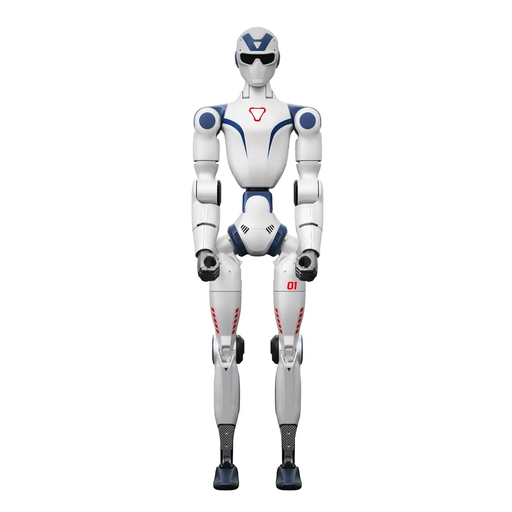
Unitree R1 Air, monocular camera, 20 degrees of freedom
For early sensor-related development trials. The product name specifies a monocular camera and 20 degrees of freedom, but doesn’t indicate whether it’s suitable for a particular inspection process.
The product description warns against operating near stairs, edges or uneven surfaces, and highlights the risk posed by moving joints. Take these limitations into account when planning the test area.
View on Joybuy
Frequently asked questions
What task makes a useful first test?
Start with a clearly described handover, gripping or inspection task, and define the test objects, routes, loads, cycle time and success criteria. Fraunhofer IPA has carried out example studies on material transport, order picking and assembly; its material transport demonstrator doesn’t prove suitability for other workplaces.
Is CE marking enough for using a robot in the workplace?
No. The German Federal Institute for Occupational Safety and Health (BAuA) distinguishes CE marking from an independent safety certification mark. Under Section 3 of the German Ordinance on Industrial Safety and Health (BetrSichV), employers must assess risks before use and identify suitable safety measures. The specific working environment and workpieces must be included in that assessment.
What documentation should you check for the robot, gripper and integration?
For the configuration quoted, clarify the applicable legal classification and ask to see the relevant conformity documentation, operating information and details of limitations and risks. Include any gripper changes and interaction with other machines in your assessment. The obligations that apply to the complete assembly will depend on its specific set-up. Your workplace risk assessment remains a separate requirement.
Which machinery rules apply in Germany on 19 October 2026?
Under the relevant legal framework, the Machinery Directive 2006/42/EC still applies to the placing of machinery on the market on 19 October 2026. According to the German Federal Institute for Occupational Safety and Health (BAuA), the Machinery Regulation (EU) 2023/1230 only applies from 20 January 2027; it should therefore not be presented as the legislation already in force for a purchase made today.
What should a pilot quote specify about training and service?
Ask for clear details of training, responsibilities for programme changes, maintenance, fault resolution, support location and agreed response times. TRBS 1116 from the German Federal Institute for Occupational Safety and Health (BAuA) sets out requirements for qualifications and instruction to ensure work equipment is used safely. A general promise of support doesn’t specify a service response time.


