What should you look for when choosing?
For universities, research laboratories and training teams, the key question is whether development access, type of movement and operating conditions suit the planned experiment or teaching session.
Bipedal teaching and development
A good fit if: Students need to test movement control on a physical bipedal robot.
Consider: Development access and software versions vary by model and variant. Check that both suit the practical session you have planned.
Walking and whole-body control research
A good fit if: The research question specifically calls for a walking, bipedal humanoid. PAL Robotics describes TALOS as a ROS-based walking platform.
Consider: Clarify space requirements, supervision and project-specific terms in the quote before proceeding.
Manipulation and interaction without walking trials
A good fit if: Arms, perception or teleoperation matter more than bipedal locomotion; Reachy 2 can move on an omnidirectional base.
Consider: A mobile base does not provide a walking function; delivery and service terms must suit the specific quote.
| Purchasing priority |
What to check before buying |
Who it matters most to |
| Development access |
Check the model identifier, supported SDK functions, ROS version and access to the movement data you need. |
If I want to use my own control software for teaching or research, I need the right interfaces. Around 28% of consumers put development access first. |
| Sensors and design |
Define the aim of your experiment, then check the sensors, arm configuration and data available on the specific variant. |
For perception, walking or manipulation trials, the hardware must suit the research question. Around 22% of consumers prioritise this suitability for the task. |
| Safe laboratory operation |
Plan a risk assessment for the task and setup, including installation and testing. |
If people work within the robot’s movement area, I want to base protective measures on the actual setup. Around 17% of consumers put safe operation first. |
| Commissioning and support |
Confirm the scope of delivery, training, support route, maintenance and spare parts terms in writing. |
For recurring teaching sessions, I need reliable help with setup and ongoing operation. Around 17% of consumers prioritise support. |
| Operating model |
Compare buying, leasing or a project-specific offer in terms of duration, included services and return conditions. |
If use is tied to a teaching or research project, the contract term should match. Around 16% of consumers pay particular attention to the operating model. |
In Germany, the risk assessment for work equipment must reflect how it will actually be used. The Federal Institute for Occupational Safety and Health points out that setup and testing should be considered alongside normal operation; CE marking is not a safety inspection mark.
Humanoid robots at Joybuy
The Joybuy products below are intended for practical development, teaching and research with humanoid platforms. Development access, features and potential limitations vary by model and variant.
 No image available
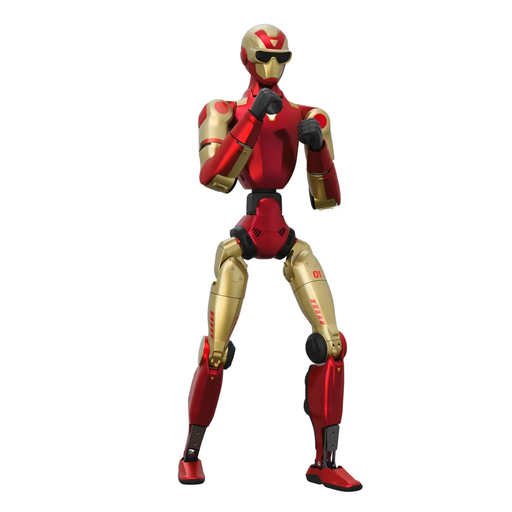
Unitree R1 EDU, Red and Gold
The product name states that it supports secondary development, making it relevant for your own development work. The product description recommends a clear operating area of at least 6 m × 6 m and warns against touching the robot while it is moving, as well as the risk of crushing at the joints.
Joybuy
 No image available
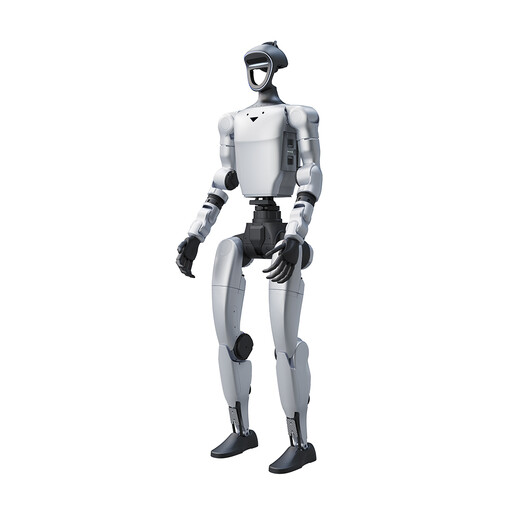
Unitree G1 Pro Embodied Intelligence Robot
This model may be worth considering for movement or manipulation demonstrations; confirm in advance that this specific version provides the development access you need. The product description lists 29 degrees of freedom and force-controlled hands. It states that the product is not a toy and is unsuitable for anyone under 14.
Joybuy
 No image available
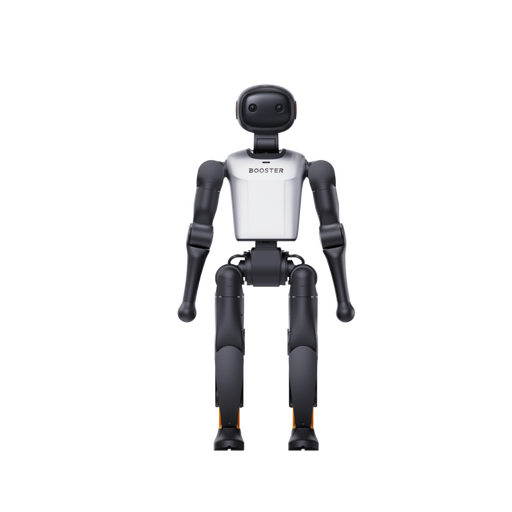
Booster Robotics K1 Geek
The product details describe a development platform for practical trials, including work on AI and movement. Specifications include 22 degrees of freedom and 48 TOPS.
Joybuy
No image available
Booster Robotics K1 EDU
This education and research variant is worth considering for teaching and project work involving your own programming. The product details list access to APIs and development tools, as well as 22 degrees of freedom and 117 TOPS.
Joybuy
 No image available
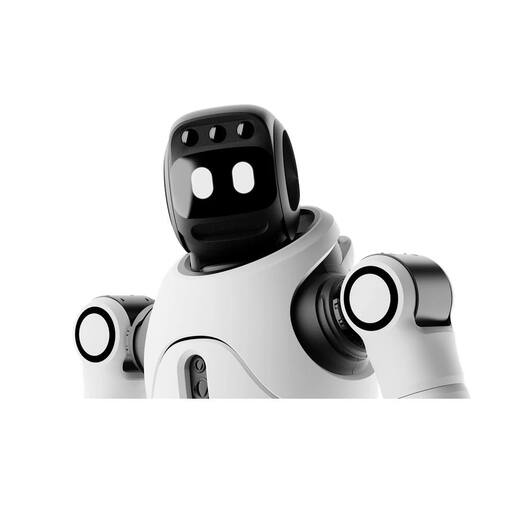
AGIBOT X2 Ultra Humanoid Robot
The product details list secondary development, autonomous navigation and environmental perception as potential uses. The X2 Ultra version is listed with 31 degrees of freedom, LiDAR, an RGB-D camera and an Orin NX computing board. The description warns that sensors may not detect every obstacle and recommends supervised operation with a clearance of at least 2 m.
Joybuy
Frequently asked questions
Is CE marking enough for use in a university laboratory?
No. In Germany, Section 3 of the Ordinance on Industrial Safety and Health requires a risk assessment before work equipment is used. The Federal Institute for Occupational Safety and Health makes clear that CE marking is not a safety inspection mark. Start the assessment before selecting and purchasing the equipment, and take the specific setup into account.
What should safety planning for teaching experiments cover?
Consider setup, testing, transport, maintenance and fault-finding, as well as normal operation. The Federal Institute for Occupational Safety and Health also identifies the workplace, workflow and people affected as relevant factors; protective measures must suit the specific setup.
Is every Unitree G1 suitable for running my own movement software?
No. Unitree states that the standard G1 product sold through its shop does not support secondary development; the EDU version is intended for this. Then check whether the EDU sub-variant you order includes the SDK interfaces you need.
What services should I check alongside the robot quote?
For the specific variant, ask about installation, training, the level of support, maintenance and spare parts. Terra Robotics lists training and maintenance as available or optional services for some of its offers; if you are leasing, also check that the term and return conditions match the length of your project.


