For repeated transport between fixed handover points, consider an AMR; for tasks at a fixed workstation, a cobot; and for processes involving movement between locations and pick-and-place tasks, a mobile humanoid platform. The key question is whether the specific configuration can handle your materials, routes and interfaces. Pilot reports and manufacturer claims alone do not prove that a system is suitable for your production line or cost-effective. You must also begin the workplace risk assessment under § 3 BetrSichV before selecting and purchasing equipment.
Who this decision matters to
Production lines with changing handover points
If materials need to be picked up or handed over as well as moved between different stations, compare mobile handling with a separate transport-and-picking solution. Fraunhofer IPA identifies material transport as an important application; BMW reports a pilot in Leipzig using a humanoid robot for repetitive tasks and material transport.
Production lines with predictable replenishment needs
For containers or components transported between regular points, consider whether a mobile transport platform is sufficient and whether material handover can be organised separately. Mobile Industrial Robots and KUKA describe AMR solutions for in-house transport.
Workstations with repetitive tasks
For a repeatable picking or placing task at a fixed workstation, a stationary cobot could be considered as an alternative to a mobile system. Universal Robots lists the UR12e-1300 as a stationary model for such applications; its suitability depends on the workpiece, gripper and working area.
Buying priorities and checks
For manufacturers looking to automate material replenishment or repetitive tasks, the right option depends mainly on whether transport, picking or integration into your operations takes priority.
| Buying priority |
What to check before buying |
Who it matters most to |
| Moving between locations and picking |
Test the workpiece and gripper, pick-up and drop-off heights, route and cycle time in the same pilot scenario. |
If materials need to be transported to different stations and picked up or handed over there, I want to test both tasks as part of the process; around 31% of consumers prioritise mobile handling. |
| Repeated material transport |
Check the loaded unit, aisle and doorway widths, floor, docking point and charging window against the planned configuration. |
If containers or components need to be delivered along regular routes, I want to know whether the transport platform can handle the route and handover points; around 25% of consumers prioritise transport. |
| Tasks at a fixed workstation |
Check the workpiece and gripper weight, reach, feeding system, connection to the equipment and required protective measures. |
If a repetitive task needs to be carried out at a fixed workstation, I want to automate the handling there without planning for travel around the factory; around 25% of consumers prioritise stationary tasks. |
| Safe integration and pilot operation |
Clarify the competent risk assessment, safety concept, interfaces, training, maintenance and support in the specific quotation. |
If protective measures and integration need to be clarified before choosing a route, I want to assess the operational workload first; around 19% of consumers prioritise safety and integration issues. |
Common purchasing pitfalls
-
Treating transport and material handover as the same task
An AMR transport platform is not proof that it can pick items up by itself. A stationary cobot, meanwhile, cannot travel to the next production line.
Specify transport, pick-up and drop-off as separate acceptance steps, then compare the three options.
Depending on the process, you may need additional handover equipment, a gripper or manual work at the end of the line.
-
Taking a maximum payload at face value
Hexagon distinguishes between AEON’s short-term and continuous payload. For the MiR250, Mobile Industrial Robots notes that operating values depend on the configuration and site.
Test the complete loaded unit under the planned continuous load and along the actual route.
Changes to the load, gripper or process may require additional testing or adjustments.
-
Taking a pilot, CE marking or reservation as approval for use
A pilot project does not prove suitability for another site. Under § 3 BetrSichV, CE marking does not replace a workplace risk assessment; a reservation is not a binding offer for industrial use.
Ask for documentation covering the specific version and have a competent person begin the risk assessment before selection and purchase. Before use, the identified protective measures must be implemented and safe use confirmed.
Testing, integration and the necessary protective measures may add to the operational workload.
Key brands to consider
Hexagon Robotics
Hexagon Robotics describes AEON as a mobile humanoid platform for industrial handling. BMW reports a pilot using the wheeled system at its Leipzig plant.
- Hexagon states that AEON has a continuous payload of 8 kg and a short-term payload of 15 kg.
- These figures alone do not prove that it can meet the required production-line cycle time, provide a site-specific safety concept or achieve the necessary operating costs.
NEURA Robotics
NEURA Robotics describes several versions of 4NE1, including an industrial version on wheels.
- The manufacturer lists handling and transport among the tasks for 4NE1.
- The 4NE1 Gen 3.5 reservation page does not prove that this version is identical to a particular wheeled version. Confirm the exact configuration and terms for industrial quantities directly in the quotation.
Universal Robots
Universal Robots offers the UR12e-1300 as a stationary alternative for defined picking and handover tasks.
- The manufacturer lists a 12,5 kg payload and a reach of 1300 mm for this model.
- A stationary arm does not transport materials between production lines; the gripper, mounting position and safety concept must suit the application.
Mobile Industrial Robots
Mobile Industrial Robots positions the MiR250 for in-house transport.
- The manufacturer’s specifications let you check payload, corridor width, doorway clearance and floor conditions.
- Routes and operating values depend on the configuration and local conditions. Autonomous picking is not a feature of the basic platform described.
KUKA
KUKA describes the KMP 250P as a mobile platform for transporting materials and components.
- According to KUKA, the platform can optionally be fitted with a lifting unit; the manufacturer also describes fleet integration via KUKA.AMR Fleet and VDA 5050.
- The manufacturer’s transport specifications and safety features do not replace an assessment of the specific material handover and the entire operating area.
Humanoid robots at Joybuy
The following Joybuy offers are for humanoid robots. Before using one in manufacturing, check that the specific configuration meets the requirements of your task and workplace safety standards.
 No image available
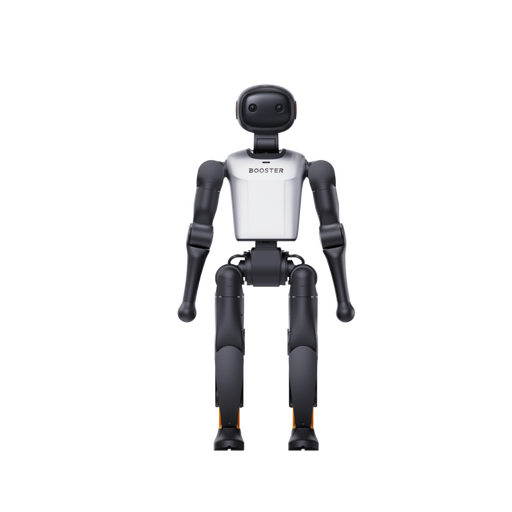
Booster Robotics K1 Geek Humanoid Robot, 48 TOPS AI, 22-DoF
The product title describes this model as an AI development platform. Before a manufacturing pilot, check the specific task, interfaces and workplace risk assessment.
Specifications listed in the title: 48 TOPS AI and 22 DoF.
View at Joybuy
No image available
Booster Robotics K1 Edu Humanoid Robot, 117 TOPS AI, 22-DoF
The product title describes a platform for education, research and development. Before using it in the workplace, check whether the specific configuration is intended for your process.
Specifications listed in the title: 117 TOPS AI and 22 DoF.
View at Joybuy
 No image available
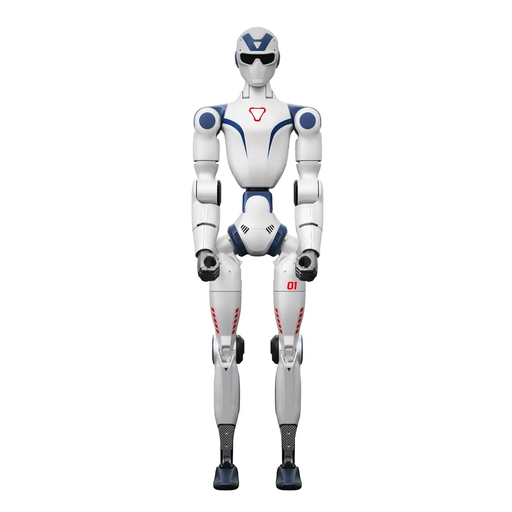
Unitree R1 Air Humanoid Robot, 20 DoF, Monocular Camera, Blue and White
Before using it in manufacturing, check the task, routes and protective measures for the specific configuration.
The product description warns against operating it near stairs, edges or uneven surfaces, or in wet or highly humid conditions.
View at Joybuy
 No image available
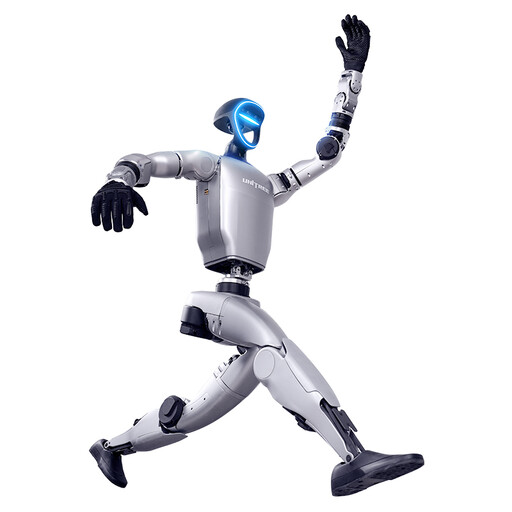
Unitree G1 Humanoid Robot
The product title lists force-controlled hands for manipulating objects. Check how they would handle your task and integrate with your workstation.
SDK/API is not available for this version, according to the product title. Check whether the available integration options are sufficient for your process.
View at Joybuy
Frequently asked questions
Can a CE-marked robot be used in a manufacturing area without further checks?
No. Under § 3 BetrSichV, CE marking does not replace a workplace risk assessment. Before use, the protective measures identified under § 4 BetrSichV must also be implemented and safe use confirmed; the specific application is what matters.
When is an inspection required before first use?
§ 14 BetrSichV requires an inspection by a qualified person before first use if the safety of the work equipment depends on its installation conditions. The regulation also covers inspections following changes that require inspection; whether this applies to a particular installation depends on its configuration.
What should I measure for a MiR250 route?
Check the planned configuration against doorways, corridors, handover points and floor conditions. For the standard setting, Mobile Industrial Robots specifies a required doorway width of 1500 mm and an operating corridor of 1450 mm; other specified settings require different amounts of space.
Will the new EU Machinery Regulation already apply in October 2026?
No. According to EUR-Lex, Regulation (EU) 2023/1230 will replace Machinery Directive 2006/42/EC from 20 January 2027. Workplace obligations under the BetrSichV must be considered separately.


