For materials handling or assembly, businesses should first pilot a clearly defined, repeatable task using the intended parts, grippers, routes and handovers. It only makes sense to assess a purchase once the platform has completed that task at the actual workstation. If performance or integration questions remain, a supported pilot is a more cautious way to proceed. The DGUV points out that, when work takes place near people, the risk assessment should also cover the tool, moving objects and intended workstation.
Who is assessing humanoid robots?
Materials flow pilot planners
You want to trial repeatable routes and handovers between the warehouse, trolley and workstation, rather than assume a demonstration will translate to your own materials flow. Fraunhofer IPA identifies materials transport as a potential application; X-Tech Robotics says that familiar routes and defined handover points are prerequisites for its logistics applications.
Assembly automation specialists
You need to pick up parts of different shapes with a suitable hand or gripper and position them within the available workspace. The key is to test the system with your own workpieces and intended process—not simply count its joints.
People responsible for safe implementation
You are planning to use the robot near people and need to take the intended workstation, tools, moving workpieces and protective measures into account. The DGUV and the Federal Institute for Occupational Safety and Health assign the assessment of specific working conditions to workplace health and safety management.
What should you consider when choosing one?
| Consideration |
What to look for when buying |
Who is it most relevant to? |
| Materials flow and handovers |
Test the route, floor and handover points using the intended containers and goods. |
If I want to deliver materials between fixed stations, the route and handover need to work with my process. This is a priority for around 31% of business buyers whose main concern is materials supply. |
| Picking and positioning |
Trial the workpieces, gripper option and required cycle time together. |
For assembly or kitting, I want to know whether the robot can handle my specific parts. This is a priority for around 25% of business buyers who prioritise picking and positioning. |
| Safe operation near people |
Include the robot, tool, moving goods and workstation in the risk assessment. |
If staff and robots work at the same workstation, I need to clarify the protective measures for the actual process. This is a priority for around 25% of business buyers whose main concern is safe integration. |
| Pilot and ongoing support |
Define the pilot scope, acceptance criteria and responsibilities for commissioning and support. |
If performance or integration effort is still uncertain, I want to test the task at my own business before making a final investment. This is a priority for around 19% of business buyers who prioritise pilot and purchasing risk. |
Which mistakes should businesses avoid?
-
Assuming a payload figure guarantees performance at every assembly stage
The stated payload does not automatically prove that a particular workpiece can be gripped in the required position and moved within the required cycle time.
Ask for the complete task to be demonstrated using your parts and the intended gripper configuration.
Additional grippers, programming and further task testing may need to be factored into your plans.
-
Assuming people detection or CE marking means the system is approved for your workplace
If contact is possible, the end effector and moving objects can also create collision hazards. The risk assessment must cover the intended workplace.
Assess the robot, tool, goods and workstation together before staff work with the system there.
Adding protective measures later may require the workstation to be redesigned.
-
Confusing the price of the robot with the cost of a system ready for use
As well as the purchase price, productivity and application-specific engineering effort affect cost-effectiveness. The robot alone does not reflect the full cost of putting it to work in a business.
Compare rental and purchase offers based on the same task and the same agreed support services.
Include engineering, commissioning, support, spare parts and potential downtime in your comparison.
Key manufacturers to consider
Unitree
G1 variants are relevant for development and research applications; the configuration is key to any assessment.
- RBTX describes SDK- and API-based options for further development with the G1 Basic EDU. Unitree lists the three-finger hand as an option for the G1 EDU.
- The G1 Basic and G1 EDU are not interchangeable. These details do not demonstrate specific assembly performance or safe collaboration at a particular workstation.
NEURA Robotics
NEURA Robotics positions the 4NE1 for industrial and logistics applications and lists different mobility configurations.
- The manufacturer gives the 4NE1 a payload of 10–20 kg, interchangeable forearms and various mobility options.
- The stated payload range is not linked to any specific German purchase configuration confirmed here, and does not demonstrate a particular picking task, cycle time or on-site safety concept.
UBTECH
UBTECH describes the Walker S2 as a humanoid platform for industrial handling tasks.
- UBTECH gives the Walker S2 a payload of 15 kg and says it can change its battery autonomously.
- These are manufacturer specifications, not independent evidence of suitability for a specific application; they also do not confirm a binding offer for the Walker S2 in Germany.
AGIBOT
AGIBOT describes different product lines for service, materials handling and industrial tasks. Each model’s design and suitability should be assessed separately.
- For the A3 Ultra, AGIBOT gives a payload of 5 kg per arm and lists various charging options.
- These product details do not demonstrate suitability for industrial assembly. German delivery or integration commitments for the announced models have not been confirmed.
Humanoid robots at Joybuy
The Joybuy products below include humanoid development platforms and a mobile platform that could be used for a materials flow pilot. Product specifications alone do not demonstrate suitability for assembly, your business’s cycle time or operation near people.
 No image available
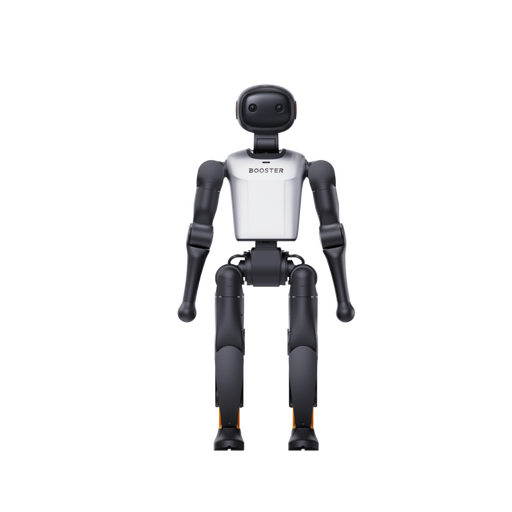
Booster Robotics K1 Geek
Described as a development platform for AI and robotics applications; this does not demonstrate suitability for a specific assembly process.
48 TOPS AI; 22 degrees of freedom (DoF).
View at Joybuy
No image available
Booster Robotics K1 Edu
Described as a development platform for education and research; check that the configuration on offer suits your application.
117 TOPS AI; 22 degrees of freedom (DoF).
View at Joybuy
 No image available
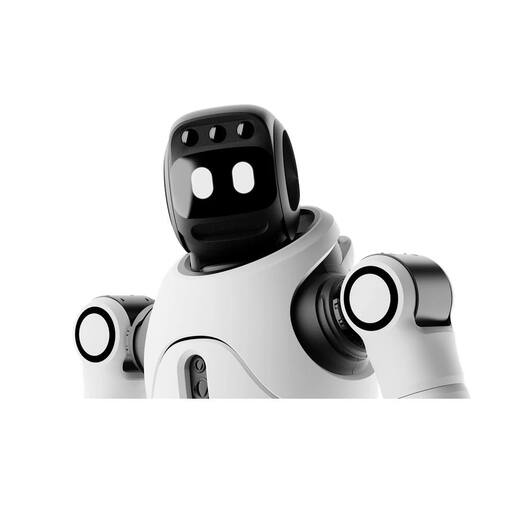
AGIBOT X2 Ultra
The product specifications list autonomous navigation and obstacle avoidance; assess a materials flow pilot using your actual routes and handovers.
The stated payload is up to 3 kg in certain postures and no more than 1 kg across the full range of motion, in both cases excluding the end effector. The product description warns that transparent or thin obstacles and drop-offs may not be detected reliably, and advises against unsupervised operation; it specifies a minimum distance of 2 m. Before use, refer to the specific manufacturer documentation and your workplace risk assessment.
View at Joybuy
 No image available
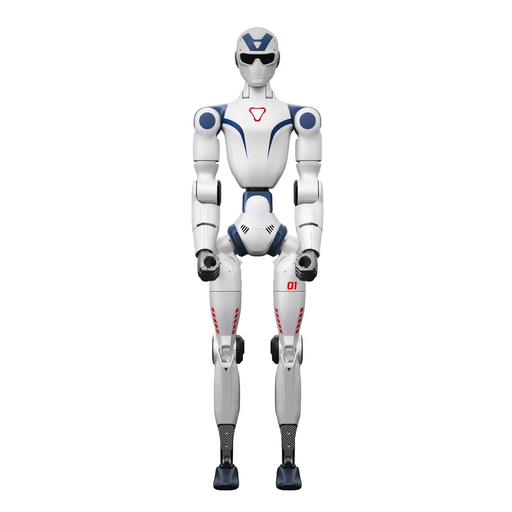
Unitree R1, Blue and White
The product description lists education and exploration as intended uses; this does not establish suitability for industrial materials handling.
26 degrees of freedom; dual cameras; integrated AI language model.
View at Joybuy
 No image available
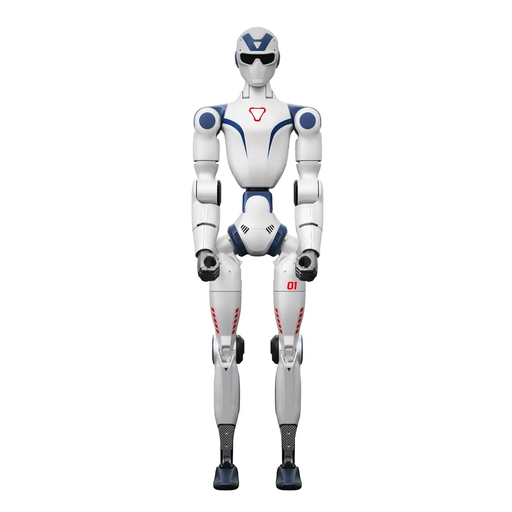
Unitree R1 Air, Blue and White
The product description is aimed at developers and technology enthusiasts; assess the specific development task before planning to use it in a business process.
20 degrees of freedom; monocular camera; integrated AI language model.
View at Joybuy
Frequently asked questions
Which task should a business trial first?
Choose a repeatable process with defined parts, routes and handovers, and an outcome you can observe. Test the movement and handling together; the Fraunhofer IPA survey of potential applications is not evidence of the performance of any individual robot model.
Is CE marking enough to allow the robot to work directly alongside staff?
No. It does not replace an assessment of how the robot will be used at the intended workstation. If contact is possible, the end effector and moving objects must also be considered. Machinery Regulation (EU) 2023/1230 will not replace the current Machinery Directive 2006/42/EC until 20 January 2027; until then, the requirements in force at the time must be taken into account.
What should be agreed for installation and ongoing operation?
Plan for training, defined handovers, procedures for faults and checks on protective measures. Agree in writing which tasks are the supplier’s responsibility and which belong to the business operating the robot; a service offer does not replace the employer’s responsibility for the risk assessment.
When might renting be an option instead of buying?
If gripping performance, route, cycle time or integration effort is still uncertain, a limited, supported pilot can help you make a decision based on your own process. Then compare engineering, commissioning, productivity and support; this does not mean renting is always cheaper.


