Who are these solutions suitable for?

Businesses with changing machine tasks

You want to handle different workpieces at several existing stations and start with a pilot to find out whether a flexible platform can carry out the required gripping, loading and machine-operating tasks. Fraunhofer IPA and Fraunhofer IEM describe machine loading and machine linking as potential applications.

Businesses with defined, distributed stations

You need to weigh up whether a mobile manipulator can navigate suitable routes and access the machines, or whether it makes sense to trial a humanoid platform for the different tasks. Fraunhofer IEM describes machine loading and machine linking as an application area.

Businesses with repetitive loading cycles

You compare fixed processes at accessible machines with a mobile solution, and check which grippers, machine access points and control interfaces are required. Universal Robots describes machine tending as an application for fixed robot solutions.

What should you consider when choosing?

Consideration What to check before buying Who this matters to
Gripping and loading workpieces Workpiece variations, orientation and clamping equipment; the gripper or hand on the exact configuration, plus repeated loading and unloading trials. If I need to grip different workpieces securely and load them correctly into the machine, the process using the actual workpiece matters more than a general gripping demonstration. This is the main concern for around 26% of consumers.
Reaching multiple stations Routes and obstacles; positioning at each machine, and access to doors and controls. If several machines in different locations need to be operated, the platform must be able to reach every station and position itself appropriately. Around 21% of consumers put moving between stations first.
Production cycle time Check complete cycles at each station, including workpiece changes and interruptions, against the production cycle time. If a repetitive process is important, I want to know whether the complete machine cycle meets the operational requirements. Around 21% of consumers say cycle time and repeatability are their main concerns.
Controls and integration Clarify machine signals and permissions, software access for the specific variant, the door solution and who is responsible for integration. If the robot needs to work with the machine controls and door, I need clear interfaces and responsibilities for the complete system. Around 16% of consumers put this integration issue first.
Employee safety Assess risks relating to the work equipment, environment and workpieces; define protective measures, fault clearance and training. If people work in the area, I want the risks of the complete process assessed before commissioning. Around 16% of consumers prioritise workplace safety as their main concern.

Which mistakes should you avoid?

  • Treating a movement video as proof of machine-tending capability

    A demonstration of movement does not prove that the hand or gripper can reliably orient a specific workpiece and load it into the clamping equipment.

    Ask for repeated trials of the complete process using your workpiece and machine combination, including unloading and possible interruptions.

    A robust pilot may require additional trials, development of a suitable gripper and integration work.

  • Classifying G1 offers as G1 EDU without checking the exact variant

    Unitree specifies, among other differences, different maximum arm payloads for the G1 and G1 EDU; a particular hand may be optional on the EDU variant. The Joybuy listing for the G1 currently states that SDK/API is unavailable.

    Ask for written confirmation of the complete product variant, the hand included and the software access promised for the exact product on offer.

    Without access for development, the planned integration may be more difficult or require a different configuration.

  • Comparing a mobile route with a fixed cell without considering station setup

    Mobility does not solve loading workpieces into clamping equipment or communicating with the machine. A fixed cell also needs suitable access to the machines.

    Compare complete processes and integration requirements for each station, rather than looking at the robot platforms alone.

  • Assuming a CE mark means the entire workstation is approved

    A CE mark on work equipment does not replace a risk assessment for the specific application. The German Federal Ministry of Justice highlights this employer responsibility in the Industrial Safety Ordinance.

    Document the product requirements separately from the competent assessment of the integrated application.

Relevant brands at a glance

Unitree

The G1 and G1 EDU are humanoid platforms with different specifications that can be assessed for movement and manipulation tasks.

  • Unitree specifies a maximum arm payload of around 2 kg for the G1 and around 3 kg for the G1 EDU. The optional Dex3-1 hand should be checked separately for the EDU configuration.
  • These manufacturer specifications do not prove suitability for a particular workpiece or a safe production cycle time. The Joybuy listing for the G1 currently states that SDK/API is unavailable.

KUKA

The KMR iiwa is a specialist alternative to consider for mobile machine tasks using a robot arm.

  • KUKA describes a combination of a mobile platform and the LBR iiwa robot arm.
  • Docking, grippers, machine permissions and the safety concept must be designed for the specific business. The platform specifications alone do not prove suitability for people sharing the route or for access to a particular machine.

Universal Robots

The UR20-1750 and machine-tending solutions offer a point of comparison for a purpose-built fixed robot solution.

  • Universal Robots specifies a standard payload of 20 kg, an extended payload of 25 kg and a reach of 1750 mm for the UR20-1750.
  • These manufacturer specifications do not show which machines can be reached on site or what cycle time can be achieved. The gripper, door and interfaces must be designed separately for the specific application.

NEURA Robotics

NEURA describes 4NE1 as a humanoid platform for development and enquiries, including wheeled variants for industrial environments.

  • The manufacturer describes different variants, including wheeled models and a version with a seventh axis for greater reach.
  • Manufacturer specifications and a reservation enquiry are not independent proof of machine-tending capability or immediate availability of an integrated variant.

Joybuy products to compare

The following Joybuy products are humanoid robots and development platforms. For a machine-tending pilot, workpiece handling, software access, cycle time and the safety concept must be assessed at the specific station.
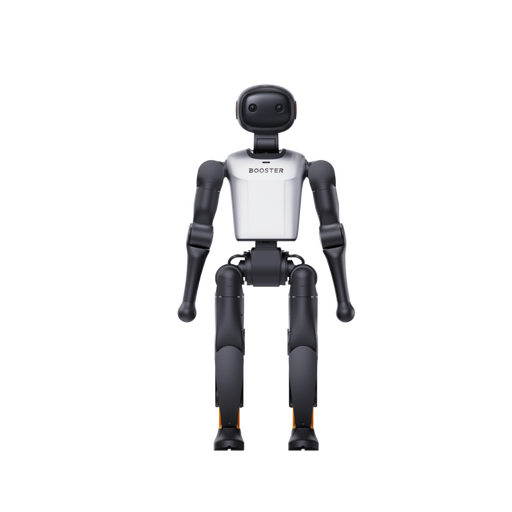
Booster Robotics K1 Geek humanoid robot

Booster Robotics K1 Geek Humanoid Robot

This model could be considered for a controlled pilot as a humanoid development platform; its suitability for a specific machine task must be assessed on site.

The product title specifies 48 TOPS AI and 22-DoF.

Joybuy
Booster Robotics K1 Edu humanoid robot

Booster Robotics K1 Edu Humanoid Robot

The variant described in the product title as an education and research platform could be assessed in a controlled pilot; integration with a specific machine should be tested separately.

The product title specifies 117 TOPS AI and 22-DoF.

Joybuy
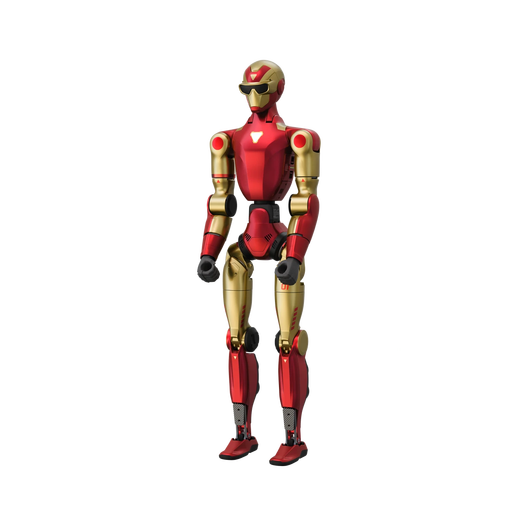
Unitree R1 Air humanoid robot

Unitree R1 Air Humanoid Robot

This humanoid robot could be considered for a controlled pilot; whether it can handle workpieces at a specific machine must be assessed on site.

The product title specifies 20 degrees of freedom and a monocular camera.

Joybuy
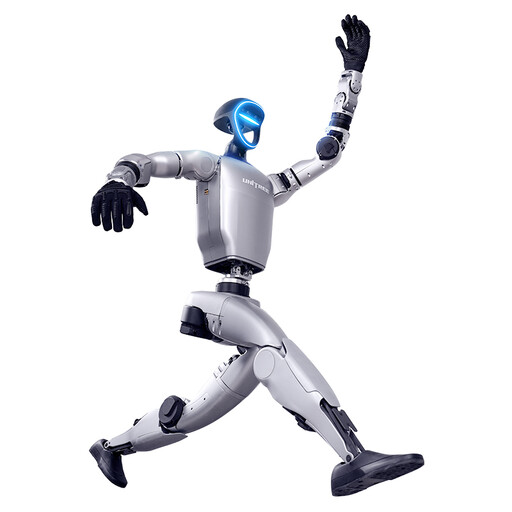
Unitree G1 humanoid robot

Unitree G1 Humanoid Robot

The G1 could be assessed as a humanoid platform for a controlled pilot; workpiece handling and integration must be suited to the specific machine task.

According to the product information, SDK/API is currently unavailable for this version. So check that it offers the software access you need before choosing it.

Joybuy

Frequently asked questions

What should you test in practice before a machine-tending pilot?

Using real workpieces and the planned machine access points, repeatedly test the complete process: gripping, loading, unloading, door and control operations, and dealing with interruptions. Manufacturer specifications for arm payload and individual demonstrations are no substitute for this application-specific trial.

Is it enough for the robot to open a CNC door mechanically?

No. The door drive, machine status and robot controls must be integrated appropriately. For the Safedoor SD100, the supplier describes a connection between the controls, robot, CNC machine and control panel. You will need to check separately whether the solution is suitable for your machine.

Which ongoing costs should you include in your comparison?

Ask for separate costs for grippers and door modifications, integration, spare parts, software access, training and station support. This lets you compare the project scope with the requirements of your machines, rather than looking only at the robot platform.

In Germany, is a robot’s CE mark enough to operate it across several machines?

No. You need to check the applicable product requirements for the products supplied and, where relevant, the integrated system as a whole. Regardless of any CE marking, the employer must ensure that the risks at the specific workplace are assessed before use. Whether the integration should be classed as a new assembly of machinery depends on the individual case.

Is the new EU Machinery Regulation already in force for placing products on the market?

Not as of 19 October 2026. According to the German Federal Institute for Occupational Safety and Health, Regulation (EU) 2023/1230 will apply from 20 January 2027; the current Machinery Directive remains in force until 19 January 2027. So check when the specific product or integrated system will be placed on the market.