What should you look for when choosing?
First, define the specific workflow and success criteria. Then compare platforms and integration approaches against the same task and safety requirements.
Under Section 3 of the German Ordinance on Industrial Safety and Health, CE marking on work equipment does not exempt the employer from carrying out a risk assessment. The percentages below refer to consumers in Germany who each have one main purchasing concern for a defined assembly or machine-tending pilot.
| Priority |
What to check before buying |
Who it matters most to |
| Safety and conformity |
Clarify the documentation for the specific delivery configuration, along with the protective measures and operating modes at the pilot workstation. |
If I’m planning a trial near employees, the entire application—including the robot, gripper, workpiece and equipment—needs to be considered. Around 31% of consumers put evidence of suitable protective measures first. |
| Integration with existing equipment |
Document the machine interfaces, door and clamping sequence, as well as the space and positioning at the pilot workstation. |
If the robot is to work with an existing machine, I need a clear sequence for handovers and authorisations. Around 25% of consumers prioritise integration with their existing equipment. |
| Grip and process quality |
Trial the gripper, required reach, loading position, acceptable error rate and target cycle time using the original parts. |
If my workpieces come in different shapes or have different surface finishes, I want to test gripping and loading with those exact parts. Around 25% of consumers put handling their workpieces first. |
| Effort and value of the pilot |
List the gripper, software access, integration, training and support separately in the quotation. |
If I’m weighing up the costs and benefits of a limited trial, I need clear success criteria and a fair comparison with alternatives. Around 19% of consumers prioritise the effort involved in a pilot and the usefulness of its results. |
Relevant brands at a glance
The brands and platforms below give an indication of the relevant product lines and described applications. Their inclusion does not prove that a model is suitable for a specific pilot workstation or that it is available.
Apptronik
Apptronik describes Apollo as a platform for machine operation and lists loading and unloading as intended applications.
- The task description is relevant to a machine-tending trial. Apptronik describes Apollo 2 as having both a bipedal and a wheeled mobility configuration.
- Manufacturer claims of reduced downtime are not independent evidence of performance. The configuration, conformity documentation and results at your own workstation need to be assessed separately.
NEURA Robotics
NEURA Robotics describes 4NE1 as a humanoid platform for industrial workflows, with a range of models including a wheeled variant.
- Interchangeable forearms and different mobility configurations are potential points to assess in a gripping or assembly trial.
- The product description does not demonstrate the safe integration of a specific cell or a cycle time achieved in a particular workflow.
Unitree
The G1 and G1 EDU are distinct platform versions for development trials. Fraunhofer IPA describes a G1 demonstrator for material transport, not for the assembly or machine-tending applications covered here.
- Unitree distinguishes between the versions in terms of optional hands and stated maximum arm payload.
- A material-transport demonstrator or manufacturer claims about gripping do not prove performance in an industrial assembly task or safe access to a specific machine.
UBTECH
UBTECH positions Walker S2 as an industrial humanoid and describes an automated battery-swapping process.
- For Walker S2, the manufacturer specifies a payload of 15 kg within a working range of 0 to 1.8 m.
- These manufacturer specifications apply to the named model variant and do not replace testing with the gripper, workpiece and specific application. Battery swapping requires suitable infrastructure and does not demonstrate approval for a German production cell.
Humanoid robots at Joybuy
The Joybuy products below include humanoid platforms for development and research trials. Their product specifications do not demonstrate suitability for a specific assembly or machine-tending workflow.
 No image available
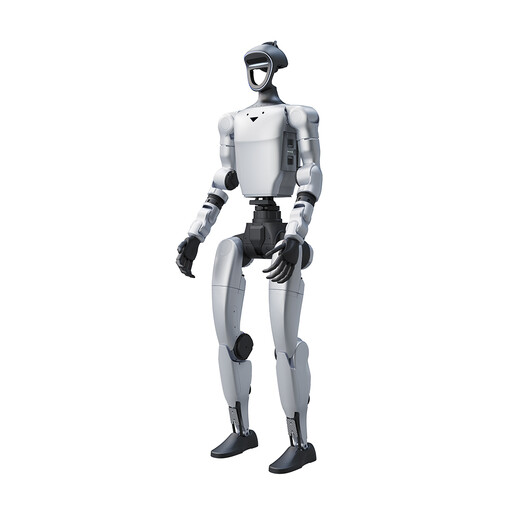
Unitree G1 Pro
This humanoid platform may be worth considering for a development trial; the product name alone does not demonstrate gripping or process performance.
Stated in the product name: 29 degrees of freedom in total and 16 joint degrees of freedom.
View at Joybuy
 No image available
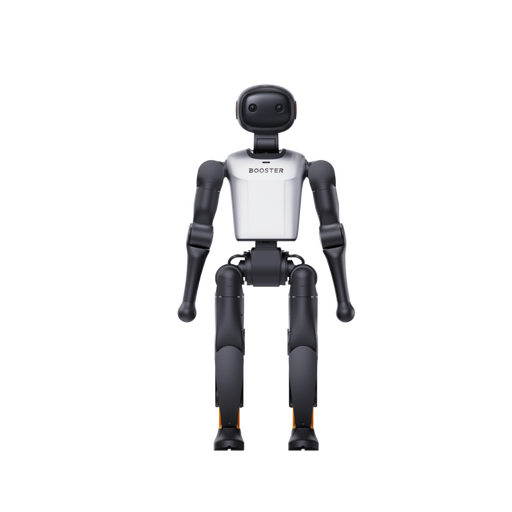
Booster Robotics K1 Geek
Its positioning as a development platform makes this model a possible option for platform trials; it does not demonstrate performance when gripping or loading parts.
Stated in the product name: 48 TOPS AI and 22-DoF.
View at Joybuy
No image available
Booster Robotics K1 Edu
The product name identifies this model as an educational and research platform; its suitability for a specific gripping or assembly workflow needs to be tested separately.
Stated in the product name: 117 TOPS AI and 22-DoF.
View at Joybuy
 No image available
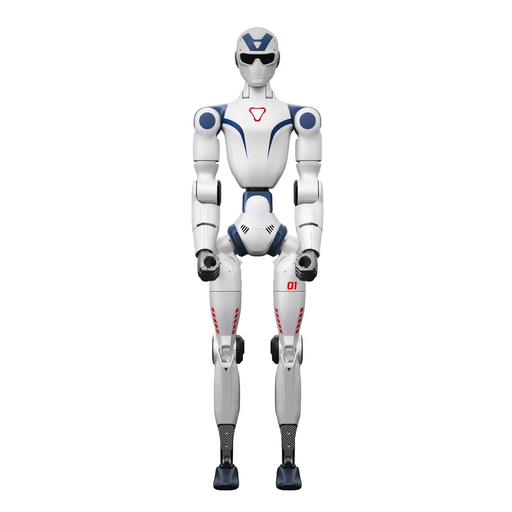
Unitree R1
This platform may be assessed for a general development trial; the listed product features do not demonstrate industrial parts-handling capability.
Stated in the product name: two cameras, 26 degrees of freedom and an integrated AI language model; blue and white colour variant.
View at Joybuy
 No image available
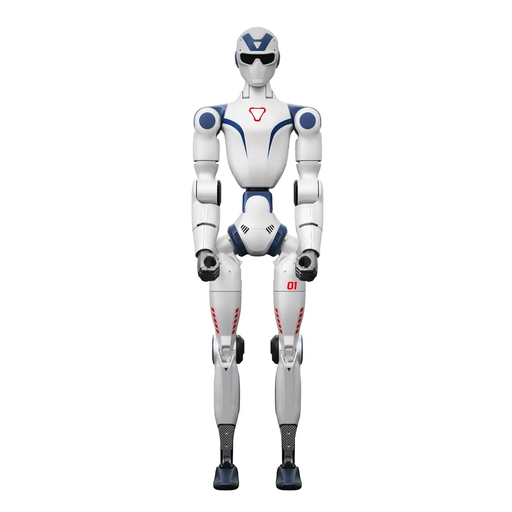
Unitree R1 Air
This model may be considered as a humanoid platform for a development trial; the product specifications do not establish its suitability for a particular machine-tending task.
Stated in the product name: monocular camera and 20 degrees of freedom; blue and white colour variant.
View at Joybuy
Frequently asked questions
Is CE marking on the robot enough for use with our machine?
No. Under Section 3 of the German Ordinance on Industrial Safety and Health, CE marking does not exempt the employer from carrying out a risk assessment. The specific application needs to be considered, including the robot, gripper, workpiece and existing machine. Whether a change is legally substantial depends on the individual circumstances.
Which machinery rules apply in October 2026?
For machinery placed on the market, the Machinery Directive 2006/42/EC will continue to apply within the relevant German legal framework up to and including 19 January 2027. As the Federal Institute for Occupational Safety and Health explains, Regulation (EU) 2023/1230 will apply from 20 January 2027. The documentation required for a specific robot and integrated system also depends on their legal classification.
What should a gripping or loading trial measure?
Before the trial, define the workpiece and gripper, required reach, loading position, acceptable error rate and target cycle time. Published platform and variant specifications do not tell you what process performance can be achieved with your workpiece.
Who is responsible for the safety assessment after installation or a software change?
The employer remains responsible for the risk assessment when work equipment is used and must seek expert advice where necessary. The manufacturer and integrator should set out their delivery, documentation and change-related responsibilities in the pilot contract. A substantial change to a machine may trigger requirements applicable to new machinery.
What should be included in a quotation comparison besides the robot?
For a fair comparison of pilot scope, include the gripper, interface integration, protective measures, training, maintenance and support during trials. The Fraunhofer IPA guide considers cost-effectiveness alongside technical feasibility and safety; the actual workload depends on the specific pilot.


